
Public Safety Training
Supporting our first responders with unique training opportunities.
Public Safety Training: A Battleship Still Serving Its Community
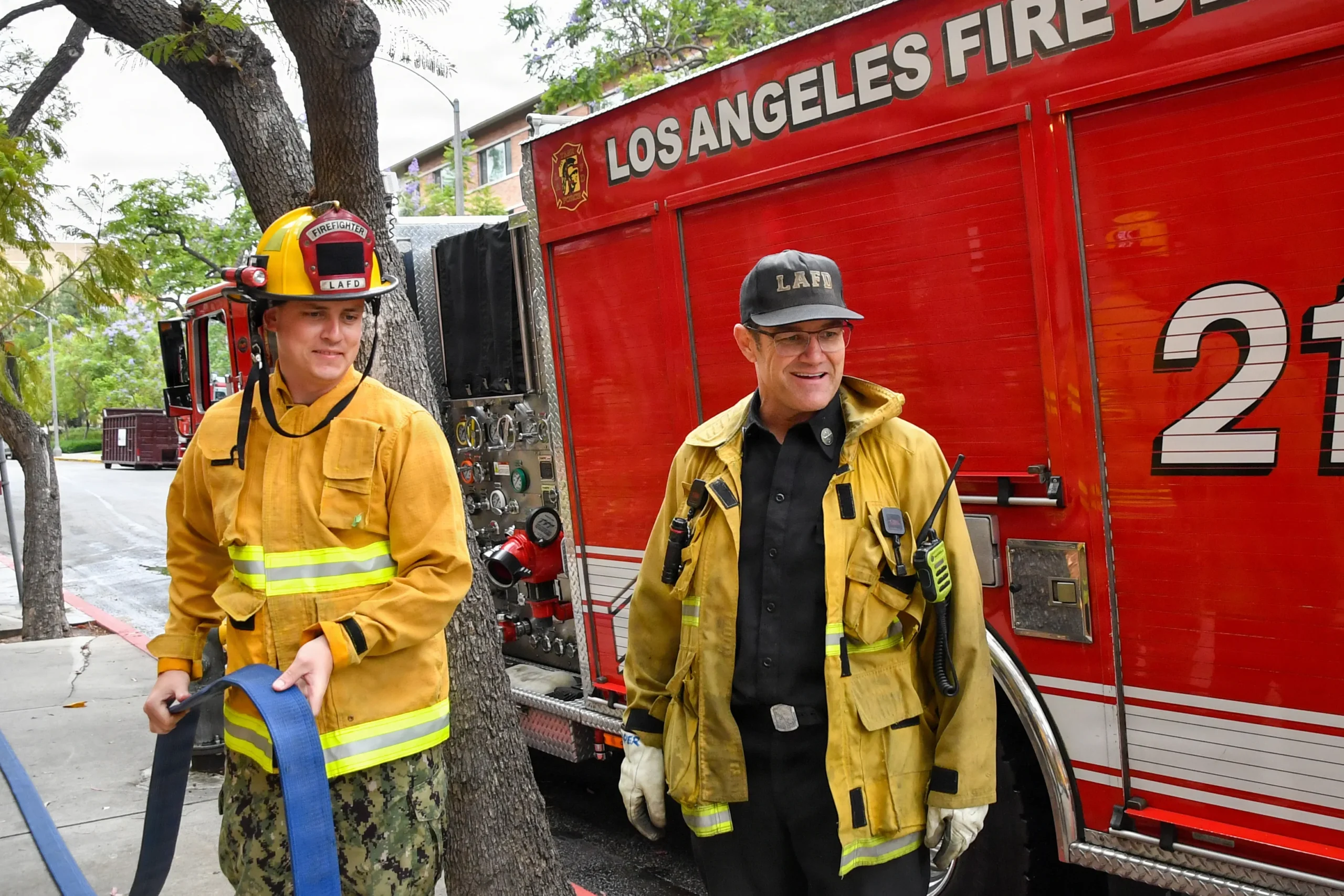
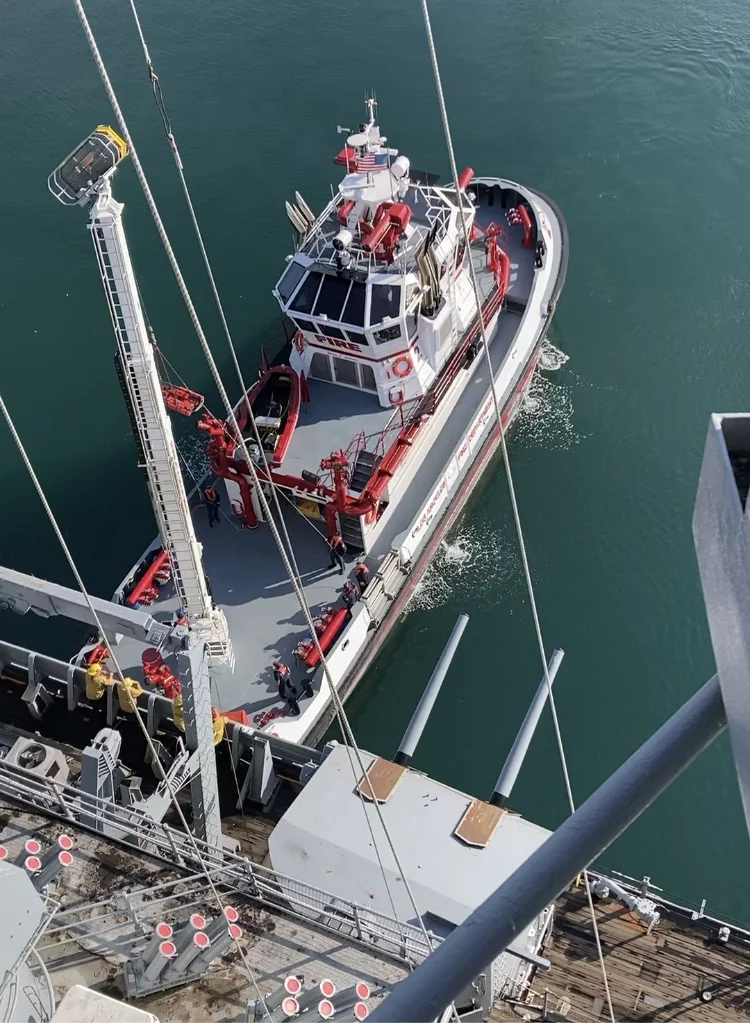
Most people who visit Battleship IOWA see a museum. However, first responders often see something entirely different: ladders, hatches, confined spaces, multiple decks, long passageways, machinery spaces, blind corners, steel bulkheads, unusual access points, significant heights, and places where moving an injured person would be anything but simple. In other words, they see an incredible place to train—and that is why Battleship IOWA serves public safety agencies so well. At the Pacific Battleship Center, I am proud that we make Battleship IOWA available to public safety agencies and organizations, providing essential training to the people who protect our communities. It is yet another way this ship continues to serve.
First responders spend an enormous amount of time training. They have to. When somebody calls 911, we expect the people arriving to know what to do, even when the situation they encounter is unusual, dangerous, or unlike anything they have seen before. There are excellent public safety training facilities throughout Southern California, but there is real value in putting a team into an environment that wasn’t designed as a training facility. Battleship IOWA certainly wasn’t, which is part of what makes it so useful. The ship was designed to fight and survive at sea. That makes it complicated. A modern building generally has predictable stairs, hallways, doors, and access points. A battleship has decks connected by steep ladders. It has vertical hatches, narrow passageways, tanks, machinery spaces, and compartments buried deep inside a massive steel structure. Some spaces are difficult to access. Some require teams to move vertically. Communications can become more difficult once people are several decks down. If there is a victim, they still have to figure out how to safely get that person back out. Those challenges force people to think, and that is exactly what good training should do.
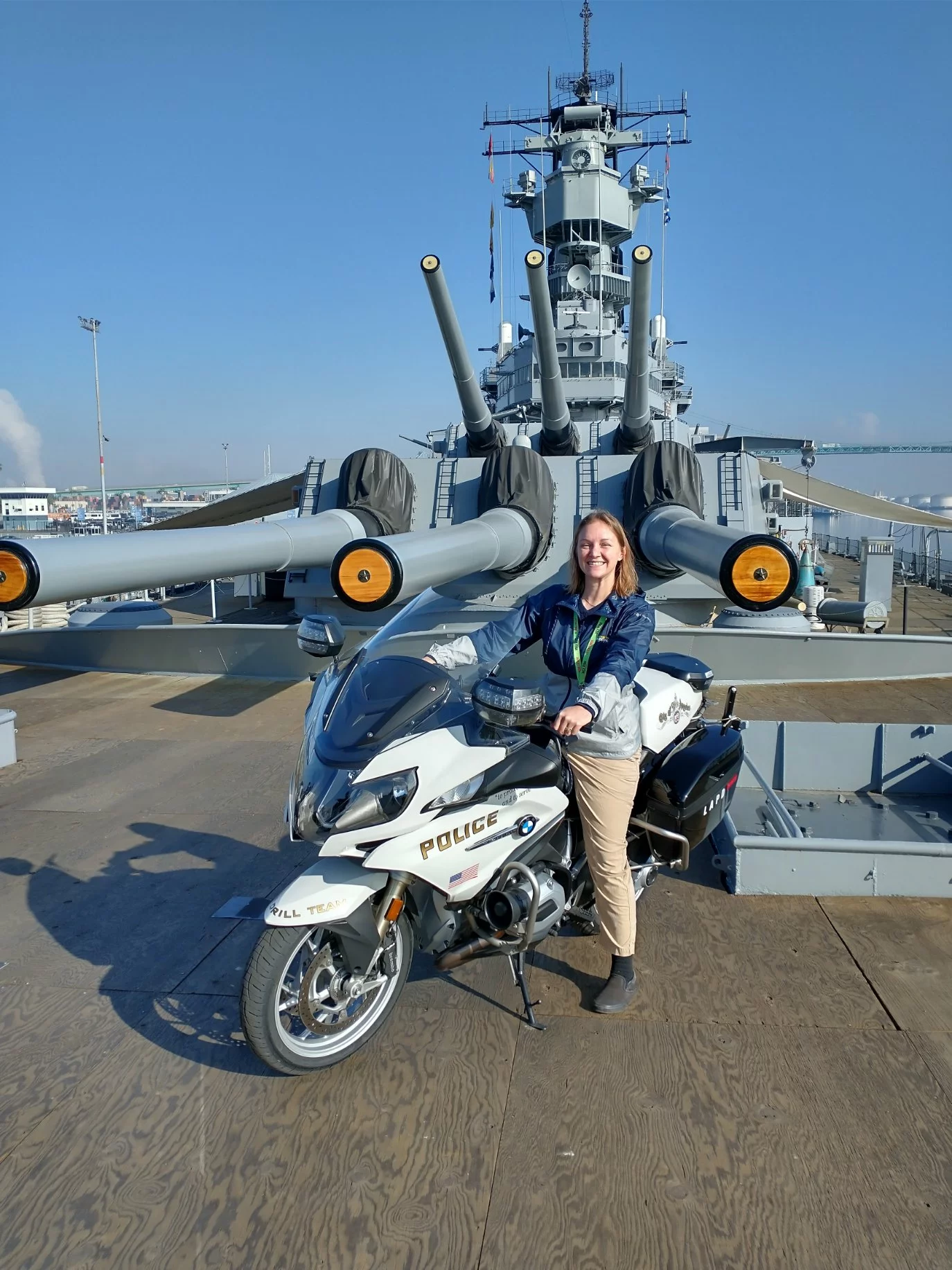
Train for the Situation You Didn’t Expect
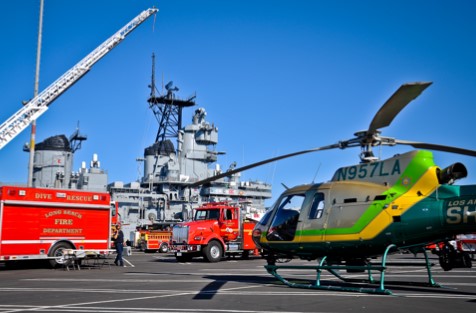
We have hosted Urban Search and Rescue teams, police and fire departments, federal agencies, and other public safety organizations aboard the ship. The exercises vary because the needs vary. Sometimes the goal may be technical rescue. Sometimes it is working in confined or difficult spaces. Sometimes an agency wants to test equipment in an environment that presents challenges they can’t easily reproduce elsewhere. In 2021, for example, the Los Angeles Office of Field Operations Special Response Team from U.S. Customs and Border Protection used Battleship IOWA for scenario-based training involving an unmanned ground vehicle. Working with Air and Marine Operations, the team tested the ability to insert the robot onto the ship by helicopter. That example shows what makes IOWA useful: we don’t need to invent an elaborate training prop. The ship is the training prop. Give a professional team a real problem in a complex environment and let them work through it. They test their equipment, their procedures, their communication, and, more importantly, themselves. If something doesn’t work perfectly during training, that isn’t failure. That’s one of the reasons you train—to find the weakness before somebody’s life depends on it.
Then There Is GRIMP
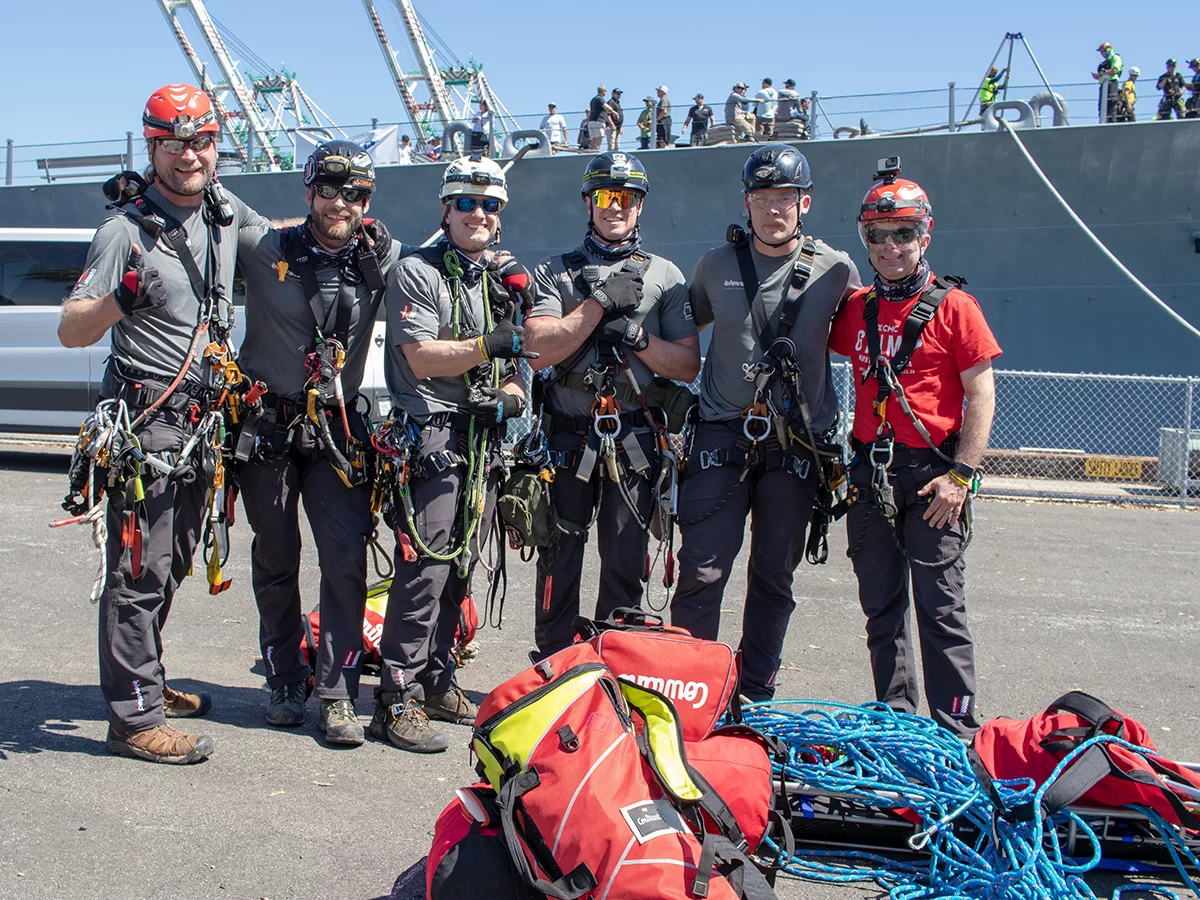
One of the best examples of what can happen aboard Battleship IOWA has been CMC GRIMP North America. If you’ve never seen a technical rescue competition, it is impressive. These aren’t people running an obstacle course for entertainment. They are experienced rescue professionals putting highly specialized skills to work against a clock in scenarios deliberately designed to challenge them. CMC brought GRIMP North America to Battleship IOWA for an international rescue-skills challenge focused on education, collaboration, and competition. The ship was a perfect fit for that purpose. During the 2022 competition, 12 teams from eight countries came aboard IOWA and faced six different 90-minute rescue scenarios. Think about what our ship offers someone designing those scenarios: you can put a victim several decks down through a hatch, create a rescue that requires a team to move somebody vertically through the ship, send rescuers into confined spaces, work from the superstructure, and require teams to move patients across areas where a normal straight-line evacuation simply isn’t possible. One GRIMP scenario used the bow of the ship for a vertical rescue through an access hatch to a non-ambulatory victim several decks below, combined with a high-line evolution from the bow toward the access road. During the 2022 event, teams worked through skills including patient packaging and transport, confined-space rescue, tower climbing, ascending and descending, raising and lowering, vertical knot passing, and high-line construction. That’s serious work. But what interests me most about GRIMP isn’t who wins; it’s what happens between the teams.
Competition Makes Everyone Better
Rescue teams can come from different departments, different states, or, in the case of GRIMP, different countries. They may use different equipment, approach a problem differently, and have techniques another team has never seen. Put those people together and something happens: they start watching each other, asking questions, comparing equipment, talking about why they approached the rescue one way rather than another, and, most importantly, they learn. CMC has been very clear that this is a central purpose of GRIMP. The competition is designed to foster learning and collaboration within the rescue community so teams sharpen their skills and response capabilities and ultimately make rescues safer and more successful. That’s exactly the type of activity we want aboard Battleship IOWA. Yes, there is competition. People want to win. But everybody goes home having seen something they didn’t know before. Eventually some technique, idea, or lesson learned during training may find its way into an actual rescue. That’s where the impact becomes real.
The Ship Understands Preparedness
There is also something fitting about this work happening aboard a Navy ship. A sailor serving aboard Battleship IOWA couldn’t simply call the fire department if something went wrong hundreds of miles from land. The crew was the fire department. The crew was the damage-control team. The crew had to respond to flooding, fire, equipment failures, casualties, and other emergencies while keeping the ship operating. Preparation was part of life at sea. Training mattered because the crew had to be ready before the emergency happened. That principle hasn’t changed. Today’s first responders may wear different uniforms and serve a different mission, but the underlying idea is very similar. You train. You practice. You learn your equipment. You understand your team. You work through difficult situations. And you do it over and over so that when something actually goes wrong, you are ready. I think Battleship IOWA is an appropriate place for that work to continue.
An Unusual Community Asset
When we talk about preserving Battleship IOWA, it is easy to think only about preserving history, but there is more to it. Of course that matters. This is one of the great historic ships in the world, and we have a responsibility to take care of her. But preservation becomes even more meaningful when a historic asset continues creating value for the community around it. In 2024 alone, Pacific Battleship Center recorded 29 disaster preparedness and response exercises and public safety trainings and exercises as part of our community impact. That is the side of Battleship IOWA most visitors will probably never see. They may be driving across the Vincent Thomas Bridge or walking along the waterfront while a group of first responders aboard the ship is working through a problem. I’m okay with that. Not everything we do needs an audience. The important thing is that the training happens.
Supporting the People Who Show Up
We ask a great deal from our first responders. When there is a fire, we expect them to go toward it. When a building collapses, we expect somebody to go into the debris. When a person is trapped somewhere most of us would never consider entering, we expect somebody to figure out how to reach them. When disaster hits our region, we expect public safety agencies to immediately begin solving problems under difficult conditions. That level of performance doesn’t happen by accident. It comes from training. Los Angeles-area fire agencies maintain specialized capabilities in areas including urban search and rescue, confined-space rescue, rope rescue, structural collapse, machinery rescue, and water rescue because the incidents they may face require skills far beyond basic emergency response. Our role is not to teach those professionals how to do their jobs—they already have experts and instructors for that. Our role is much simpler: we have a really unusual training environment, and when we can responsibly make that environment available to organizations doing important work for our community, we should do so.
More Than a Museum
I have said for years that Battleship IOWA is more than a museum. This is one of those examples. During public hours, a family may come aboard and experience the Life of a Sailor. A student may discover engineering or a career they had never considered. A veteran may reconnect with a part of their life. A volunteer may find purpose and community. And at another time, first responders may be deep inside the same ship working through a rescue scenario designed to make them better at saving someone’s life. All of those things can happen on the same battleship. That’s what makes this place special: Battleship IOWA serves the community in more ways than one. The Navy built Battleship IOWA to serve our country. Today, we have the opportunity to give this ship new ways to serve. Providing a challenging place for the people who protect our communities to train is one of them. And if a firefighter, rescue technician, police officer, or other first responder walks away from Battleship IOWA a little better prepared for the call they haven’t received yet, then this old battleship has done something pretty important. She has helped prepare them for the moment when somebody else needs them most.
Train Aboard Battleship IOWA
We welcome inquiries from public safety agencies, first responder organizations, and qualified training groups interested in using Battleship IOWA for training opportunities. Every request is different, and every activity must be coordinated around the ship, safety requirements, museum operations, and the needs of the participating organization. If you have a training concept that could benefit from the unique environment aboard Battleship IOWA, we’d like to hear about it. Bring us the challenge. Let’s see what the ship can teach you.
Limited time only!
Kids Board Free
In the all-new Life of a Sailor experience, kids become sailor recruits, building their skills, following the story of a famous sailor, and joining Vicky the Dog on a scavenger hunt through Battleship IOWA.
Kids board free with a paid adult.