Beyond steel and guns
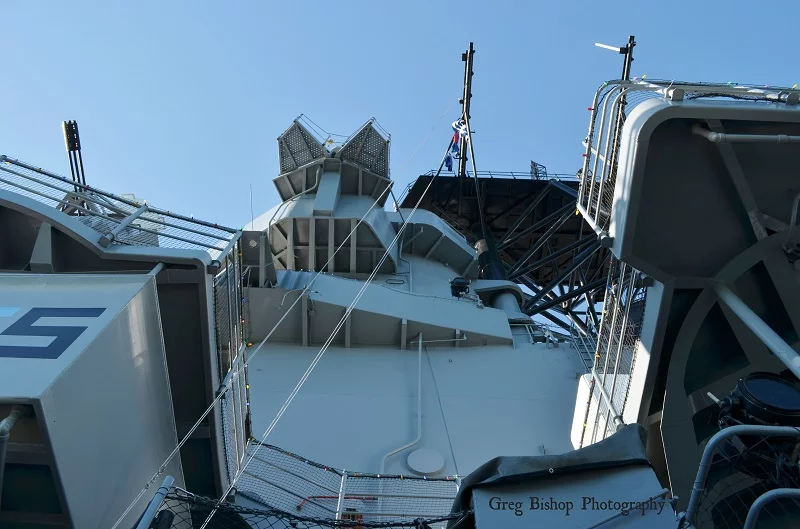
Battleship IOWA’s scale will always be one of its first impressions. But by 2015, the organization was learning that scale alone could not create lasting meaning. The stories that stayed with visitors were often intimate: where a sailor slept, how a crew worked together, what a veteran remembered, or how a family honored someone who had served.
That shift toward people-centered interpretation helped the museum move beyond the stereotype of a military attraction focused only on weapons and machinery. IOWA could still teach engineering and naval history, but those subjects became more compelling when connected to the people who designed, operated, maintained, and depended on the ship.
Veterans as participants, not exhibits
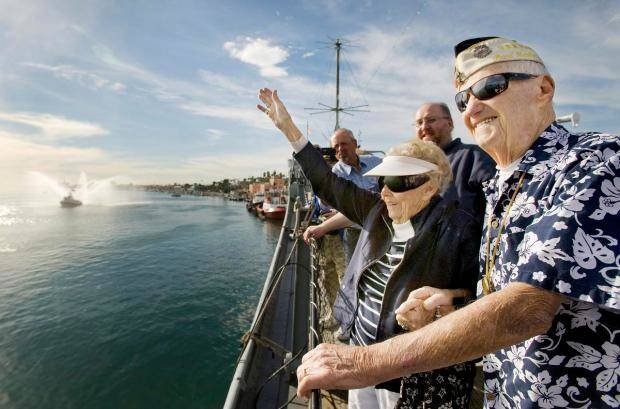
Oral-history work and commemorative programs gave veterans a visible role in interpreting the past. Stories involving World War II veterans, Pearl Harbor survivors, and recipients of France’s Legion of Honor placed individual lives inside events that can otherwise become abstract dates and campaigns.
The ship itself made those encounters unusually powerful. A veteran speaking in a passageway or on a deck similar to one he had known could connect memory to place. Younger visitors could hear history from people who had lived it. The museum was not simply preserving objects; it was helping preserve testimony.
A broader public stage
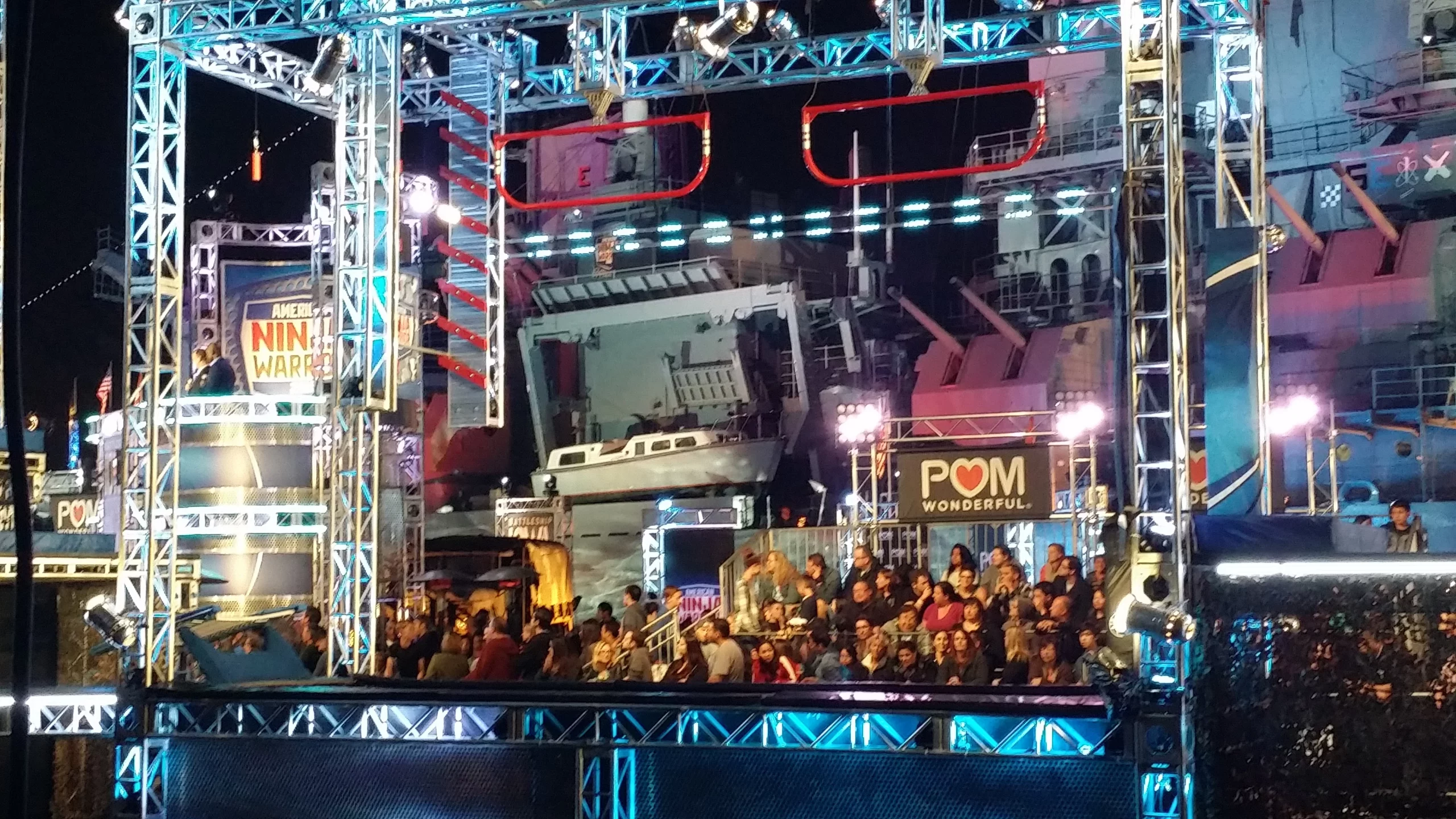
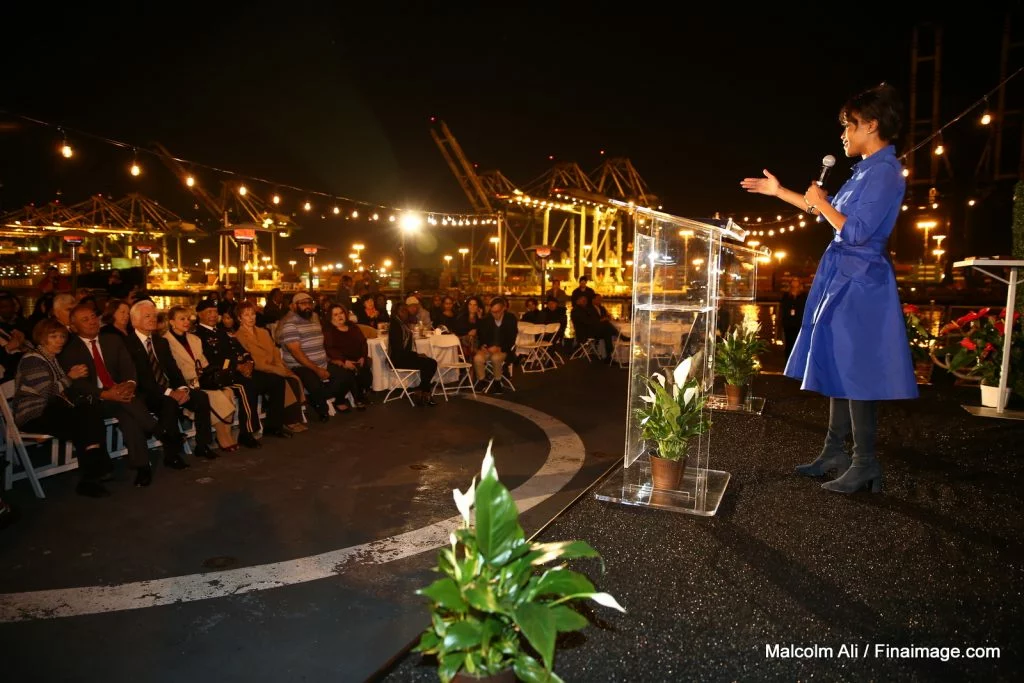
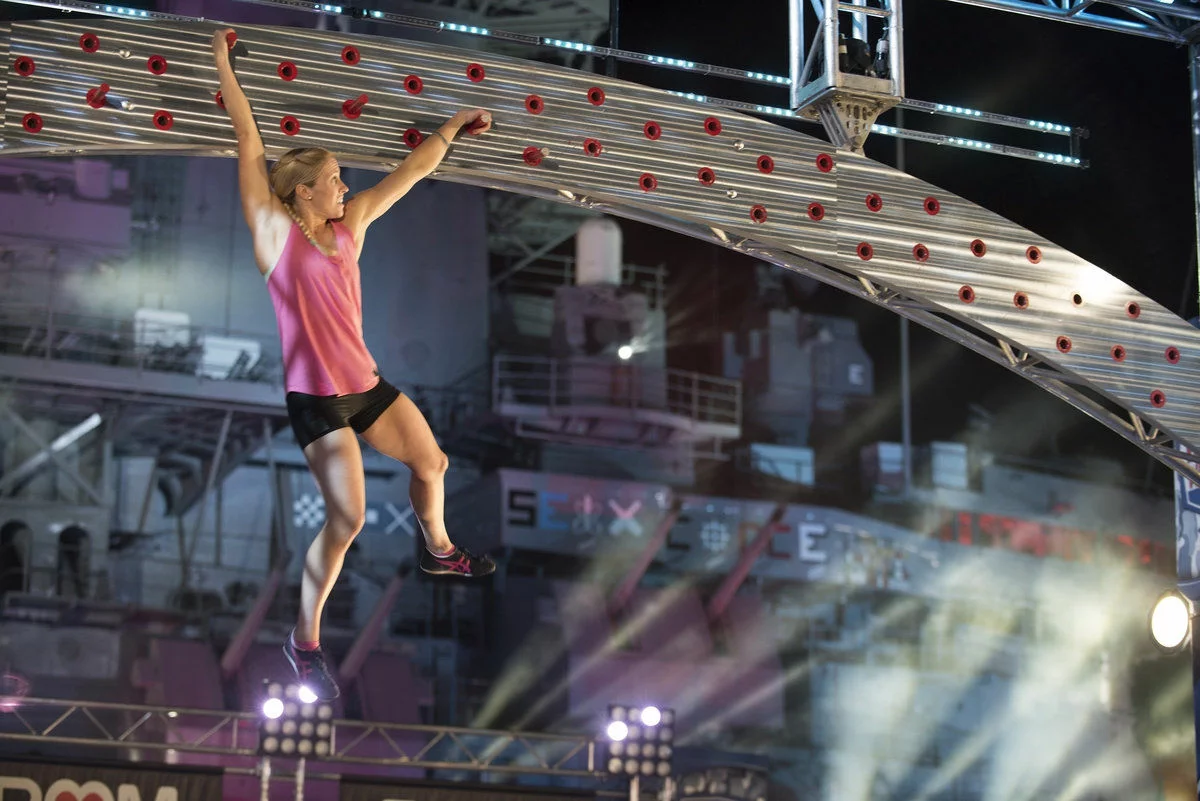
Battleship IOWA also expanded its reach through music, television, special events, and partnerships. Music Under the Guns used the ship as an unmistakable setting for the performance. An episode connected with NBC’s American Ninja Warrior brought the battleship to audiences that might never have searched for a naval museum. Navy-focused events linked the historic ship with contemporary service.
Internal correspondence from the period also shows how actively the organization pursued large public moments and regional marketing opportunities. Planning around major events, sports-related gatherings, convention outreach, radio broadcasting, and tourism promotion reveals a museum still fighting to build awareness in one of the most competitive visitor markets in the country.
The Gravely legacy and leadership
Work around recognition of Vice Admiral Samuel L. Gravely Jr., the first African American to command a U.S. Navy warship and later the first African American fleet commander, reflected the museum’s expanding interest in leadership and service stories beyond IOWA’s own shipboard chronology. These efforts helped position the organization to tell a broader Surface Navy story in later years.
The significance was both interpretive and civic. A battleship could serve as a platform for discussing not only combat but leadership, opportunity, barriers, public service, and the changing composition of the Navy across generations.
Operations remained the invisible foundation
All of this public programming rested on an expensive operating structure. Preservation, insurance, utilities, security, staffing, visitor services, and constant repair continued regardless of whether a particular event drew headlines. Audited financial statements show total revenue of roughly $3.66 million in 2015, with admissions remaining the largest source of revenue.
That reality explains why diverse programming was not a distraction from preservation. It was part of the preservation strategy. Every successful event, tour, membership, donation, filming project, and group visit helped support the physical platform on which the public mission depended.
Why 2015 mattered
By the end of 2015, Battleship IOWA had developed a clearer interpretive strength: national history could be told through individual experience. Veterans were living participants in the museum community. Cultural events could introduce new audiences. Public recognition could extend beyond the biography of a single ship.
The year laid important groundwork for the organization’s next stage, when education, active-duty connections, large-scale waterfront events, and eventually a National Museum of the Surface Navy vision would broaden the mission even further.
Research basis and further reading
• Pacific Battleship Center news archive, 2015
• Pacific Battleship Center audited financial statements, 2014-2015
• Internal Pacific Battleship Center correspondence regarding events, partnerships, and outreach
• Public materials related to the VADM Samuel L. Gravely Jr. Service & Leadership Award
Limited time only!
Kids Board Free
In the all-new Life of a Sailor experience, kids become sailor recruits, building their skills, following the story of a famous sailor, and joining Vicky the Dog on a scavenger hunt through Battleship IOWA.
Kids board free with a paid adult.