


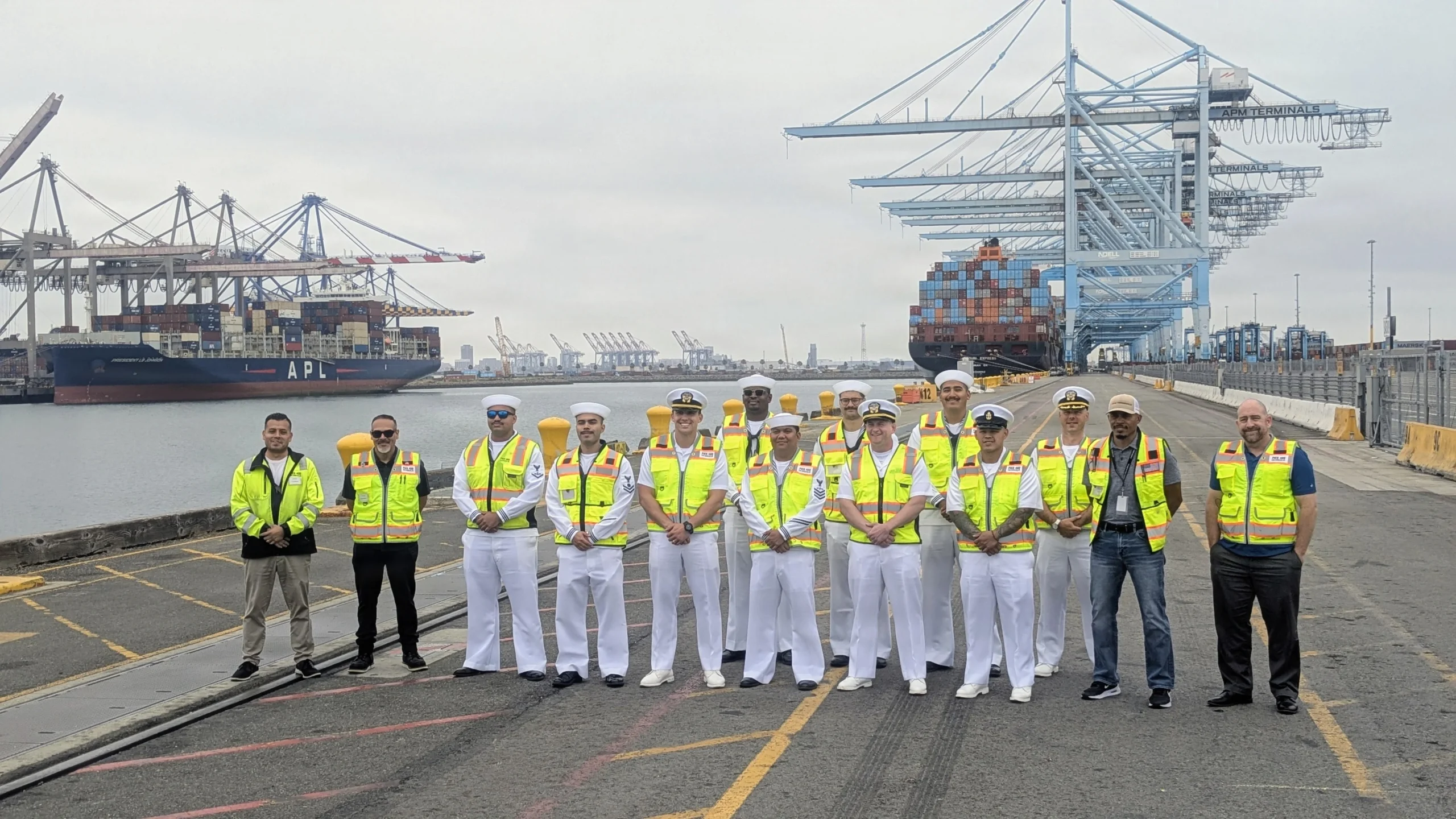

A ship arriving at a port is only the beginning. Berths must be ready. Cargo has to move. Trucks and trains have to connect. Security and safety rules have to be followed. Equipment and labor have to be coordinated, often around the clock.
Port operations are the work of making those moving parts come together.
What is port operations?
Port operations include the day-to-day coordination of vessels, terminals, cargo, equipment, facilities and people. Depending on the employer, jobs may involve berth planning, yard operations, gate operations, equipment coordination, vessel services, safety, security, maintenance, or supervision.
A port authority, terminal operator, shipping company, stevedoring company and logistics provider may all work in the same harbor while performing very different jobs.
What happens at a marine terminal?
When a vessel arrives, terminal teams coordinate the berth, cargo plan, equipment, labor, and landside connections needed to move freight. Container terminals may use ship-to-shore cranes, yard cranes, tractors and highly computerized systems to track boxes through the terminal.
Other terminals handle automobiles, breakbulk cargo, liquid bulk, dry bulk, or cruise passengers. Each type of cargo creates its own operational needs.
What kinds of jobs are there?
Students may encounter roles in terminal operations, vessel operations, safety, environmental compliance, maintenance, security, planning, customer service, information systems, and management.
Longshore work is another important part of many ports, but hiring systems can vary depending on the local labor agreement. They should not be described as a simple open application process. Students interested in longshore careers should use official information from local unions and employers.
Do you need a college degree?
Not for every port job. Some operational and trade roles can begin with a high school diploma, technical training, or experience. Management, engineering, planning, environmental, and business roles are more likely to require college education.
The best strategy is to identify the specific port job that interests you and then work backward from its actual requirements.
What skills matter?
Ports reward people who can communicate, solve problems, follow safety procedures, and keep work moving when conditions change. Leadership, situational awareness, and documentation matter because a delay or mistake in one part of a terminal can affect many other operations.
Technology is increasingly important. Modern terminals rely on data systems, automation, sensors, and planning software alongside heavy equipment and hands-on work.
How does this connect to Battleship IOWA?
Battleship IOWA sits in one of the largest port complexes in the United States. A visit to the ship can be a starting point for looking outward at the working waterfront around it - container terminals, cranes, vessels, rail lines, trucks, and support operations.
If you were interested in how the ship is supplied, berthed, moved, or connected to everything happening ashore, you may be thinking like a port operations professional.
Where can a port career lead?
Operational careers can progress into lead, supervisory, and management roles. Others branch into safety, environmental compliance, maintenance, planning, security, or technology.
The Bureau of Labor Statistics' broader category of transportation, storage, and distribution managers reflects the management side of moving goods and operations. Still, port-specific career paths vary widely by employer.
What can you do now?
Visit a working port when tours or career events are available. Learn how different terminal types operate. Study logistics, business, environmental science, engineering, or industrial technology depending on what interests you. Look for internships and entry-level roles with actual port employers and service providers.
Most importantly, learn the difference between the port authority, the terminal operator, the shipping line, and the many contractors working around them. Understanding who does what is the first step toward finding where you fit.

Maritime Defense and Security Careers: Engineering, Technology, Navy and Defense Industry Jobs
Maritime defense depends on far more than sailors. Explore careers in engineering, cybersecurity, sensors, communications, ship systems, logistics and the civilian organizations that support […]

Ocean and Environmental Science Careers: Marine Science, Weather, NOAA and Research
The maritime world is also scientific. Explore careers in oceanography, marine science, weather, environmental monitoring and research - on shore and at sea.

Maritime Supply Chain and Logistics Careers: How Goods Move From Ship to Shore
Every product has a journey. Explore careers that plan and coordinate how cargo moves through ships, ports, warehouses, trucks, and rail networks - and […]

Port Operations Careers: How to Work in Ports, Terminals and Vessel Operations
Ports are working systems where ships, cargo, people and equipment have to move safely and on schedule. Learn about terminal operations, vessel coordination, and […]
Limited time only!
Kids Board Free
In the all-new Life of a Sailor experience, kids become sailor recruits, building their skills, following the story of a famous sailor, and joining Vicky the Dog on a scavenger hunt through Battleship IOWA.
Kids board free with a paid adult.