
What's It Like To Walk on an Iowa-Class Battleship?
You'll never understand unless you experience it in person
What Is It Like to Experience an Iowa-Class Battleship?
You stand on the dock. As far as you can look to the left or right, you see nothing but ship. She extends down to the water and up almost as high as your neck can crane. IOWA is immense in a way your brain can’t fully comprehend.
Once you're aboard, that scale becomes harder to comprehend. Passageways lead into living spaces, machinery compartments, command areas and workstations. Ladders rise to decks above while others descend deep into the hull. Pipes and cables run overhead, watertight doors divide the ship into compartments, and spaces that seem close together on the outside can require an unexpected route to reach.
The ship stops feeling like a single enormous object and begins to feel like what it really is: a working community built inside a steel hull.
That is what makes visiting Battleship IOWA different from visiting a conventional museum. The museum is the artifact. You do not stand outside a display case looking at an Iowa-class battleship. You walk through one.
How Big Does Battleship IOWA Feel From the Inside?
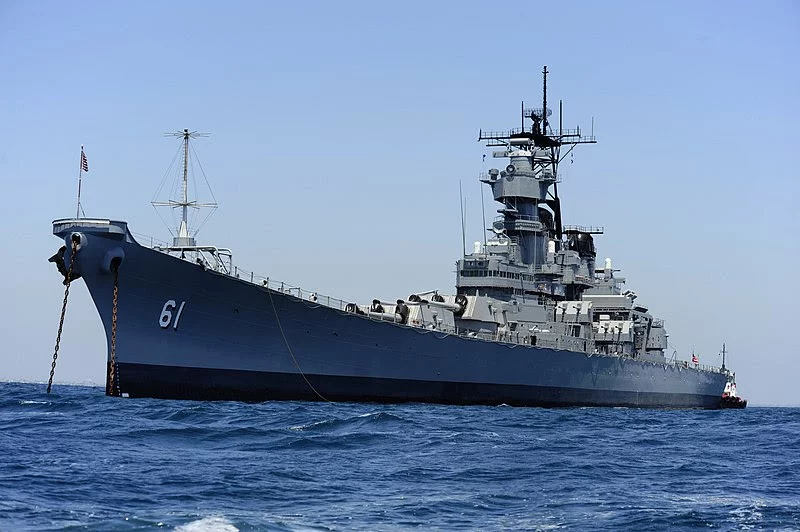
Battleship IOWA stretches 887 feet from bow to stern, roughly the length of three football fields. Those dimensions are impressive on paper, but they tell only part of the story.
The first surprise aboard is that the ship's scale is not simply horizontal. IOWA rises deck after deck above the waterline and extends deep into the hull below. The current self-guided experience takes visitors across seven decks and through more than 75 exhibits and displays, yet even that represents only part of the ship.
Moving through those spaces reveals why battleships are sometimes described as floating cities. An Iowa-class battleship has to be a weapons platform, power plant, communications center, transportation system, workplace and home at the same time.
Thousands of sailors need places to sleep, eat, and work. Food has to be prepared. Electrical power has to be generated and distributed. Water has to be managed. Machinery requires constant maintenance. Supplies and ammunition have to move throughout the ship. Orders and information have to reach sailors working hundreds of feet apart.
Every one of those requirements creates another compartment, system or job.
That interconnectedness is one of the defining characteristics of the ship. A passageway may lead to a berthing area, workshop, office, mess space, or operating station. Almost every function depends on another part of the vessel working correctly.
The farther you explore, the less IOWA feels like a single ship and the more she feels like an entire community compressed into steel.
How Do Sailors Move Around And How Do They Know Where They Are?
Moving through a ship is very different from moving through a building on land.
Visitors encounter steep ladders, raised thresholds, hatches, narrow passageways and abrupt transitions between decks. These features are not designed around modern expectations for a public building. They are part of a ship that has to conserve space, maintain watertight integrity, withstand damage and allow sailors to reach their stations efficiently.
For today's visitor, climbing a steep shipboard ladder may be part of the adventure. For sailors, it is part of everyday life. They make those same movements carrying tools and equipment, reporting to battle stations and passing shipmates heading in the opposite direction.
They also have to know exactly where they are.
Deep inside the ship, signposts are different. Sailors learn a precise language of location: forward and aft, port and starboard, deck numbers, frames and compartment designations. The Navy's compartment-numbering system - nicknamed bullseyes - identifies where a space is located and what type of space it is.
That matters because an emergency aboard a battleship leaves little time for confusion. A sailor responding to damage, a fire or another casualty needs to understand immediately where a problem has occurred.
Visitors get a small taste of that internal geography. Follow a passageway, pass through a hatch, climb a ladder, and you may emerge in a place that feels surprisingly far from where you started.
For the men who serve aboard IOWA, navigating that three-dimensional environment is simply part of knowing the ship.
What Is Daily Life Like for Battleship IOWA's Sailors?
Battleships are usually described through numbers: speed, displacement, armor, horsepower and the size of their guns. Walking through IOWA shifts the focus from those specifications to the people who make the ship work.
A bunk, locker or mess table can sometimes tell that story better than a large piece of machinery.
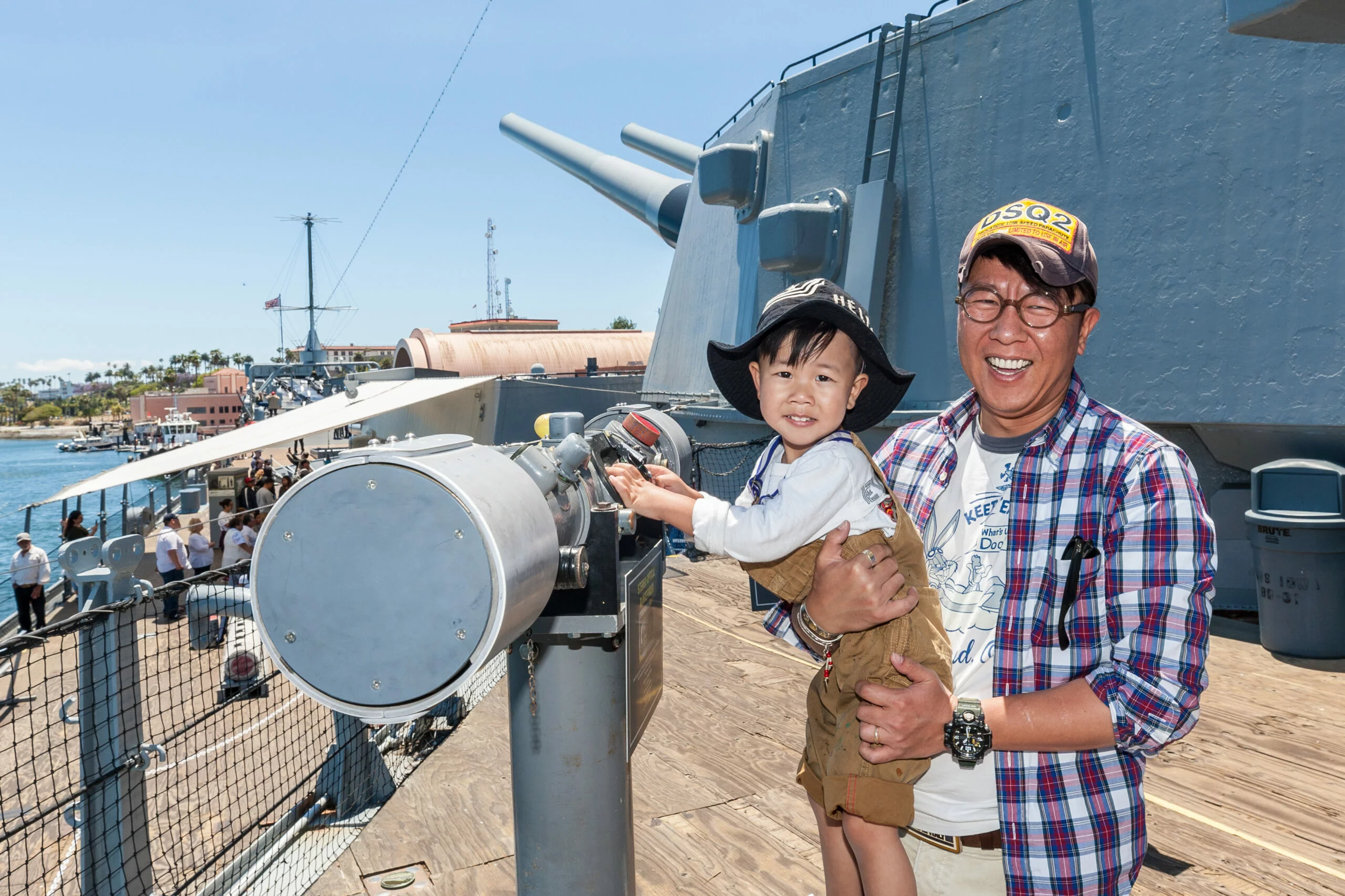
Thousands of sailors serve aboard IOWA during different periods of her career, and the ship has to accommodate them. Berthing spaces show how little personal room a sailor can expect. Privacy is limited, and daily life revolves around watches, meals, maintenance, training and the operational demands of the ship.
Work and living spaces exist almost side by side. A sailor might climb through several levels to reach a station, spend hours performing a highly specialized task, eat with his shipmates, sleep in close quarters and then begin the cycle again.
That human perspective is central to Battleship IOWA's emphasis on the "Life of a Sailor."
It also explains why some of the smallest spaces aboard can be among the most memorable. The 16-inch guns and towering superstructure communicate the power of the ship. A bunk or narrow passageway communicates what it means to live there.
Once you have stood in those spaces, the thousands of sailors who serve aboard IOWA become more than a statistic. The ship begins to look like their workplace and their home.
What Is It Like to Stand in Battleship IOWA's Command Spaces?
As visitors move higher through the ship, the experience changes again.
From the bridge and command areas, the harbor opens around you and the length of IOWA becomes easier to appreciate. Looking forward over the bow provides a very different perspective than looking up at the ship from the pier.
These spaces also show the complexity involved in operating an 887-foot ship.
Someone has to navigate. Someone has to steer. Sailors monitor the sea, communicate information and relay orders while others work far below in engineering, machinery and other spaces.
A ship of IOWA's size cannot respond simply because one person turns a wheel or issues an order. Operating the battleship requires a network of sailors and systems working together.
Standing in the spaces where those decisions are made transforms an abstract phrase such as "command and control" into something physical. The bridge is part of a system that extends from the highest levels of the ship to compartments deep inside the hull.
What Do Battleship IOWA's 16-Inch Guns Reveal About the Ship?
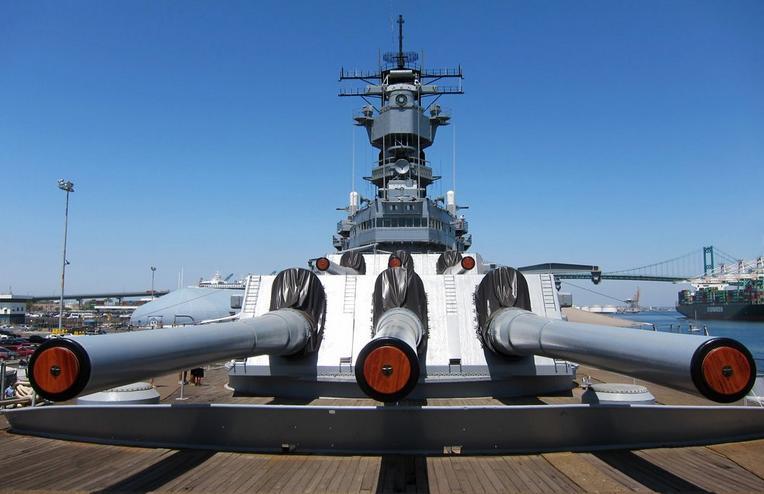
IOWA's nine 16-inch guns are among her most recognizable features. From shore, they dominate her silhouette. Standing beside them makes their scale more difficult to ignore.
But the barrels visible above deck are only the most obvious parts of a much larger weapons system.
Behind and below the turrets are machinery, ammunition-handling systems, magazines, fire-control functions and workspaces needed to make the guns operate. Battleship IOWA's specialized Gun Tour provides access to spaces associated with these systems, including a 5-inch gun house, ammunition-handling areas, battery plot and the interior of a 16-inch gun turret.
Seen in that context, a battleship gun becomes something more than a barrel pointing toward the horizon. She is the end of a complex chain involving machinery, electrical power, targeting information, communications, ammunition and sailors performing carefully coordinated jobs.
The same lesson appears throughout IOWA: much of what makes the ship work is hidden beneath the surfaces most people recognize.
What Is Inside Battleship IOWA's Engineering Spaces?
If the guns represent IOWA's visible combat power, engineering provides the power that makes nearly everything else possible.
Battleship IOWA is built with eight boilers and four steam turbines capable of producing 212,000 shaft horsepower, allowing the enormous armored ship to reach speeds approaching 35 knots.
Those numbers become more meaningful when placed beside the machinery and spaces required to produce them.
The Engineering Tour takes visitors into normally restricted areas that include boiler rooms, engine rooms, the Anchor Windlass Room, After-Steering room, and oil and water testing lab. These compartments reveal IOWA as an industrial machine as much as a ship.
Steam has to be generated and controlled, turbines have to turn, and shafts have to transfer power to the propellers. Electrical power has to reach systems throughout the vessel, while fuel, oil, water, ventilation and communications all have to function across hundreds of feet of ship.
Thousands of sailors depend on those systems. Many others spend their working lives maintaining them.
Engineering therefore tells two stories at once: the extraordinary power required to move an Iowa-class battleship and the human effort required to keep that power available.
What Does an Operating Battleship Feel Like?
A museum visit cannot completely recreate IOWA underway. Her boilers are no longer producing full power. Thousands of sailors are not moving through the passageways, and the ship is not rolling through the Pacific.
The spaces, however, provide clues.
Machinery is packed tightly together. Passageways are narrow. Hatches are heavy. Ladders connect working spaces spread across multiple decks. Add the sounds of ventilation, machinery, voices, alarms and communications, along with thousands of sailors performing their assigned tasks, and the environment is loud, crowded, disciplined and complex.
An Iowa-class battleship can function only because sailors with hundreds of specialties work as one integrated crew.
Navigation depends on engineering. Weapons depend on electrical systems, fire control and ammunition handling. Machinery depends on maintenance. The crew relies on cooks, corpsmen, supply personnel, machinists, electricians, gunners, communications specialists, officers and many others.
The ship is a system, and the crew is part of that system.
Walking through IOWA makes that relationship between people and machinery visible in a way specifications alone cannot.
Why Does Preserving the Ship Itself Matter?
There are only four Iowa-class battleships, representing the final class of battleships built by the United States. Battleship IOWA is the lead ship of the class and serves during World War II, the Korean War and the Cold War before her final decommissioning in 1990.
Preserving IOWA therefore protects something that cannot be fully recreated through photographs, documents, models or individual artifacts removed from their original surroundings.
It preserves scale. It preserves space. It preserves context.
A sailor's bunk means something different when you see where it fits inside the ship. A 16-inch gun means something different when you understand the systems hidden beneath the turret. A boiler takes on new significance when you descend through the ship to reach it. The bridge looks different when you stand there and look down the length of an 887-foot vessel.
The physical ship gives historical stories a setting.
That may be the most important difference between Battleship IOWA and a conventional museum. History is not simply displayed aboard the ship. Visitors physically move through the environment where part of that history occurs.
What Can Visitors Explore Aboard Battleship IOWA Today?
Battleship IOWA's self-guided experience allows visitors to explore seven decks and more than 75 exhibits and displays. Along the way, they encounter crew areas, command spaces, historic shipboard environments, major weapons and exhibits devoted to the Surface Navy and the Life of a Sailor.
For a first visit, the self-guided route provides a broad introduction to the ship and the people who serve aboard her.
Visitors interested in understanding how an Iowa-class battleship produces and manages its enormous power can go deeper through the Engineering Tour, which enters normally restricted machinery and operating spaces.
Those interested in how IOWA's weapons actually work can take the Gun Tour, which goes behind the visible guns into ammunition-handling, fire-control and turret spaces.
Other crew-led experiences provide additional access and stories beyond the standard visitor route.
Each experience approaches the ship differently, but together they reinforce the same point: you cannot fully understand an Iowa-class battleship from the pier.
You understand it one deck, one compartment, one system and one sailor's story at a time.
What Is It Really Like to Walk Through an Iowa-Class Battleship?
You can read that Battleship IOWA is 887 feet long. You can study photographs of her nine 16-inch guns and learn about her armor, engines, speed and combat history.
Those facts explain what the ship is capable of doing.
Walking through IOWA answers a different question. It shows what the battleship is like as a place.
You experience the steepness of the ladders, the density of the machinery, the confined living spaces and the complexity of the passageways. You begin to understand the relationship between the enormous ship visible from the pier and the hundreds of spaces and systems hidden inside it.
Most importantly, the steel begins to connect to people.
The sailors who serve aboard IOWA live and work in these spaces, operate the machinery, maintain the systems and depend on one another to make an extraordinarily complex ship function.
That is when Battleship IOWA becomes more than an enormous historic ship.
It becomes a human environment—one built, operated, maintained and lived in by generations of sailors.
And that is something you can only fully appreciate by stepping aboard.
TICKETS
Experience the Life of a Sailor.

Life of a Sailor
Our general admission experience shows how sailors live, work, and serve.
President’s Tour
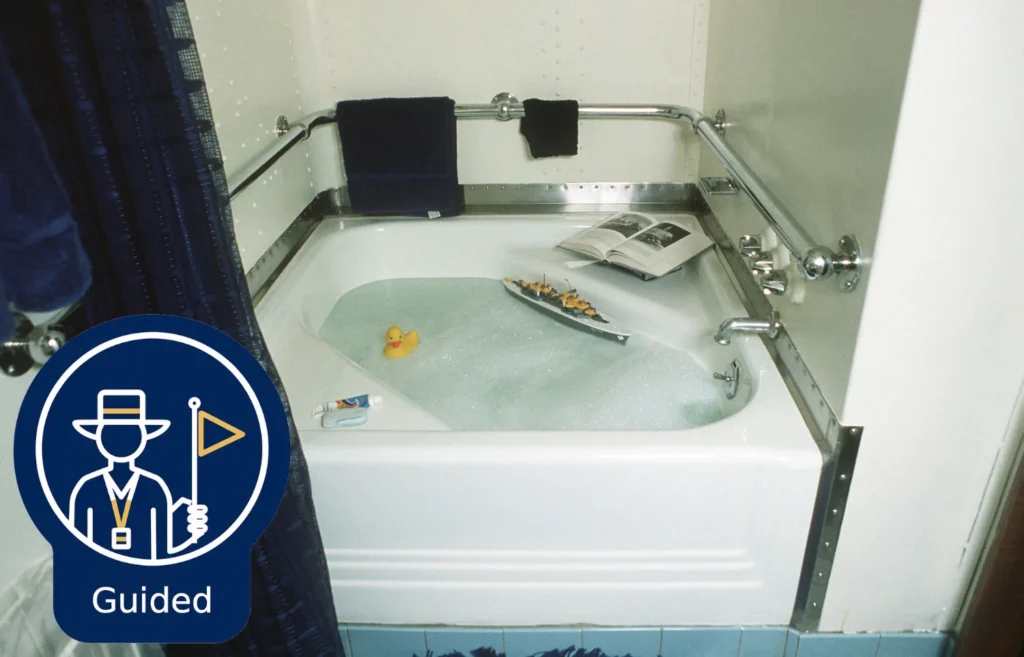
It’s November 1943, and Battleship IOWA is on a covert mission. President Franklin Delano Roosevelt and his entire staff are aboard, headed for top-secret meetings with Winston Churchill and Joseph Stalin.
Overview Experience
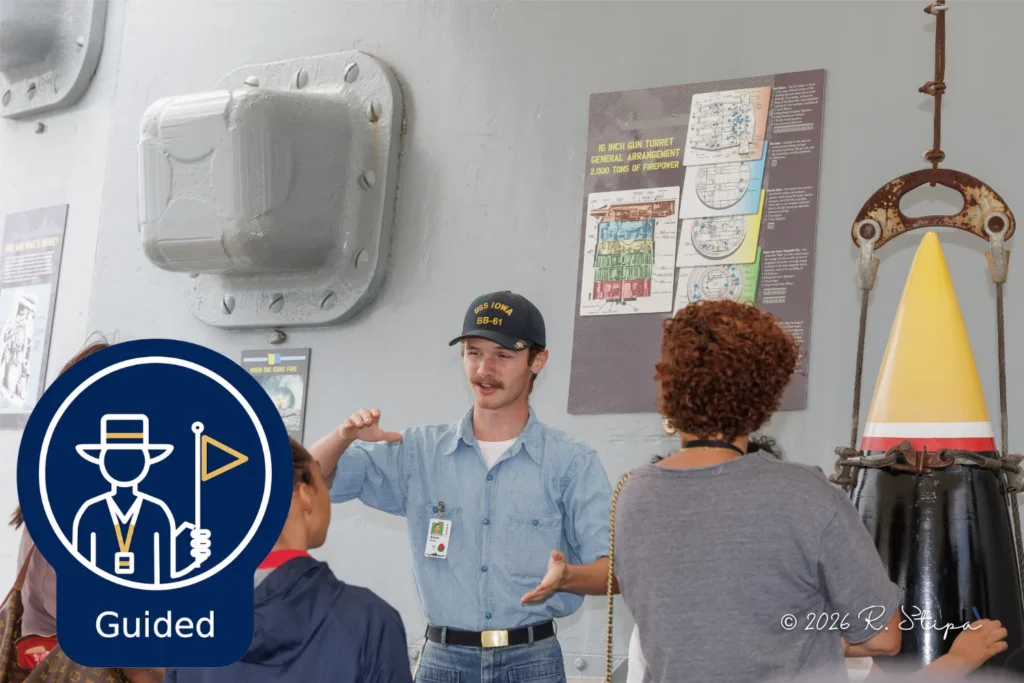
The overview experience is a 90-minute crew-led tour that brings the ship’s legacy to life through the stories of those who served, and those who preserve her today.
Gun Tour Experience
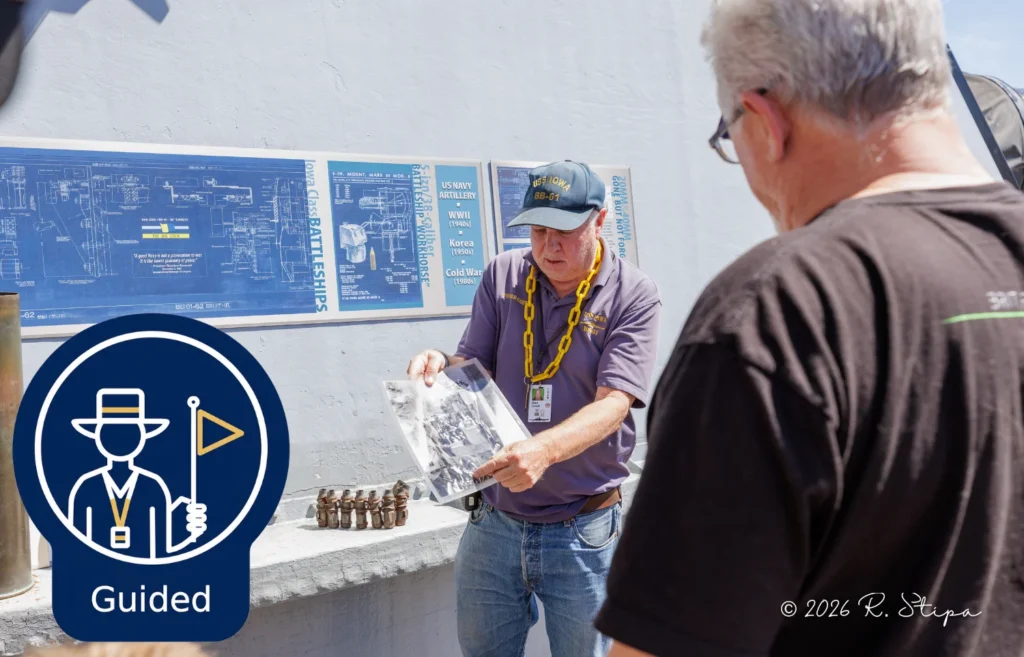
This exclusive, behind-the-scenes journey puts you inside the systems that made Battleship IOWA one of the most powerful warships ever built.
Engineering Tour Experience
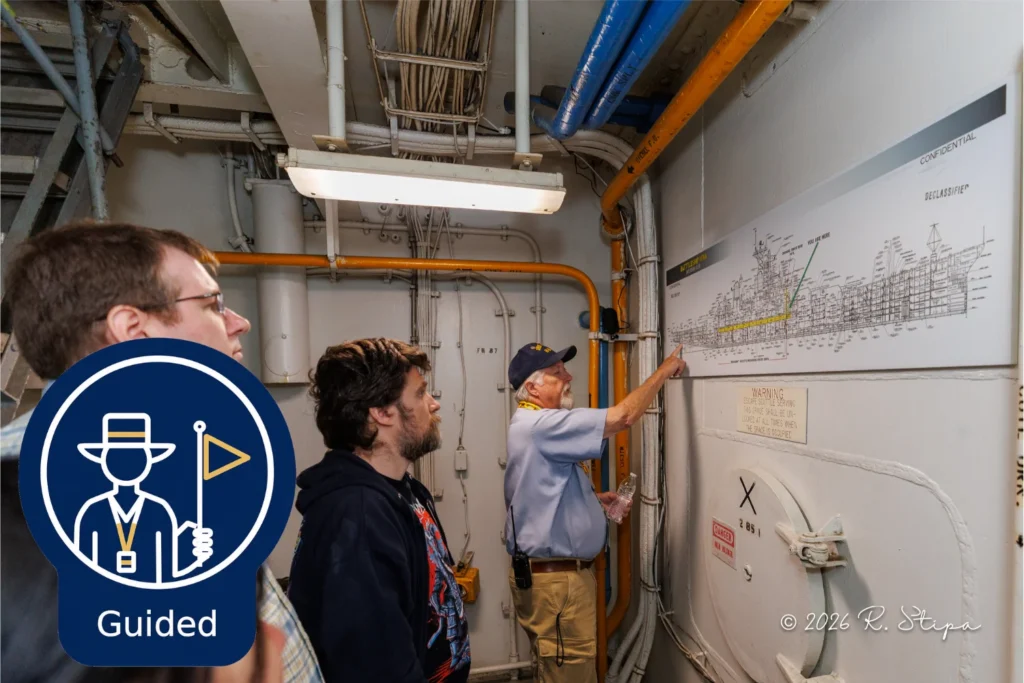
The Engineering Tour takes you below into the hidden heart of Battleship IOWA, where eight boilers and four steam turbines once generated 212,000 shaft horsepower, enough to power 650 Ford F-150 trucks, and drove IOWA to a blistering 35 knots, the fastest of any battleship ever built.
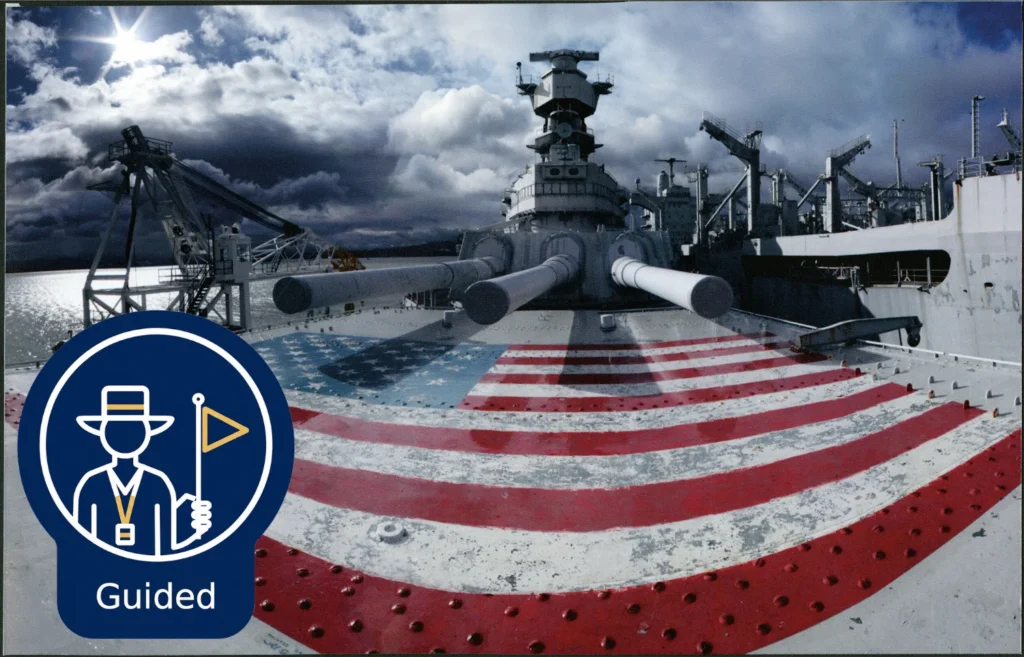
Escape the Fleet Adventure
In 2011, a small team raced against time to pull Battleship IOWA out of the Navy’s reserve “ghost fleet” — or watch her be scrapped forever. Now it’s your turn to live that mission.
Included with Admission

Life of a Sailor
Our general admission experience shows how sailors live, work, and serve.
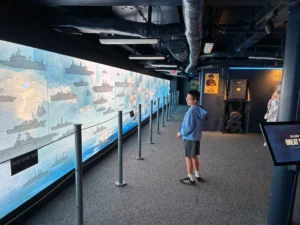
Great Ships
Explore the ships of America’s Surface Navy.
Ship Cutaway
See inside a Navy ship from bow to stern.
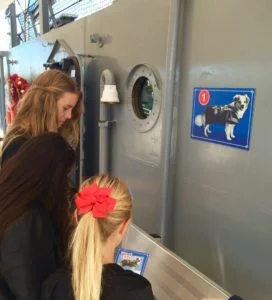
Vicky’s Scavenger Hunt
Find Vicky throughout your shipboard adventure.
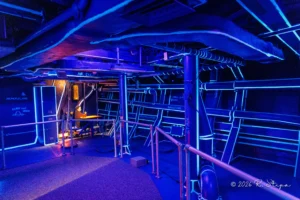
Living Blueprint
Immerse yourself in a blueprint of a Navy ship.
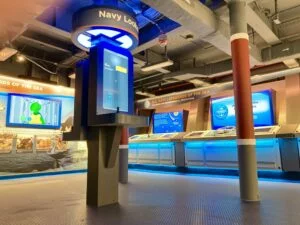
Stewards of the Sea
Explore how the Navy protects the seas.
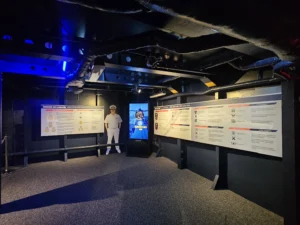
What’s My Rate?
Find the Navy career that fits you.
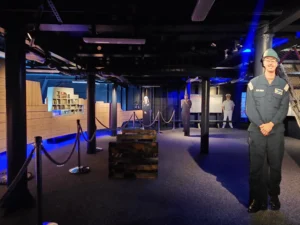
Every Sailor has a Story
Meet the people who serve.
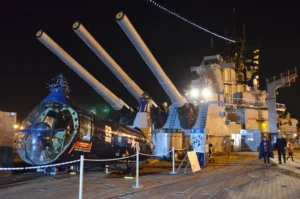
HUP-2 Retriever Helicopter
Korean War-Era HUP-2 Retriever Helicopter.
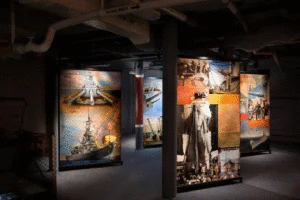
Sticks Art Gallery
Discover IOWA’s story through art.
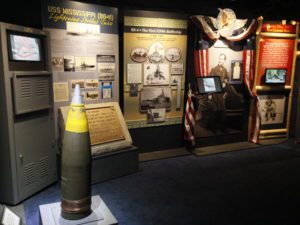
Gunnery Incidents
A dive into Navy gunnery incidents over the years.

Limited time only!
Kids Board Free
In the all-new Life of a Sailor experience, kids become sailor recruits, building their skills, following the story of a famous sailor, and joining Vicky the Dog on a scavenger hunt through Battleship IOWA.
Kids board free with a paid adult.