
New: Life of a Sailor
Become Part of the Crew Aboard Battleship IOWA
Open Thurs-Mon
10am-5pm
Last entry 4pm
PLAN YOUR VISIT
Allow 2 to 3 Hours
Location
LA Waterfront
Parking
Next Door
Highly Rated
Google 4.8/5
Life of a Sailor: From Walking the Decks to Joining the Crew
How Battleship IOWA turns a museum visit into an active journey through shipboard life.
Most visitors step aboard Battleship IOWA expecting to see a famous warship. They look at the big guns, steel rooms, narrow passageways, and huge machines. Life of a Sailor changes that visit. Instead of only following a tour route, visitors take part in the story.
A sailor does not come aboard to walk the decks. A sailor joins a crew. Sailors learn where they work, find the mess decks and their rack, meet their shipmates, and learn the rules of the sea. They stand watch, solve problems, practice skills, and find their place on a ship that needs every person to do a job.
That bond between the sailor, the ship, and the crew is the heart of Life of a Sailor. It is the signature experience aboard Battleship IOWA, home of the National Museum of the Surface Navy. Guests report aboard as recruits, receive orders, practice skills, learn how a ship works, and follow the early life of a real sailor. Near the end, they discover who that sailor became.
The change may sound simple, but it changes how visitors see the ship. A ladder is not just a steep staircase. It is how sailors move through a working vessel. A compass is not just an object in a case. It is a tool sailors use to make safe choices. A shipboard announcement is not background noise. It may carry a message with real consequences. Life of a Sailor turns observation into participation.
Why Make a Battleship Visit an Experience?
Battleship IOWA is an amazing ship, but the ship is not the whole story. She helps visitors understand the larger world of the Surface Navy. Ships have changed over time. Their weapons, engines, and technology have changed. But ships still depend on sailors who work together.
Sailors handle lines, find their way at sea, stand watch, fix equipment, fight fires, share meals, and sleep in close quarters. They depend on each other for safety and success. Steel does not run a ship. People do.
Life of a Sailor starts with people. Battleship IOWA gives visitors real places where sailors lived and worked. The National Museum of the Surface Navy tells the bigger story of sailors, ships, missions, and service. Together, they show why a single historic battleship can help visitors understand the entire Surface Navy.
About Battleship IOWA
Known as the Battleship of Presidents, Battleship IOWA is considered one of the most powerful warships ever built. Nearly three football fields long, the ship carried more than 2,700 sailors during World War II, while its nine massive 16-inch guns could fire 2,700-pound shells more than 20 miles. Today, visitors can walk the same decks where generations of sailors lived, worked, and served.
The Four-Part Visitor Journey
Life of a Sailor is included with general admission. Most guests spend two to three hours exploring seven decks, more than 75 exhibits and displays, and the stories of the people who served aboard ships. Along the way, they take part in hands-on activities, build sailor skills, follow their assigned sailor, and complete their mission. The experience has four parts.
1. Sailor Assignment: Receive Your Orders
When visitors cross the forward brow, they report aboard. They receive a sailor assignment card. The card introduces a real sailor, but does not give away the sailor’s name right away. It may start with a simple clue, such as where the sailor grew up or what they loved to do.
The card also gives the visitor orders. It lists six skills to collect, tasks to complete, ship classes linked to the sailor, and a service number used for the final reveal. Families can compare cards, and returning visitors can follow a different sailor on another visit.
2. Hone Your Skills
As visitors move through the ship, they practice six skills that sailors share. The goal is not to earn a real Navy qualification. The goal is to feel the difference between looking at a skill and trying it.
Customs and Courtesies, Seamanship, Navigation, Watchstanding, Communication, Damage Control
Some tasks ask visitors to do something. Others ask them to stop, look closely, listen, or figure something out. Together, they show the responsibility behind the everyday work of a sailor. Each task helps visitors see the responsibility behind everyday shipboard work.
3. Reveal Your Sailor’s Story
Near the end of the self-guided journey, visitors bring their clues together. In Great Ships, they look for the ship classes connected to their sailor. In What’s My Rate?, they explore Navy careers that fit their own interests. Then they use their sailor card to reveal the person they have been following.
The reveal turns a game into a human story. Visitors may first meet a farm kid, an athlete, a student, a mechanic, an immigrant, or a dreamer. Only later do they learn what that person did in the Navy. The message is simple: every sailor starts somewhere, and every person has a story.
4. Explore Deeper
The story does not have to end with the reveal. Guests can choose crew-led experiences that go deeper into special jobs, systems, and stories. Engineering explores the power and people behind the ship. Gunnery explores the teams and systems behind IOWA’s weapons. The President’s Tour follows the ship’s secret mission carrying President Franklin D. Roosevelt during World War II.
More engineering and gunnery experiences are in development. They will place visitors in the role of a sailor who must make decisions, solve problems, and help complete a mission.
How the Exhibits Build One Connected World
The current self-guided experience follows the four-part journey above. As Life of a Sailor grows, its galleries are designed to create a fuller journey—from first reporting aboard to receiving a mission assignment and joining the crew. Some of the showcases below are currently open to the public.
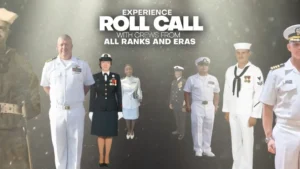
Roll Call
Every sailor begins as part of a crew. Roll Call introduces the people who serve beside you. Their stories show that sailors come from many places, backgrounds, and generations.
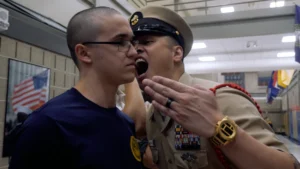
P-Days and Boot Camp
Processing Days and Boot Camp show the first steps from civilian to sailor. Visitors learn about Navy language, routines, teamwork, and the standards shared by every crew member.
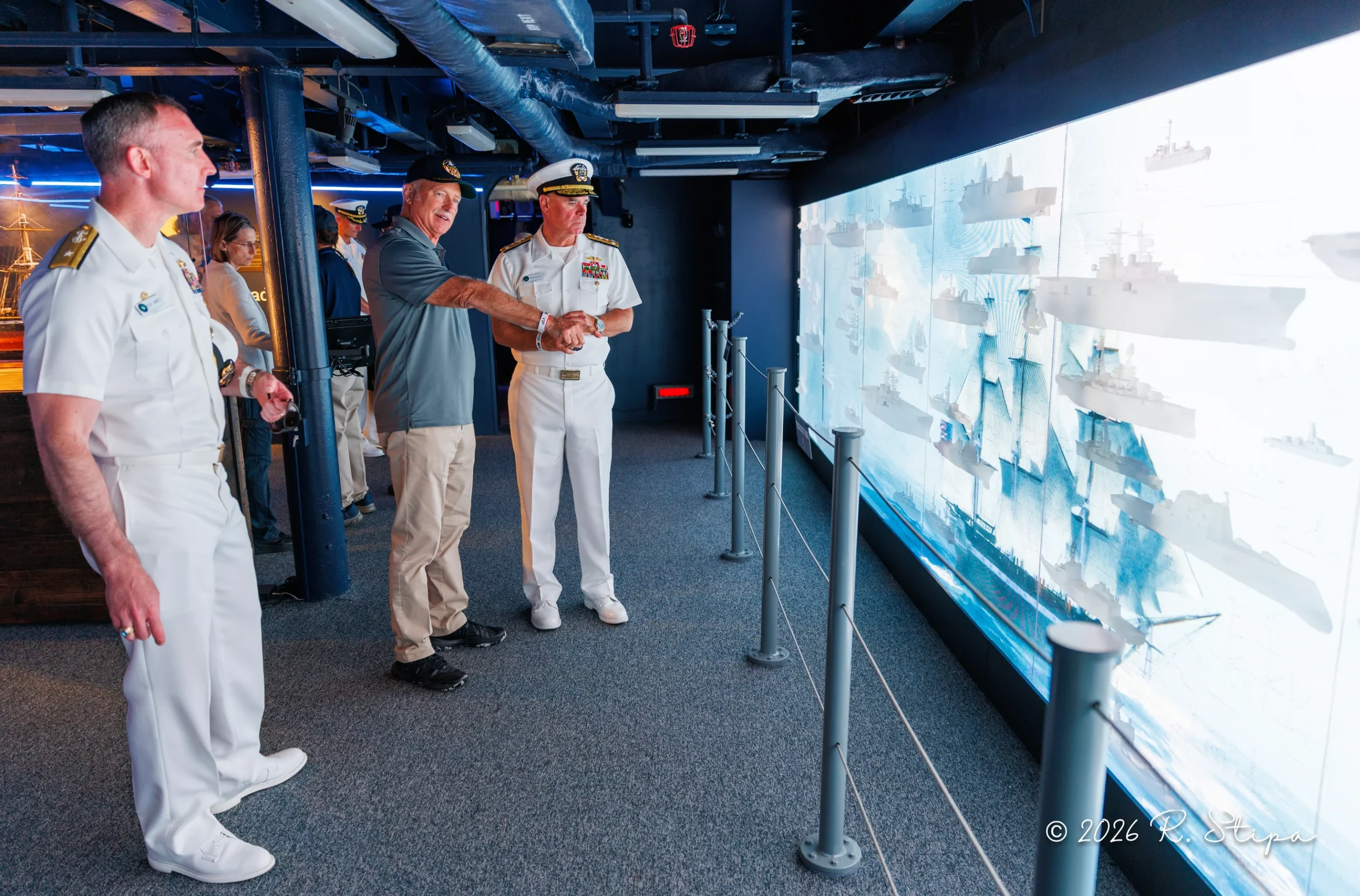
Great Ships
Great Ships is a first welcome to the fleet. More than 300 ships and many ship classes appear on a 68-foot high-definition LED wall. Visitors see battleships, destroyers, carriers, support ships, and more as workplaces, communities, and homes.
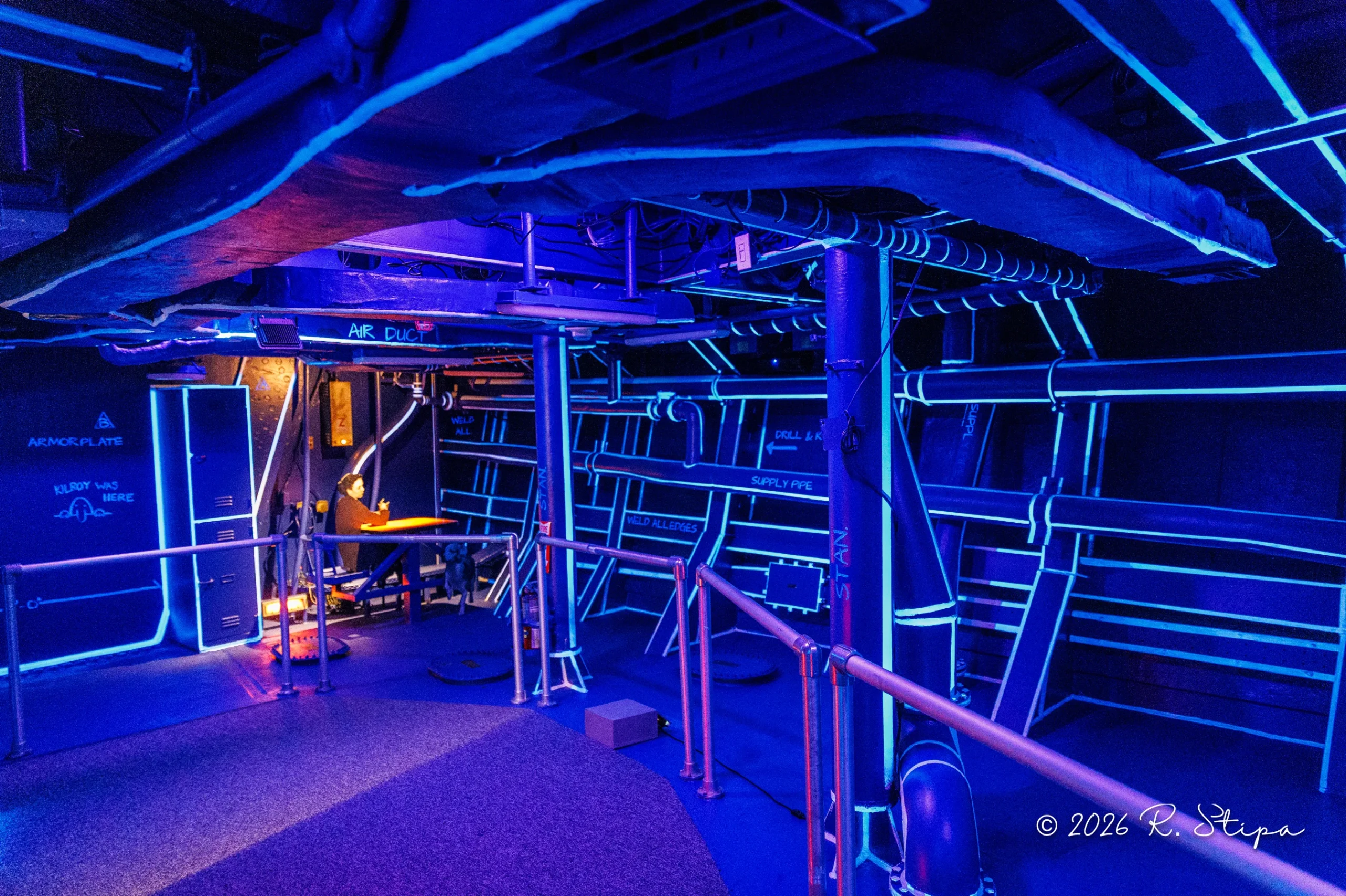
Living Blueprint
Living Blueprint helps visitors understand a ship’s decks, rooms, passageways, and systems. It makes a large ship easier to understand by showing how different elements support the mission.
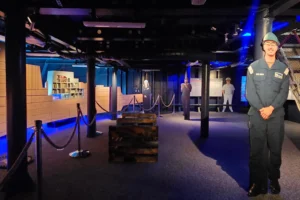
Ship Cutaway
Ship Cutaway opens up a modern destroyer from bow to stern. It shows the parts visitors cannot see from the outside and explains how sailors live, work, and serve at sea.
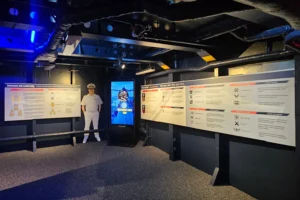
What’s My Rate?
Every sailor has a job. This gallery helps visitors explore Navy careers that match their interests, from engineering and navigation to food service, health care, logistics, and communications.

Mission Assignment
After learning about the crew, training, ship, and job, visitors receive a mission assignment. They see that missions are finished by many sailors doing connected work.
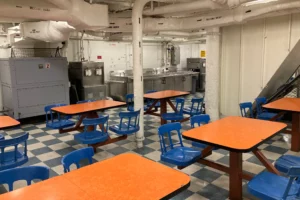
Welcome Aboard
The Mess Decks are one of the most important social spaces aboard a ship. Sailors eat, share stories, make friends, and build the trust that turns people into a crew.
The Crew Is Part of the Experience
Immersion is not only about screens and exhibits. It also comes from people. Staff members and volunteers help visitors feel like recruits and shipmates, always in a welcoming, appropriate way. They can use Navy terms, explain how a crew works, and turn a simple question into a moment of learning.
Veterans and active-duty sailors have a special role in this work. They can share how crews communicate, solve problems, look after each other, and take pride in their ship.

Vicky Gives Children Their Own Mission
Vicky the Dog gives children a mission of their own. On an all-new Vicky’s scavenger hunt, kids look closely at the ship, follow clues, and search for Vicky along the way. The hunt adds play to a big industrial space, but it supports the same ideas as the sailor card: pay attention, complete a mission, and work together.
Adults can follow a sailor while children follow Vicky. At the end, families can compare what they found and what they learned.
Adventure, Opportunity, Belonging, and Purpose
Life of a Sailor is built around four ideas: adventure, opportunity, belonging, and purpose. Visitors explore a real ship and take on a mission. They see the many jobs and career paths connected to the sea, learn how strangers become shipmates, and discover how every job supports a larger mission.
These ideas speak to many kinds of visitors. Families can take on a challenge together. Veterans may recognize the purpose and community of service. Students can connect what they learn with real careers. Others may discover new paths in maritime work, public service, skilled trades, science, and technology.
Designed for Different Kinds of Visitors
Not every visitor wants the same amount of detail. A skimmer can follow the sailor card, complete the main tasks, and enjoy the major spaces. A swimmer can spend more time with videos, objects, and exhibits. A deep diver can add a guided tour, explore special spaces, return for a program, or keep learning through the museum’s stories and career resources.
This design keeps the experience easy to enter without making it shallow. A family, a veteran, a history fan, and a student can travel the same route and still find different things that matter to them.
What is included?
Sailor Card
A real sailor’s story, six skills, tasks, ship classes, and a final reveal.
Six Core Skills
Customs and Courtesies, Seamanship, Navigation, Watchstanding, Communication, and Damage Control.
Hands-on Tasks
A real sailor’s story, six skills, tasks, ship classes, and a final reveal.
Immersive Exhibits
Great Ships, Living Blueprint, Ship Cutaway, What’s My Rate?, Stewards of the Sea, and more.
Real Ship Spaces
A self-guided route across seven decks of Battleship IOWA.
For Families
Vicky the Dog’s scavenger hunt gives children their own shipboard mission.
Go Deeper
Optional guided Engineering, Gunnery, President’s, and other special experiences.
More Than a Tour
Life of a Sailor does not replace the history of Battleship IOWA. It gives visitors a more personal way to enter that history. The guns, engines, bridge, berthing spaces, mess decks, and passageways mean more when visitors understand the people, skills, friendships, and hard work that made the ship run.
By the time visitors reveal their sailor, the main idea should be clear: ships matter because people give them life. Every sailor starts somewhere. Every sailor learns the ship and the ways of the sea. Every crew is built through shared skills, trust, and responsibility. Every mission depends on people doing their part.
Visitors may step aboard expecting to walk through a historic battleship. They leave with a better sense of what it means to report aboard, learn a job, depend on shipmates, and belong to a crew.
TICKETS
Experience the Life of a Sailor.
Life of a Sailor
Our general admission experience shows how sailors live, work, and serve.
President’s Tour
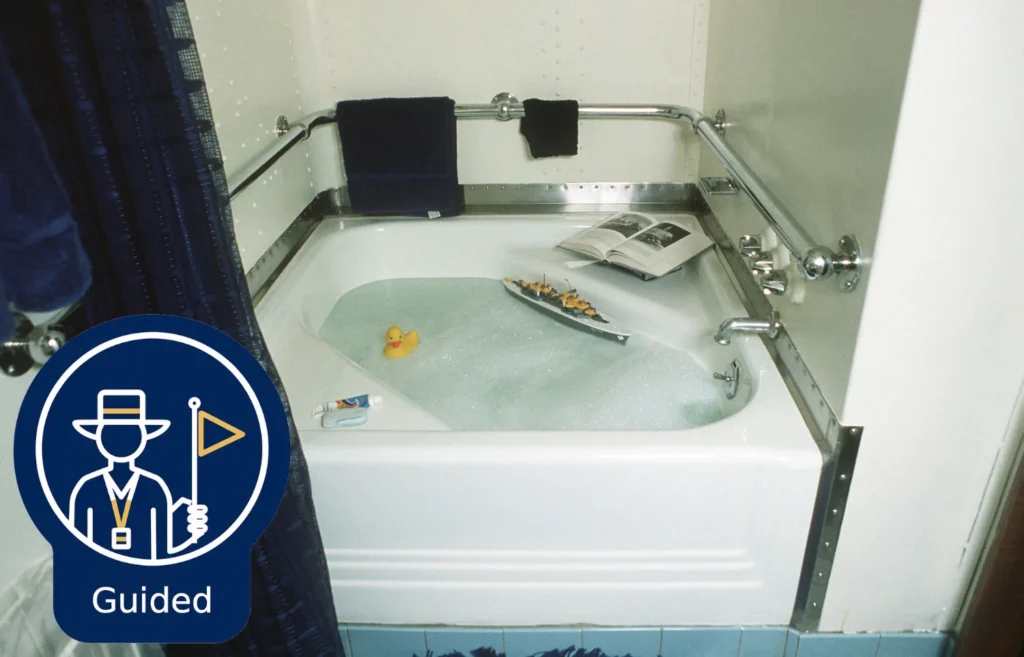
It’s November 1943, and Battleship IOWA is on a covert mission. President Franklin Delano Roosevelt and his entire staff are aboard, headed for top-secret meetings with Winston Churchill and Joseph Stalin.
Overview Experience
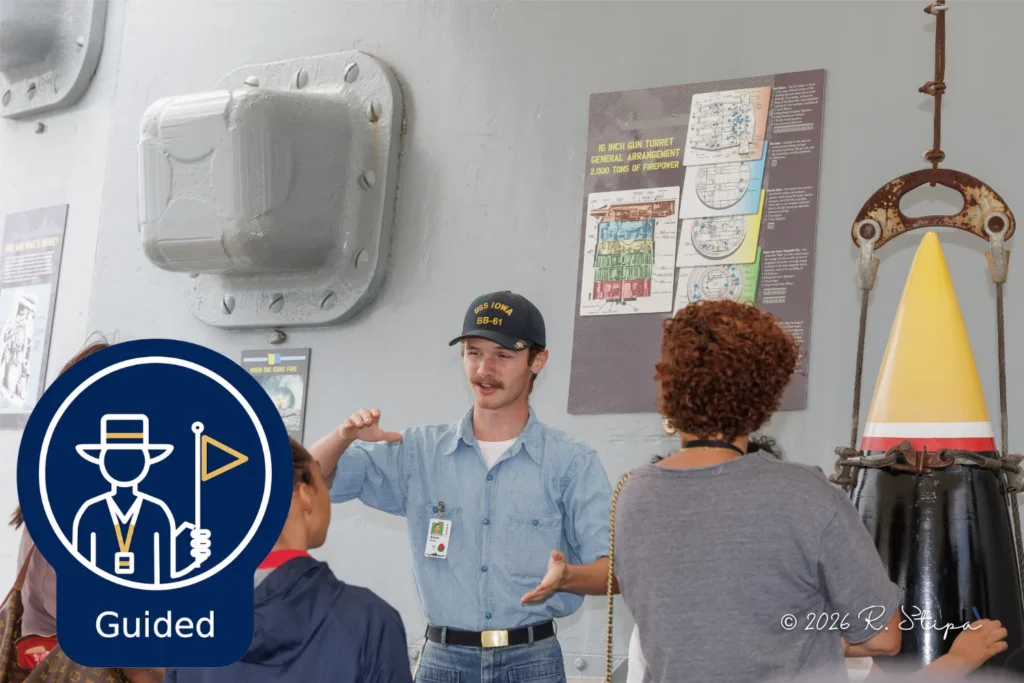
The overview experience is a 90-minute crew-led tour that brings the ship’s legacy to life through the stories of those who served, and those who preserve her today.
Gun Tour Experience
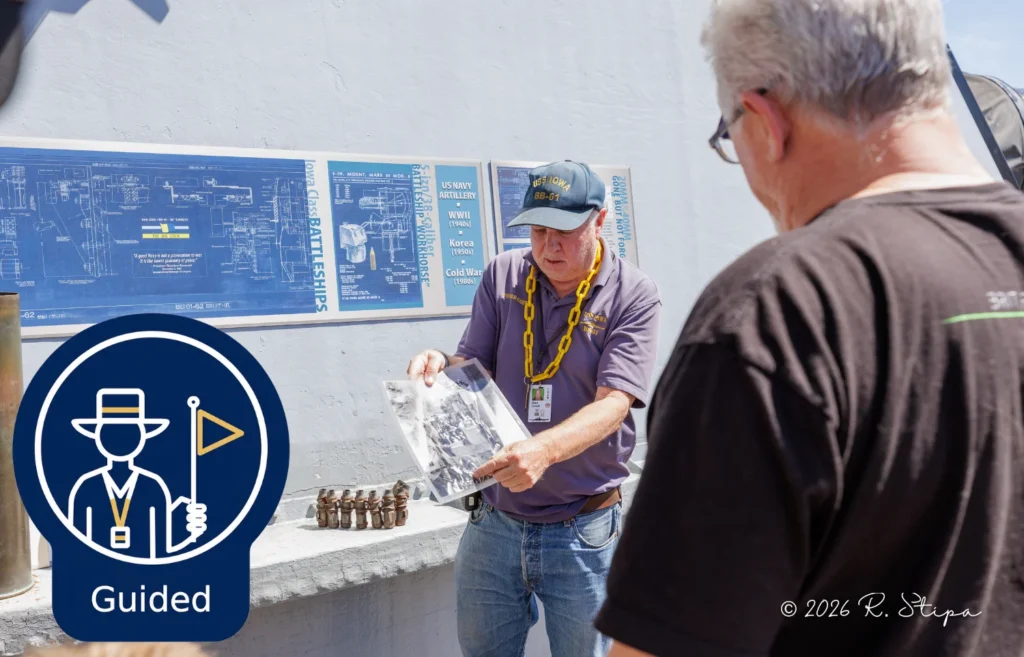
This exclusive, behind-the-scenes journey puts you inside the systems that made Battleship IOWA one of the most powerful warships ever built.
Engineering Tour Experience
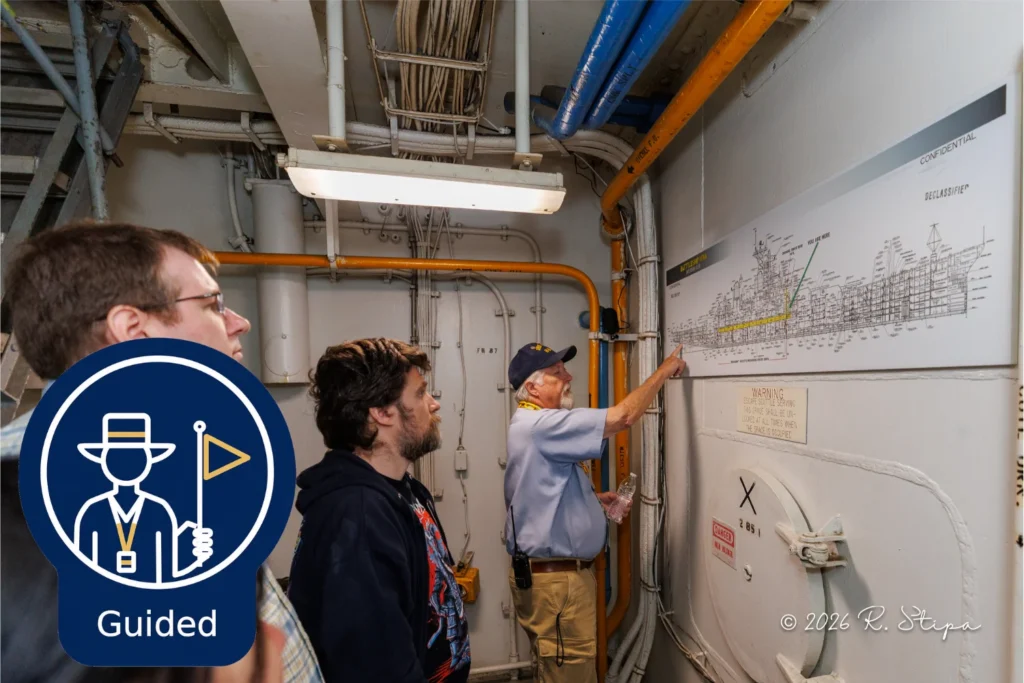
The Engineering Tour takes you below into the hidden heart of Battleship IOWA, where eight boilers and four steam turbines once generated 212,000 shaft horsepower, enough to power 650 Ford F-150 trucks, and drove IOWA to a blistering 35 knots, the fastest of any battleship ever built.
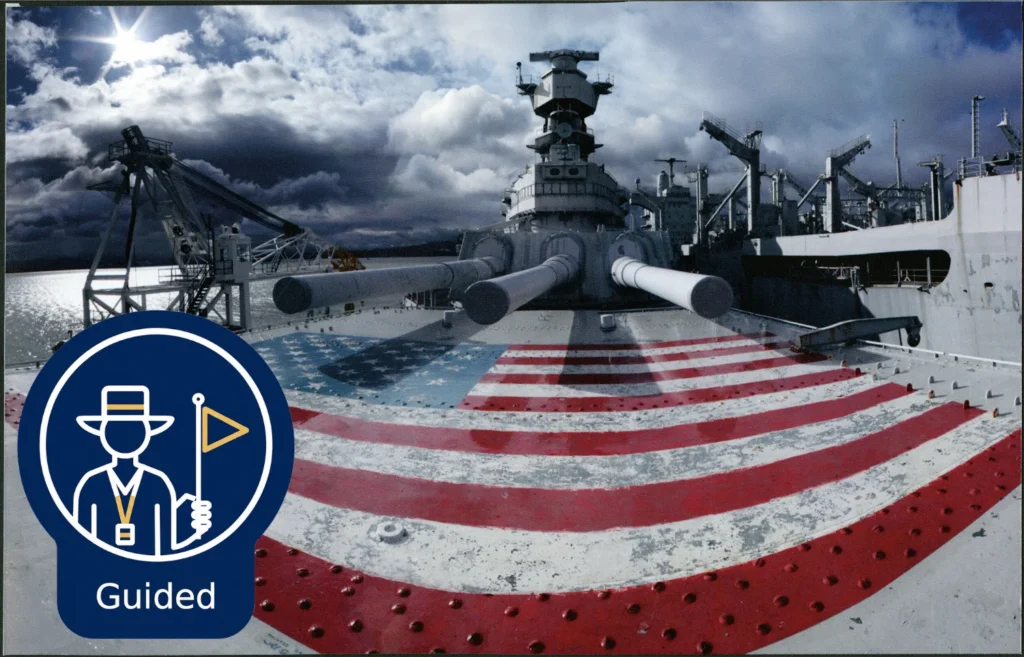
Escape the Fleet Adventure
In 2011, a small team raced against time to pull Battleship IOWA out of the Navy’s reserve “ghost fleet” — or watch her be scrapped forever. Now it’s your turn to live that mission.
Included with Admission
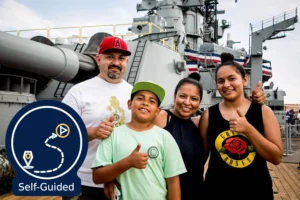
Life of a Sailor
Our general admission experience shows how sailors live, work, and serve.
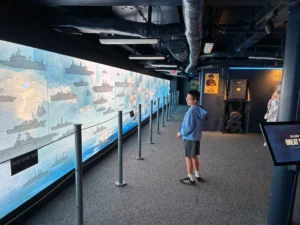
Great Ships
Explore the ships of America’s Surface Navy.
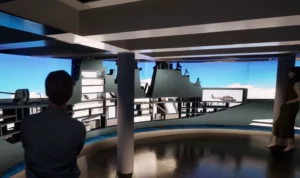
Ship Cutaway
See inside a Navy ship from bow to stern.
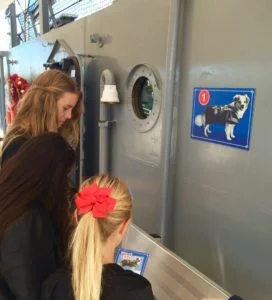
Vicky’s Scavenger Hunt
Find Vicky throughout your shipboard adventure.
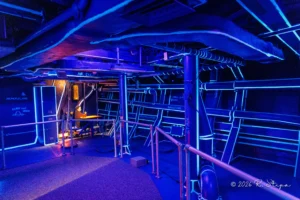
Living Blueprint
Immerse yourself in a blueprint of a Navy ship.
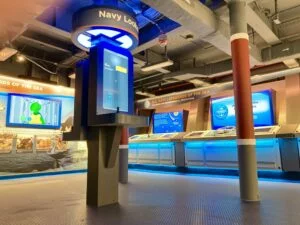
Stewards of the Sea
Explore how the Navy protects the seas.
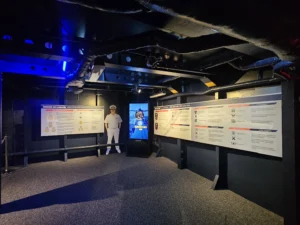
What’s My Rate?
Find the Navy career that fits you.
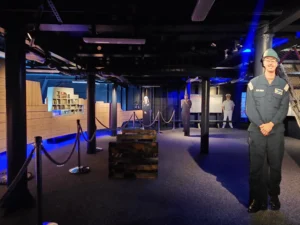
Every Sailor has a Story
Meet the people who serve.
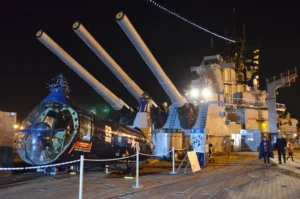
HUP-2 Retriever Helicopter
Korean War-Era HUP-2 Retriever Helicopter.
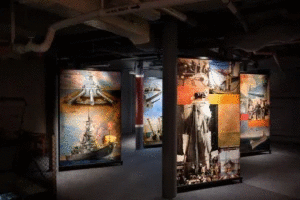
Sticks Art Gallery
Discover IOWA’s story through art.
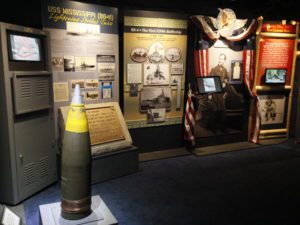
Gunnery Incidents
A dive into Navy gunnery incidents over the years.
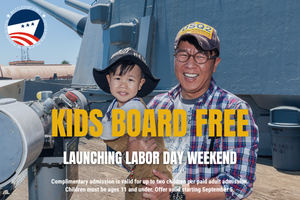
Limited time only!
Kids Board Free
In the all-new Life of a Sailor experience, kids become sailor recruits, building their skills, following the story of a famous sailor, and joining Vicky the Dog on a scavenger hunt through Battleship IOWA.
Kids board free with a paid adult.