
Explore the Ship
Battleship IOWA Deck Plans
Open Thurs-Mon
10am-5pm
Last entry 4pm
PLAN YOUR VISIT
Allow 2 to 3 Hours
Location
LA Waterfront
Parking
Next Door
Highly Rated
Google 4.8/5
Explore the Ship
Battleship IOWA is a floating city filled with historic spaces, exhibits, working systems, guided-tour areas, overnight berthing, and unique event venues. Explore the deck plans below to see how the ship comes together and discover what you can experience aboard.
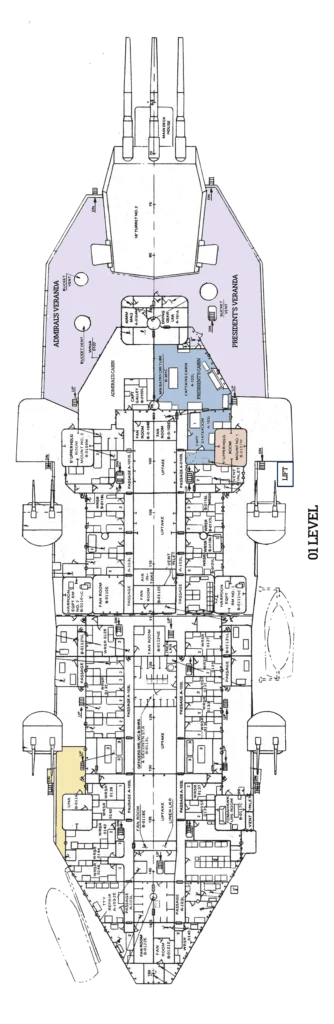
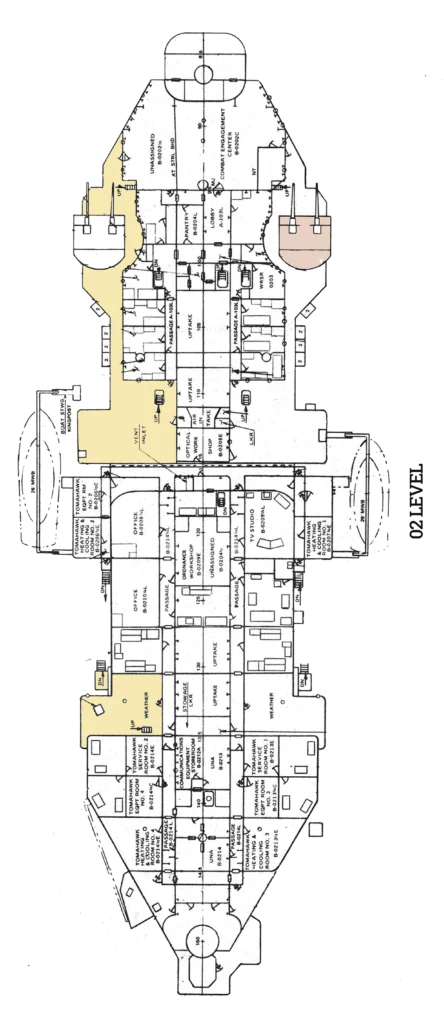
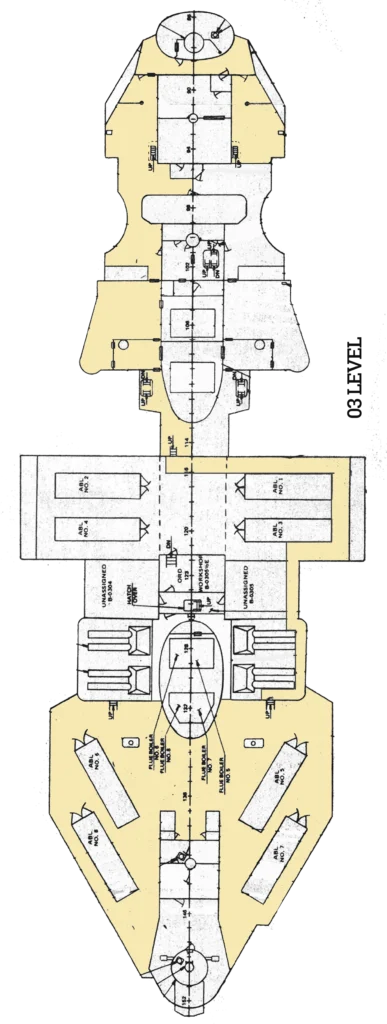
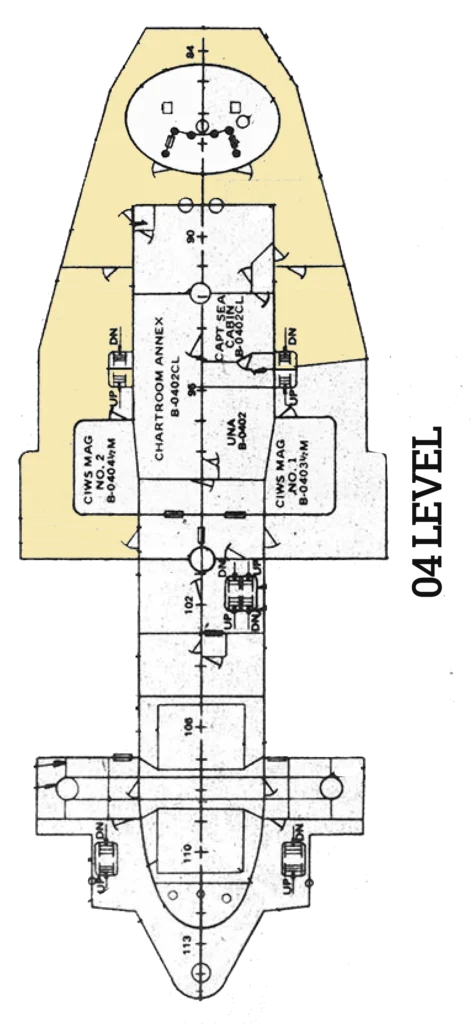
Select a deck, then choose a highlighted space to learn more. Colors identify Life of a Sailor areas, exhibits, Engineering and Gunnery career tracks, President’s Tour spaces, overnights, event areas, restrooms, and other uses.
Main Deck
2nd Deck
3rd Deck
01 Level
02 Level
03 Level
04 Level
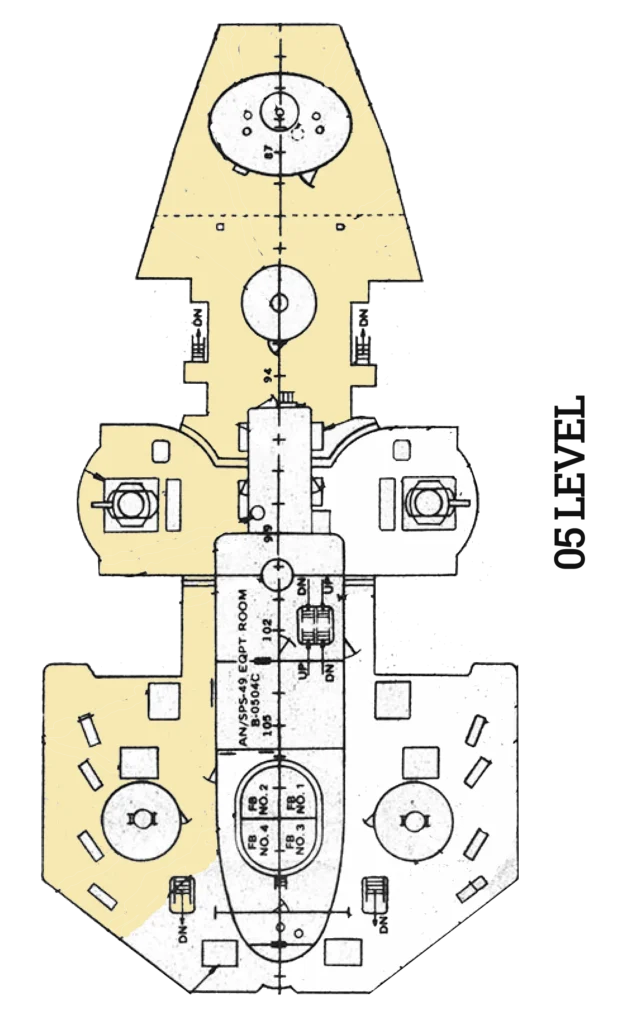
05 Level
LIFE OF A SAILOR EXPERIENCE
Quarterdeck
Join the Crew
Begin where sailors reported aboard. Watchstanders control the Quarterdeck, enforce Navy customs and salutes, and mark each sailor’s transition from shore to ship.
📸 Picture stop: Pose with the life ring.
The Bow
Scale, Seamanship, and Firepower
At the bow, see the anchors, chain, capstans, and massive forward battery. Turn aft for one of the best views of Turrets 1 and 2 and imagine the sailors who work together to operate a ship such as the IOWA.
📸 Popular picture stop: Turrets 1 and 2 behind you; sit on the large 16-inch shell.
Port Side
A Working Ship in a Working Port
Walk aft along the wooden deck and think about the constant maintenance required at sea. Across the channel, watch today’s working Port of Los Angeles, with cargo ships, tugs, cranes, cruise traffic, and security vessels.
📸 Picture stop: Harbor, cargo ship, tugboat, or cruise-ship views.
Weather Decks
Step onto the weather decks and experience the ship’s working spaces under open sky. Sailors handle lines, maintain the wooden decks, operate weapons and communications equipment, stand lookout watches, and work through sun, wind, salt spray, and rough seas.
Wardroom
Officers’ Country
Commissioned officers eat, meet, and prepare for duty in the Wardroom. Department heads use this space to lead the sailors and systems under their responsibility.
Senior Officer Staterooms
Living at Work
Step into the senior officer staterooms and see how closely work and daily life overlap aboard ships. Department heads live just steps from the sailors, equipment, and spaces they lead, reinforcing how little separation exists between duty and personal life at sea.
Enlisted Berthing
Where the Crew Slept
Enlisted sailors sleep in tightly packed racks, surrounded by watch schedules, noise, alarms, and constant activity. With nearly 2,800 people aboard during World War II, sailors had little privacy.
📸 Popular picture stop: Try a visitor-accessible bunk.
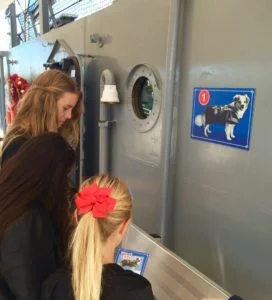
Vicky
Meet IOWA’s Famous Mascot
Victory, better known as Vicky, served as IOWA’s wartime dog mascot. Her story shows how mascots, humor, nicknames, and traditions helped sailors turn a battleship into a community.
📸 Popular picture stop: Pose with the large Vicky statue.
Vicky’s Doghouse
One More Meal Together
After seeing IOWA’s historic food-service spaces, Vicky’s Doghouse brings the story into the present. Stop for a meal and talk about what your crew discovered aboard.
Fantail
From Aviation to Gatherings
The Fantail once supported floatplanes and later helicopter operations. Today, IOWA uses it for ceremonies, programs, and private events while preserving its historic character.
📸 Picture stop: Open-deck harbor and waterfront views.
HUP-2 Retriever
Expanding What a Ship Can Do
The HUP-2 Retriever represents the early era of shipboard helicopters; aircraft like this expanded surface-ship capabilities in rescue, transport, medical evacuation, and support missions.
Aft Starboard Brow
Mission Complete
Your route ends where you return ashore. By now, IOWA is more than a giant machine; it is an iconic Surface Navy ship operated by a network of sailors, skills, systems, teamwork, and shared responsibility.
📸 Share your pictures and follow @battleshipiowa on Instagram.
EVENT SPACE
Focsle Event Space
Host receptions, celebrations, and special gatherings on IOWA’s forward weather deck, surrounded by the ship’s massive anchors, chains, and iconic gun turrets. The Focsle offers a memorable open-air setting with sweeping views of the Los Angeles waterfront.
Wardroom Event Space
Host an intimate reception, dinner, or special gathering in IOWA’s historic Wardroom, the professional and social center for the ship’s commissioned officers. The space offers a distinctive setting surrounded by authentic naval history.
Vicky’s Deck & Adjoining Decks
Host receptions, celebrations, and special gatherings on Vicky’s Deck and the adjoining open decks, with an impressive view of Turret 3 and sweeping views of the Los Angeles waterfront. These connected outdoor spaces offer a flexible setting for food and beverage service, social events, and larger group gatherings.
Fantail Event Space
Gather on IOWA’s expansive Fantail for receptions, ceremonies, dinners, and special events with open-air views of the Los Angeles waterfront. Once tied to naval aviation and ship operations, the Fantail now provides one of the ship’s most dramatic event settings.
GUNNERY TOUR
Turret 1
Explore the Main Battery
Explore deeper into IOWA’s main battery and discover what it took to operate her massive 16-inch guns. Follow the teamwork of gunners, fire-control crews, ammunition handlers, electricians, and technicians who turn one of the ship’s most powerful weapons into a coordinated system.
EXHIBITS
HUP-2 Retriever
Expanding What a Ship Can Do
The HUP-2 Retriever represents the early era of shipboard helicopters; aircraft like this expanded surface-ship capabilities in rescue, transport, medical evacuation, and support missions.
OVERNIGHT BERTHING
Camp Battleship Overnight Berthing
Sleep Aboard Battleship IOWA
Spend the night aboard Battleship IOWA and experience life aboard ship after hours. The program can accommodate approximately 200 participants using the ship’s original sailor bunks, creating an immersive setting for youth groups, families, and organized overnights.
RESTROOMS
Restrooms
Original Shipboard Spaces
Use IOWA’s original shipboard restroom spaces, now adapted to provide both men’s and women’s facilities for today’s visitors. These spaces preserve the ship's historic character while supporting modern guest needs.
LIFE OF A SAILOR EXPERIENCE
Second-Deck Berthing
A Floating City
More berthing helps reveal IOWA as a floating city. Thousands of sailors had to sleep, eat, wash, work, and relax inside the same steel hull.
Command Master Chief Bobby Scott
Leadership from the Deckplates
This stateroom tells the story of Command Master Chief Bobby Scott, IOWA’s senior enlisted leader. The command master chief connected the commanding officer with the crew’s needs, morale, and readiness.
The IOWA Crew
A Ship Is Her People
IOWA served through World War II, Korea, and the Cold War. Different generations brought different missions and technology, but the crew’s skill, culture, and relationships gave the ship her identity.
Hobby Area, Vending, and the Geedunk
The Human Pause
Sailors need breaks as much as they need work. Snacks, hobbies, and informal gathering spaces help crews relax, build friendships, and maintain morale between watches.
Trash Incinerator
The Hidden Work of a Ship
A crew of thousands creates waste every day. Sanitation, cleaning, disposal, ventilation, and other support jobs kept IOWA healthy and operational.
Bakery
The Smell of Home
Ship's bakers produce bread, rolls, desserts, and other staples for thousands of sailors. Their work turns food into both a major logistics operation and an important source of comfort and morale.
Marine Detachment
Security and Ceremony
IOWA carried a Marine Detachment that supported security, ceremonial duties, and shipboard defense. Sailors and Marines shared the same ship while bringing different traditions and responsibilities aboard.
Galley and Vegetable Prep
Feeding the Ship
The enlisted galley works like an industrial kitchen, producing thousands of meals. Sailors prepare ingredients, cook, serve, clean, and start the process again several times a day.
Forward Mess Deck
The Crew’s Dining Room
The mess deck brings sailors from across the ship together. Meals create a familiar daily rhythm between watches, drills, maintenance, and duty.
Exhibits
Continue the Story
The Life of a Sailor experience now transitions into a broader collection of exhibits that explore the Surface Navy's history, naval technology, traditions, people, and service. As you continue, look for the connections between the ship, the sailors who served aboard, and the changing story of the Surface Navy.
Ship’s Store
Help Carry the Story Forward
The Ship’s Store marks the transition back to the present. Your purchases, visits, donations, memberships, and volunteer support help the nonprofit Pacific Battleship Center preserve IOWA and grow the National Museum of the Surface Navy.
GUNNERY TOUR
Transit Spaces
Look Beyond the Tour Route
As you move between Engineering and Gunnery Tour stops, take time to notice the ship around you. Look for sailor art, handwritten markings, equipment, passageway details, and the small traces of everyday life that reveal how sailors make ships their workplace and home.
ENGINEERING TOUR
Anchor Windlass
Explore the massive machinery sailors use to raise and lower anchors. This stop shows how seamanship, mechanical power, and coordinated teamwork come together to handle enormous loads.
Machine Shop
(Limited Availability)
When operations allow access, step into the Machine Shop and see where sailors fabricate and repair parts aboard ship. Lathes, tools, and skilled machinists solve mechanical problems far from shore.
Transit Spaces
Look Beyond the Tour Route
As you move between Engineering and Gunnery Tour stops, take time to notice the ship around you. Look for sailor art, handwritten markings, equipment, passageway details, and the small traces of everyday life that reveal how sailors made the ship their workplace and home.
EXHIBITS
Gunnery Incident
Remembering Turret 2
This exhibit explores the April 19, 1989 Turret 2 tragedy, when an explosion killed 47 sailors. Some material may not suit minors, and families may choose to continue around it.
Battleships and Naval History
Technology Never Stops
Travel from the Age of Sail to the missile age and see how naval warfare evolved across generations. The exhibits show how ships, weapons, sensors, tactics, and sailors' skills changed over time, while every era still depended on trained crews adapting to new technology.
IOWA’s Bell
The Ship’s Voice
Ship’s bells marked time, supported ceremonies, and became part of a vessel’s identity. IOWA’s bell connects generations of sailors with the museum visitors who walk her decks today.
Navy Stewards of the Sea
Responsibility Beyond the Ship
Modern Navy operations also demand environmental responsibility. This exhibit connects historic shipboard systems with today’s stewardship of waste, fuel, hazardous materials, and the maritime environment.
Ship’s Store
Help Carry the Story Forward
The Ship’s Store marks the transition back to the present. Your purchases, visits, donations, memberships, and volunteer support help the nonprofit Pacific Battleship Center preserve IOWA and grow the National Museum of the Surface Navy.
EVENTS SPACE
Crew’s Mess
Host meals, receptions, meetings, and group gatherings in the Crew’s Mess, a central part of daily life aboard a Navy ship. This historic space offers an authentic shipboard setting where guests can gather much as sailors do between watches and duties.
CPO Mess
The CPO Mess offers a more intimate event setting within the historic world of chief petty officers. Ideal for smaller receptions, dinners, and private gatherings, the space reflects the leadership, tradition, and camaraderie long associated with the Navy’s Chiefs’ Mess.
CPO Lounge
The CPO Lounge gives chief petty officers a place to gather, plan, mentor, and decompress between duties. It reflects the strong traditions, leadership, and camaraderie that made Navy chiefs an important link between officers and the enlisted crew.
LIFE OF A SAILOR EXPERIENCE
Tailor Shop
The Uniform Is Work Too
Uniforms carried rank, rating, and identity, but sailors also had to maintain them. The tailor shop handled alterations, buttons, seams, insignia, and other everyday crew needs.
The Brig
Standards and Accountability
The Navy used the brig as IOWA’s shipboard jail. In a crowded military community, rules, lawful orders, and accountability protected safety, discipline, and teamwork.
Laundry
Thousands of Uniforms Every Week
Laundry crews turned an everyday chore into a shipwide logistics job. They collected, washed, dried, pressed, sorted, and returned uniforms, towels, and linens for thousands of sailors.
Print Shop
Information Before the Digital Age
Before email and digital displays, IOWA still needed forms, menus, notices, schedules, and newsletters. The print shop helped information move through the ship.
GUNNERY
Broadway
Enter Broadway, IOWA’s long armored passageway, and see how sailors move between critical spaces deep inside the ship. On the Gunnery Tour, Broadway connects you to the hidden systems and compartments that supported the weapons above.
Aft Plot
Where the Firing Solution Comes Together
Step into Aft Plot and explore how sailors turn target information into firing solutions for IOWA’s guns. This space reveals the calculations, instruments, communication, and teamwork required before a gun crew can engage a target.
5-Inch Magazine
Where the Ammunition Began
Descend into the 5-inch Magazine and see where sailors store ammunition deep inside the protected ship. Discover how magazine crews safely handle projectiles and powder before sending them upward toward the gun mount.
EXHIBITS
Sailor Roll Call
Every Sailor Has a Story
Roll Call begins with the individual sailor. Before joining a crew, every sailor had a family, hometown, interests, ambitions, and a personal reason for serving.
Processing Days and Boot Camp
Becoming Part of a Crew
Recruits learn Navy language, customs, standards, and teamwork. Here, you encounter six shared skills: Customs and Courtesies, Seamanship, Navigation, Watchstanding, Communication, and Damage Control.
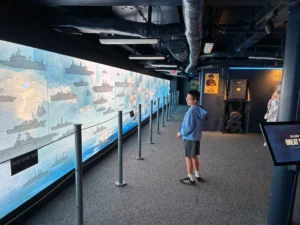
Great Ships
Welcome to the Fleet
Great Ships expands the story beyond IOWA with a 68-foot display featuring more than 300 ships. Different ships perform different missions, but each depends on a trained crew.
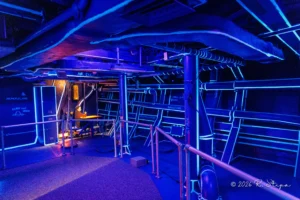
Living Blueprint
Learn the Shape of a Ship
Living Blueprint helps make sense of decks, frames, passageways, compartments, and bulkheads. It shows how naval architects balance mission, protection, access, weight, and crew needs.
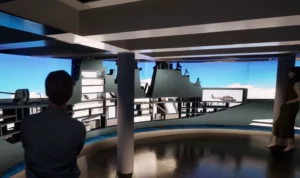
Ship Cutaway
See the Hidden City
The cutaway reveals machinery, living spaces, weapons, electronics, food service, storage, and damage-control systems inside a surface ship. The tour shows visitors only part of the whole vessel.
Mission Assignment
Find Your Place in the Crew
Different Navy jobs require different skills and interests. Mission Assignment asks where you might fit; machinery, navigation, communications, logistics, technology, leadership, or another part of the crew.
Model Art Room
Ships Become Memory
Models, artwork, photographs, and stories preserve ships long after active service ends. They keep memories of shipmates, deployments, and years at sea alive.
ENGINEERING
Broadway
The Ship’s Main Passageway
Walk through Broadway, one of IOWA’s major interior passageways, and see how sailors move people, equipment, and information through the ship. It conveys the scale and complexity hidden behind the battleship’s armor.
Engine Room 4
Turning Steam Into Power
Go deep into Engine Room 4 and see where IOWA converts steam into the power that turned her propeller shafts. The space reveals the machinery, heat, noise, and technical skill required to drive a battleship across the ocean.
Boiler Room 4
Making the Steam
Step into Boiler Room 4, where sailors generate the high-pressure steam that powered IOWA’s engines. This stop shows the demanding work behind the ship’s speed, electrical power, and daily operations.
Oil Lab
Keeping the Machinery Healthy
Visit the Oil Lab and discover how sailors test and monitor the lubricants and fuels that keep IOWA’s machinery running. Small samples and careful analysis help engineers detect problems before they become major failures.
Damage Control Central
Protecting the Ship
Explore the nerve center for damage control, where sailors coordinate responses to fire, flooding, battle damage, and other emergencies. DC Central shows how training, communication, and fast decisions help keep the ship afloat and in the fight.
LIFE OF A SAILOR EXPERIENCE
Turret 2
In Memoriam
Turret 2 reveals the immense scale of IOWA’s main battery. It also asks us to remember the 47 sailors who died in the April 19, 1989 explosion.
President’s & Admiral’s Veranda
A Front-Row Seat to History
In 1943, President Franklin D. Roosevelt watched naval exercises from this area when USS William D. Porter accidentally fired a live torpedo toward IOWA. Today, these verandas offer a distinctive waterfront setting for private receptions and exclusive events.
President / Captain In-Port Cabin
Command Meets History
Look into the Captain’s In-Port Cabin, which connects IOWA to President Franklin D. Roosevelt’s 1943 voyage. Only the President’s Tour enters the cabin and includes the historic bathtub the crew installed for Roosevelt.
5-Inch Gun Mount
A Team Behind the Gun
The twin 5-inch/38-caliber mount could attack aircraft, ships, and shore targets. Sailors in magazines, handling rooms, hoists, fire control, and the gun mount worked together to load, aim, and fire it.
GUNNERY TOUR
5-Inch Upper Handling Room
Feeding the Gun
Explore the Upper Handling Room and follow the ammunition’s journey toward the 5-inch gun house. Sailors here receive, prepare, and move projectiles and powder through the system while coordinating closely with the crews above and below.
PRESIDENT'S TOUR
President’s Tour
Walk in the Footsteps of FDR
Step inside spaces connected to President Franklin D. Roosevelt’s secret 1943 voyage aboard IOWA, including the President / Captain’s Cabin and its specially installed bathtub. This guided experience brings presidential history, wartime diplomacy, and life aboard the “Battleship of Presidents” to life.
PRIVATE EVENT SPACE
President’s & Admiral’s Veranda
A Front-Row Seat to History
In 1943, President Franklin D. Roosevelt watched naval exercises from this area when USS William D. Porter accidentally fired a live torpedo toward IOWA. Today, these verandas offer a distinctive waterfront setting for private receptions and exclusive events.
LIFE OF A SAILOR EXPERIENCE
5-Inch Gun Mount
A Team Behind the Gun
The twin 5-inch/38-caliber mount could attack aircraft, ships, and shore targets. Sailors in magazines, handling rooms, hoists, fire control, and the gun mount worked together to load, aim, and fire it.
Weather Decks
Step onto weather decks and experience the ship’s working spaces under open sky. Sailors handle lines, maintain the wooden decks, operate weapons and communications equipment, stand lookout watches, and work through sun, wind, salt spray, and rough seas.
GUNNERY
5-Inch Gun House
Inside the Weapon
Step into the 5-inch gun house and see where the gun crew loaded, aimed, and operated one of IOWA’s most versatile weapons. The compact space shows how training, communication, and precise teamwork allowed the crew to keep the guns firing.
LIFE OF A SAILOR EXPERIENCE
Signal Deck
Voices Without Sound
Sailors use signal flags, semaphore, and flashing-light Morse code to communicate visually. They could send IOWA’s four-letter call sign, NEPM, across the fleet.
Signal Shelter
The Team Behind the Signal
The Signal Shelter supports the sailors working outside on the Signal Deck. It shows how a larger watch team, clear procedures, and trust supported every visible task aboard ship.
Admiral’s / Flag Bridge
Running a Fleet
Naval designers built IOWA to serve as a flagship. From the Flag Bridge, an embarked admiral and staff can coordinate other ships while the ship's captain and bridge team operate the ship.
Weather Decks
Step onto IOWA’s weather decks and experience the ship’s working spaces under open sky. Sailors handle lines, maintain the wooden decks, operate weapons and communications equipment, stand lookout watches, and work through sun, wind, salt spray, and rough seas.
LIFE OF A SAILOR EXPERIENCE
Navigation Bridge
Where Orders Become Movement
From the Navigation Bridge, sailors steer, plot position, watch the horizon, and maneuver a nearly 900-foot battleship. At roughly 33 knots, they relied on teamwork and constant awareness.
📸 Popular picture stop: Sit in the bridge chair.
LIFE OF A SAILOR EXPERIENCE
05 Level
See the Ship as a System
High in the superstructure, fire-control, optics, radar, communications, and command systems come together. Sailors turn that information into coordinated action, giving the ship her combat power.
Close-In Weapon System (CIWS)
Last Line of Defense
Look for IOWA’s Phalanx Close-In Weapon System, designed to defend the ship against fast-moving threats at close range. CIWS combines radar, tracking, and a rapid-fire gun into an automated defensive system that reflects how IOWA adapted to modern missile-era warfare.
Chaff and Decoy Launchers
Cold War Defense
By the 1980s, IOWA faced anti-ship missiles as well as guns and aircraft. SRBOC launchers fire chaff and other decoys to confuse incoming missile seekers.
Tomahawk Battery
IOWA Enters the Missile Age
When IOWA returned to service in 1984, eight armored box launchers gave her 32 Tomahawk cruise missiles. The modernization combined her World War II-era 16-inch guns with Cold War missile technology. The U.S. Navy still uses modern Tomahawk variants today, linking IOWA’s 1980s weapons systems directly to the modern fleet.
Harpoon Missiles
Fighting Beyond the Horizon
IOWA carries sixteen Harpoon anti-ship missiles, giving the battleship the ability to strike ships beyond visual range. The U.S. Navy still uses modern Harpoon variants today, connecting IOWA’s Cold War modernization to the weapons and missions of the current fleet.
Aft Tomahawk Battery and 5-Inch Mounts
Old and New Firepower Together
See two generations of naval weapons side by side. IOWA’s 5-inch guns reflect her World War II-era design, while the Tomahawk launchers show how the Navy modernized the battleship for Cold War missions. Together, they reveal how IOWA combined traditional naval gunnery with modern missile technology.



Additional Information
Inforgraphic
Tour Brochures
- 2012 Tour Alpha
- 2016
- 2022
TICKETS
Experience the Life of a Sailor.
Life of a Sailor
Our general admission experience shows how sailors live, work, and serve.
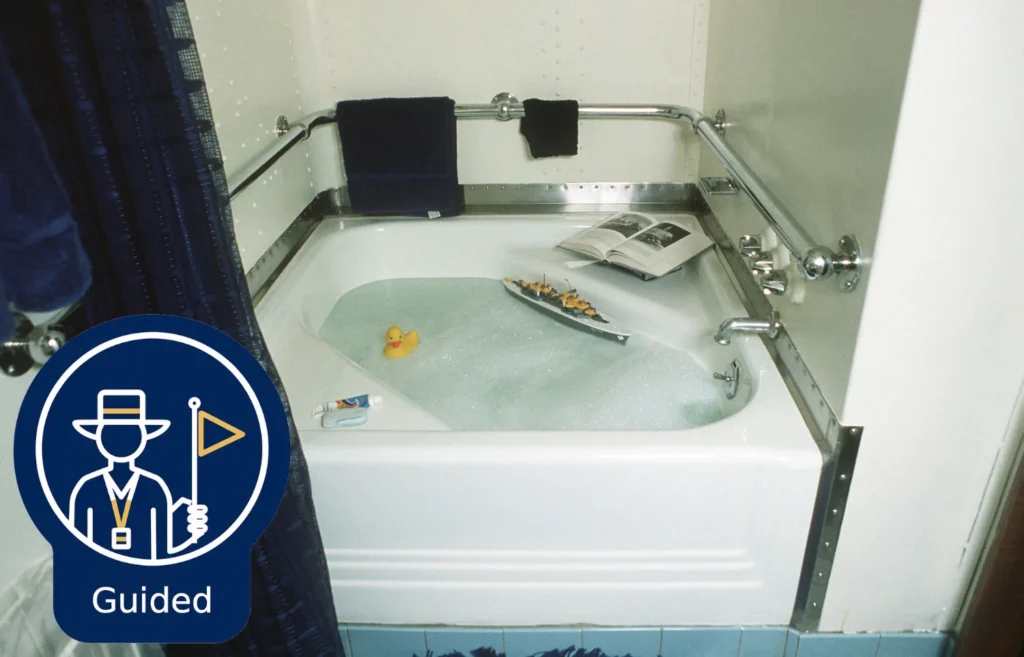
President’s Tour
It's November 1943, and Battleship IOWA is on a covert mission. President Franklin Delano Roosevelt and his entire staff are aboard, headed for top-secret […]
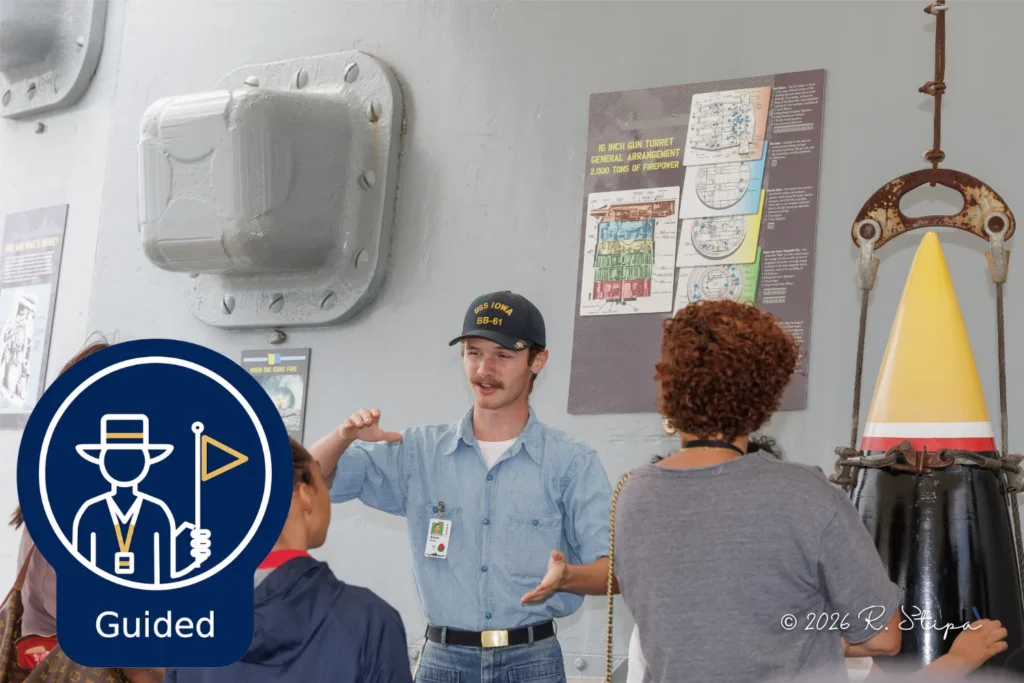
Overview Experience
The overview experience is a 90-minute crew-led tour that brings the ship's legacy to life through the stories of those who served, and those […]
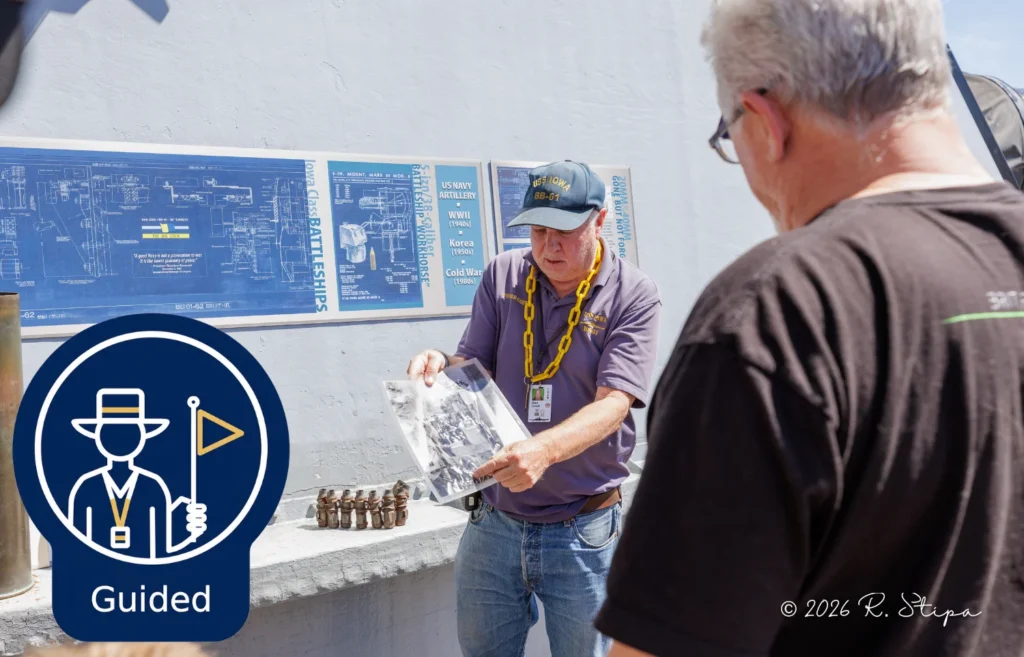
Gun Tour Experience
This exclusive, behind-the-scenes journey puts you inside the systems that made Battleship IOWA one of the most powerful warships ever built.
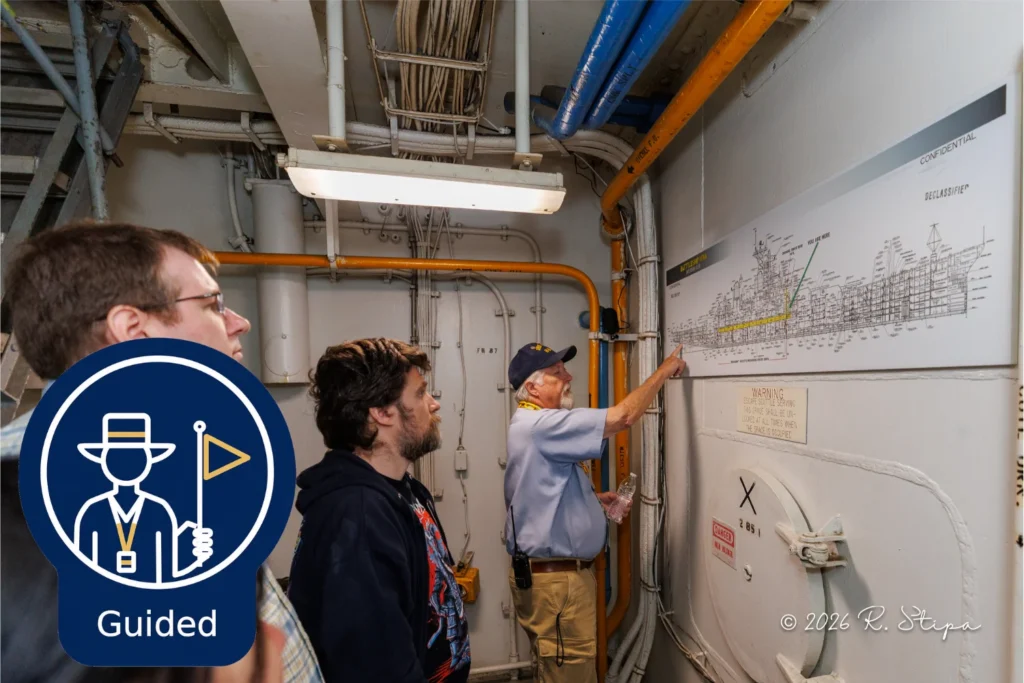
Engineering Tour Experience
The Engineering Tour takes you below into the hidden heart of Battleship IOWA, where eight boilers and four steam turbines once generated 212,000 shaft […]
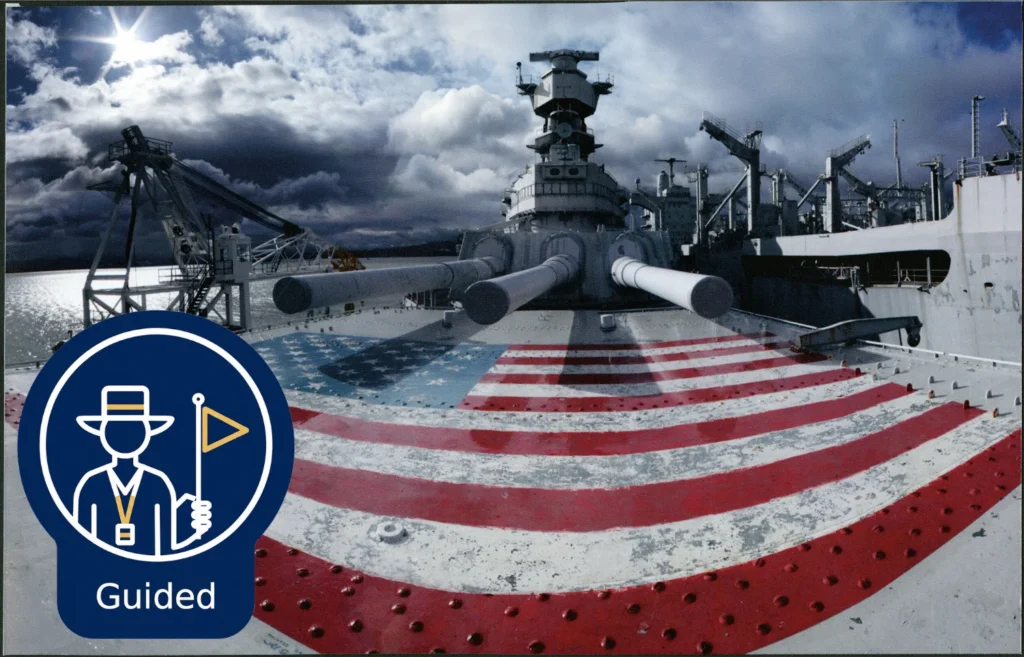
Escape the Fleet Adventure
In 2011, a small team raced against time to pull Battleship IOWA out of the Navy's reserve "ghost fleet" — or watch her be […]
Included with Admission
Life of a Sailor
Our general admission experience shows […]
Great Ships
Explore the ships of America's […]
Ship Cutaway
See inside a Navy ship […]
Vicky’s Scavenger Hunt
Find Vicky throughout your shipboard […]
Living Blueprint
Immerse yourself in a blueprint […]
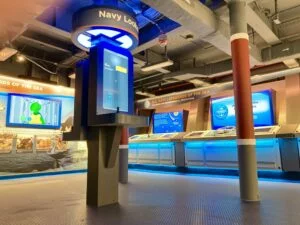
Stewards of the Sea
Explore how the Navy protects […]
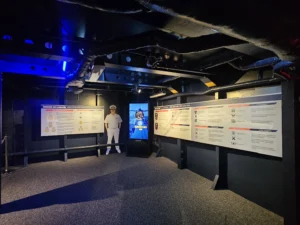
What’s My Rate?
Find the Navy career that […]
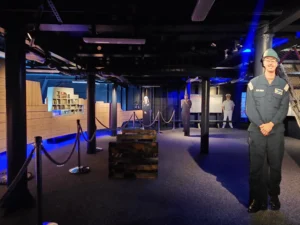
Every Sailor has a Story
Meet the people who serve.
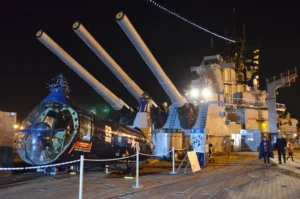
HUP-2 Retriever Helicopter
Korean War-Era HUP-2 Retriever Helicopter.
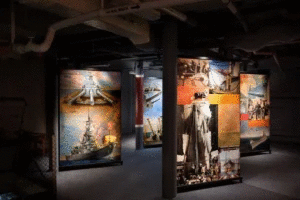
Sticks Art Gallery
Discover IOWA's story through art.
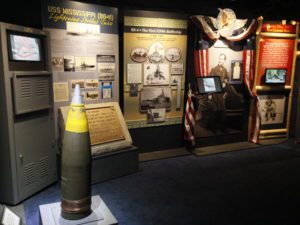
Gunnery Incidents
A dive into Navy gunnery […]
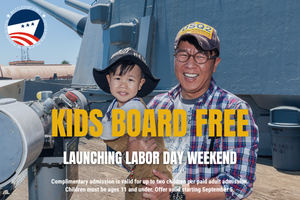
Limited time only!
Kids Board Free
In the all-new Life of a Sailor experience, kids become sailor recruits, building their skills, following the story of a famous sailor, and joining Vicky the Dog on a scavenger hunt through Battleship IOWA.
Kids board free with a paid adult.