
Why Is Battleship IOWA One of the Most Significant Battleships in American History?
How Has Innovation Shaped Battleship IOWA—and What Can It Teach Us About Solving Problems?
Battleship IOWA was built because the United States Navy faced a problem.
By the late 1930s, naval warfare was changing rapidly. Aircraft carriers were becoming increasingly important, fleets were operating across enormous distances, and the Navy needed battleships capable of combining the firepower and protection expected of a capital ship with enough speed to operate alongside fast carrier forces.
The result was the Iowa class, the final class of battleships built by the United States.
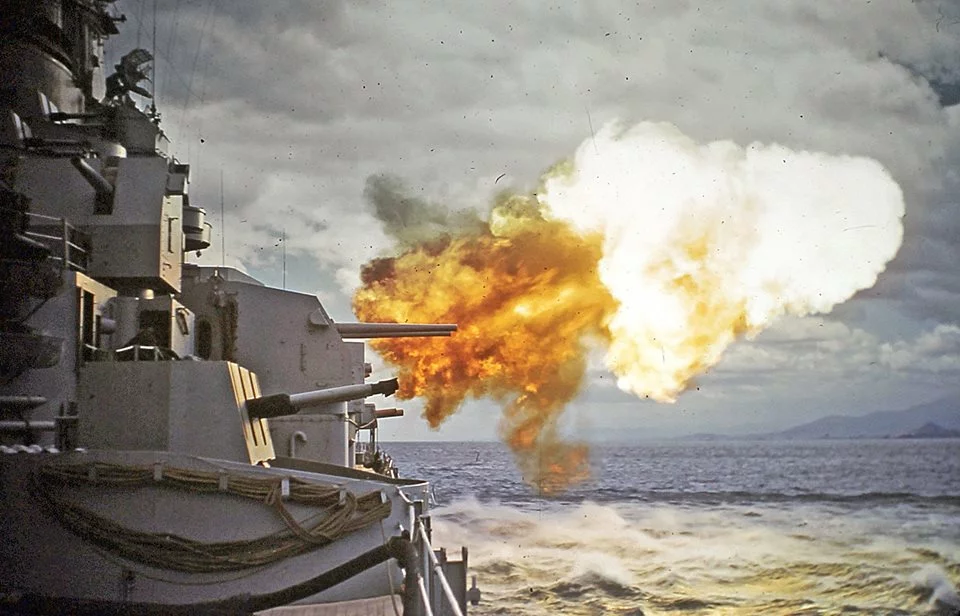
USS Iowa entered service in 1943 with nine 16-inch guns, an engineering plant capable of producing 212,000 shaft horsepower, and a combination of speed, range, weapons, protection, communications and mechanical systems that made the ship one of the most complex machines of its era.
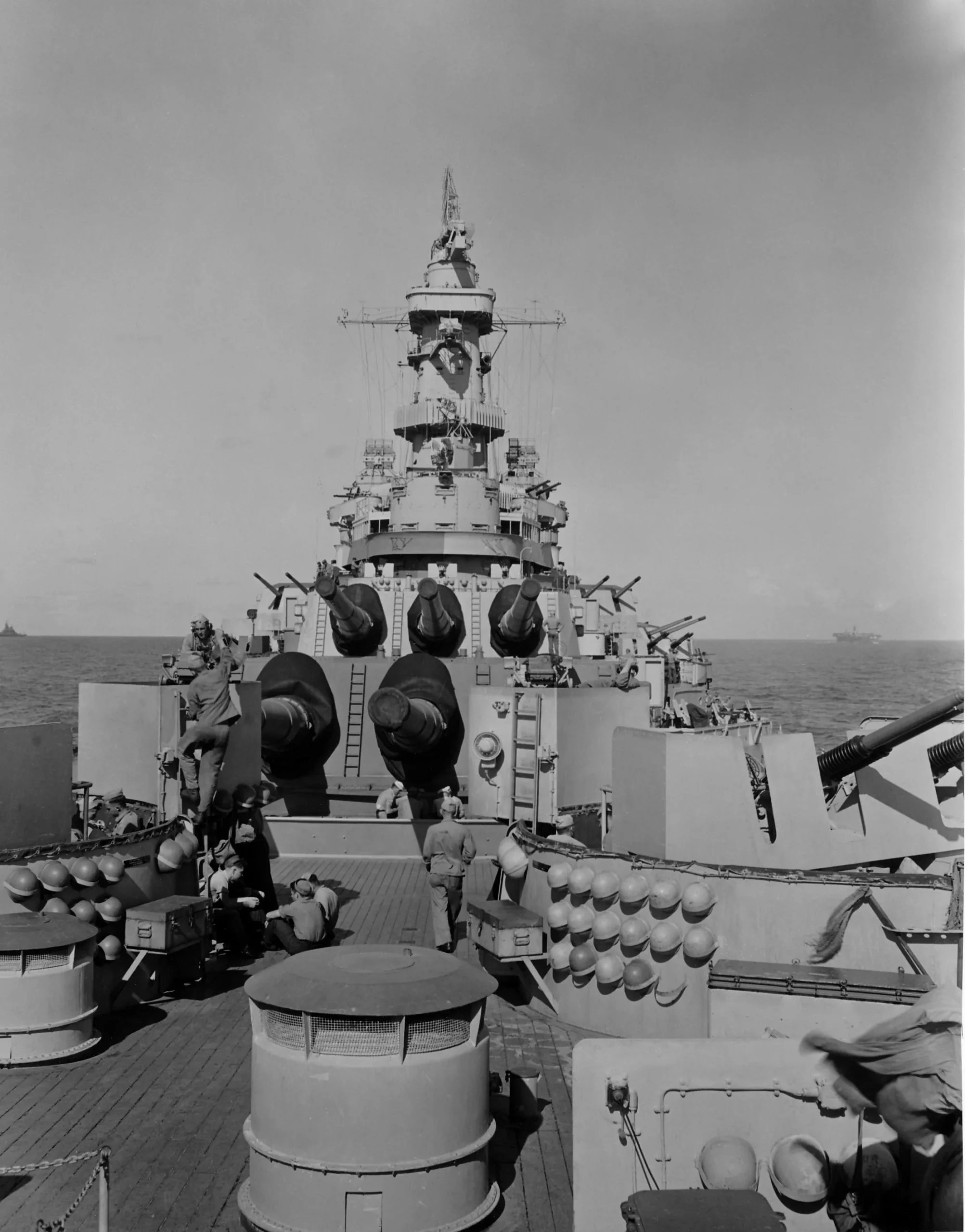
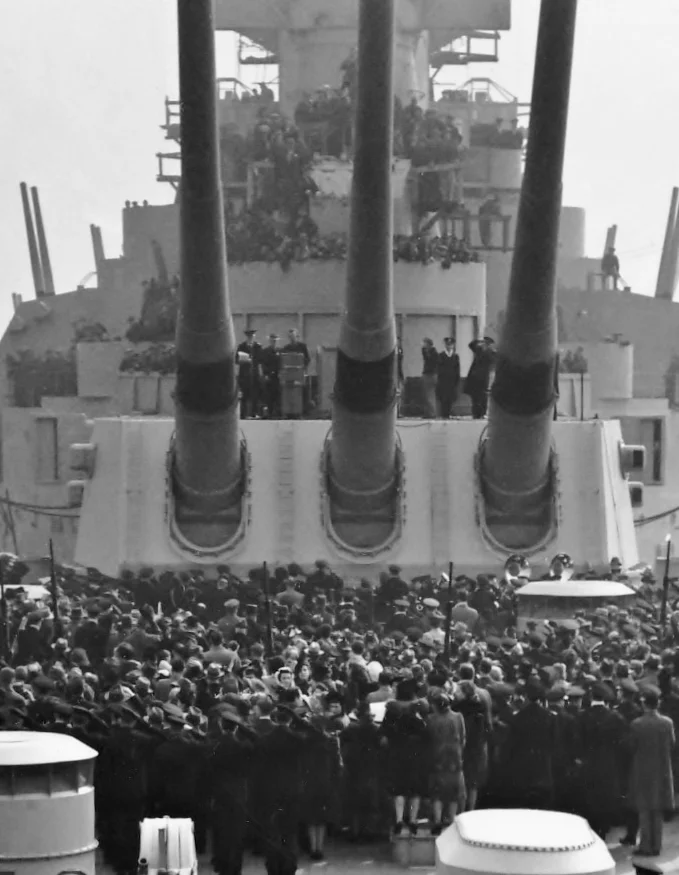
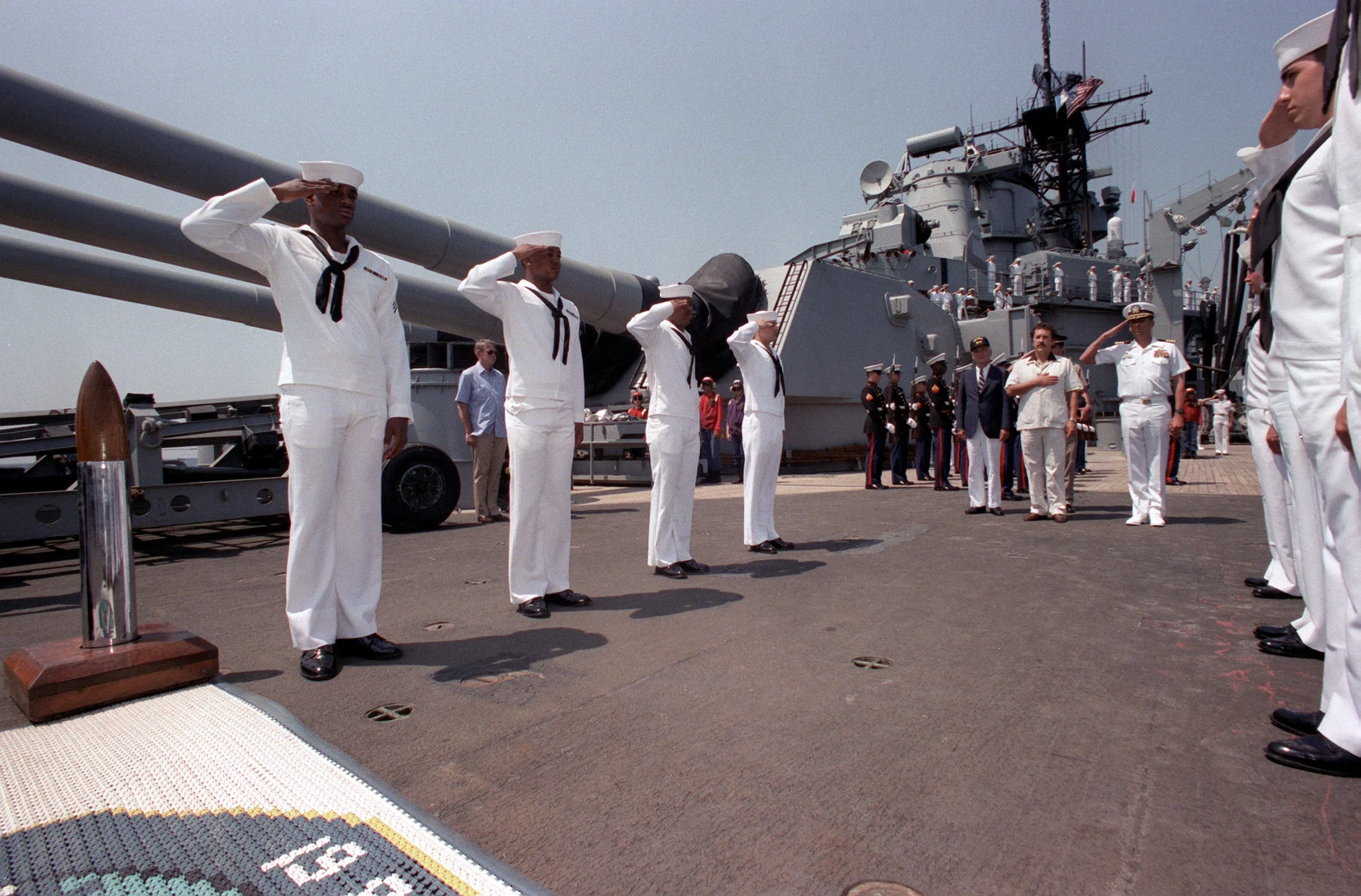
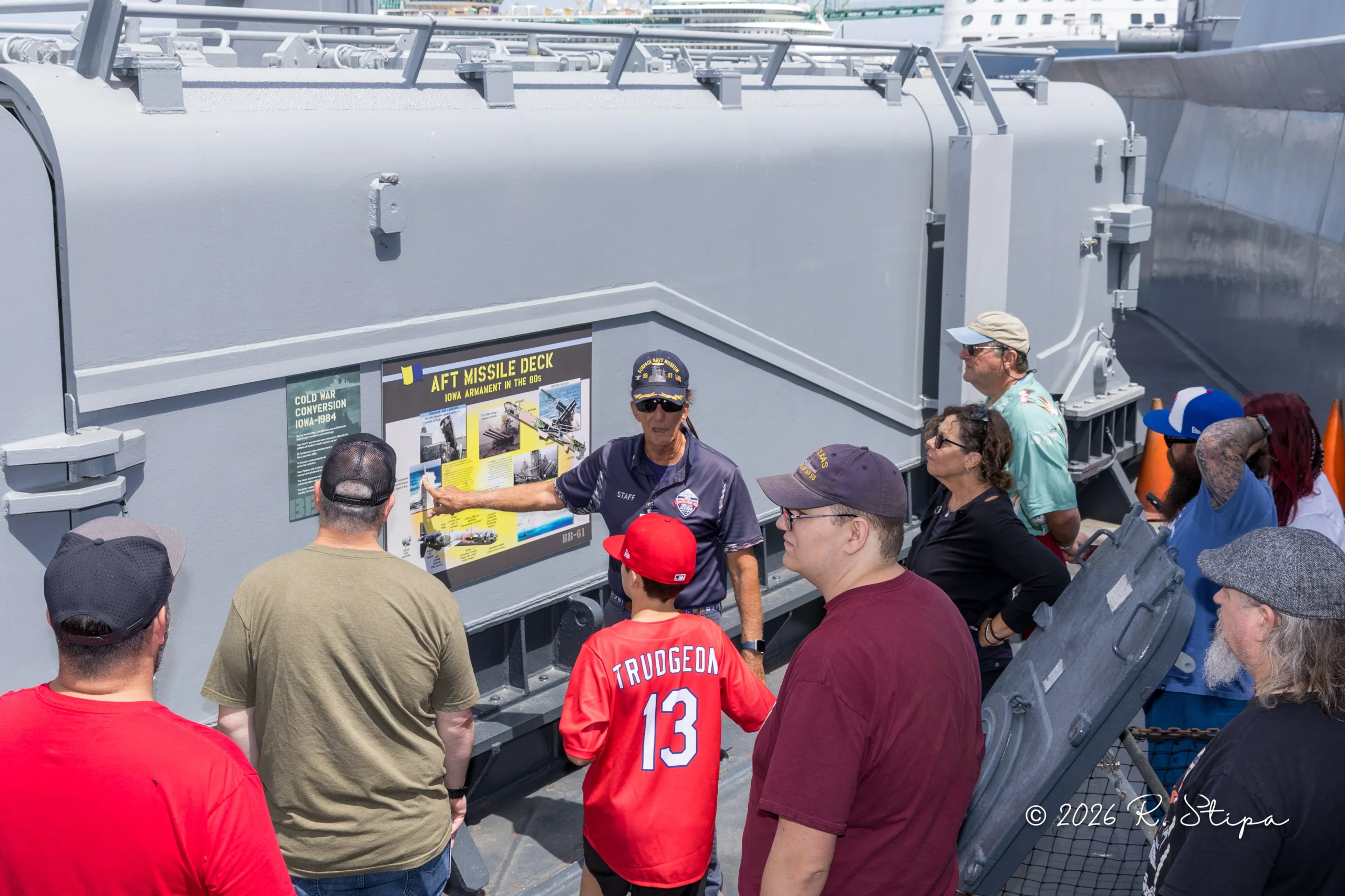
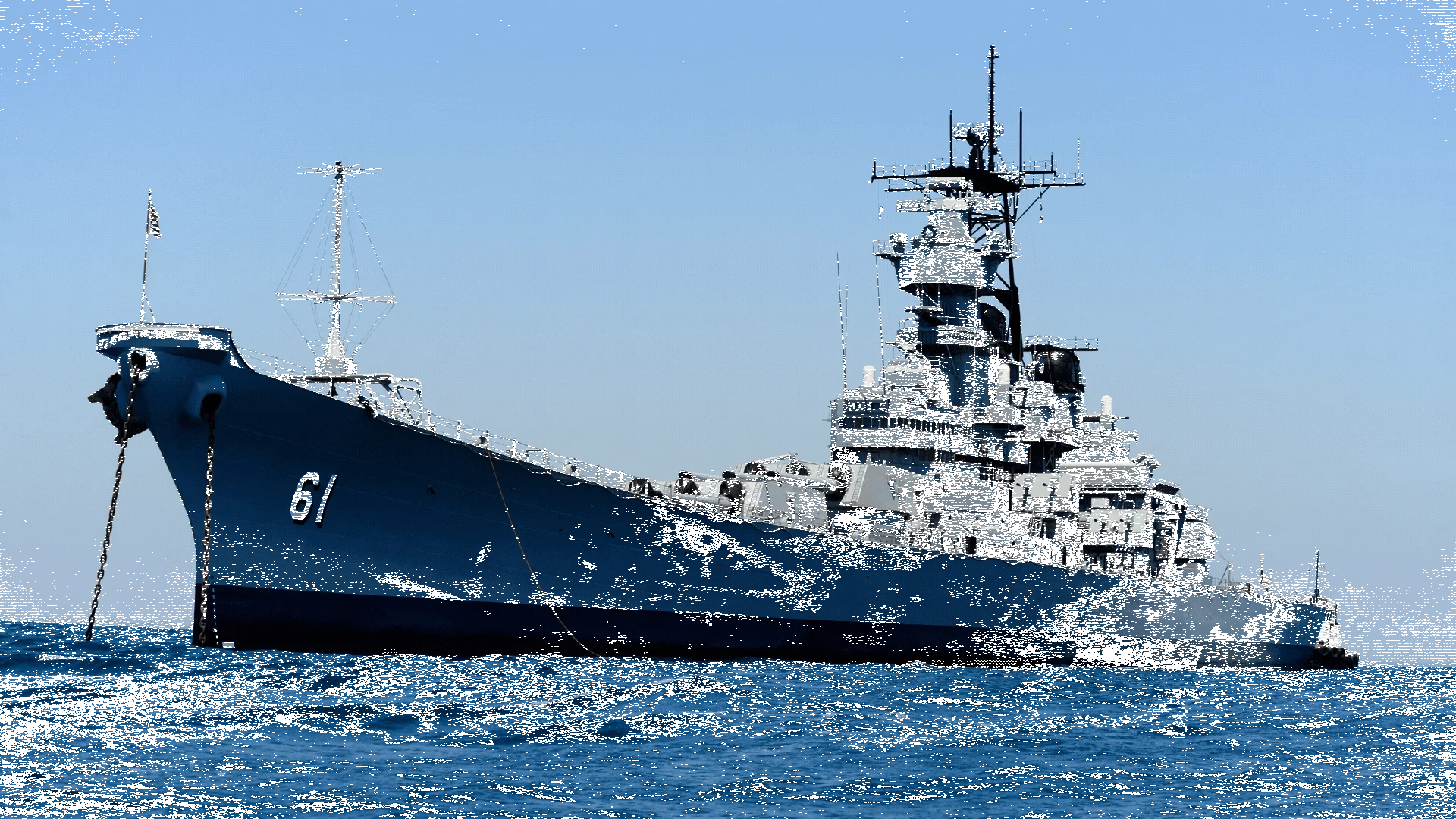
But IOWA did not remain frozen in 1943. Radar and other systems changed during World War II. Four decades later, Tomahawk cruise missiles, Harpoon anti-ship missiles and updated combat systems were added during the ship's Cold War modernization.
Today, innovation aboard Battleship IOWA continues for a very different reason.
Engineers, preservation specialists, volunteers, museum designers, educators and technology professionals now solve problems the ship's original designers could never have anticipated: how to preserve an 887-foot steel vessel for future generations, how to reactivate historic systems without returning the ship to operational service, how to incorporate modern materials without erasing historic character, and how to use technology to help contemporary audiences understand a ship built more than 80 years ago.
The mission has changed dramatically since 1943.
The need to solve problems has not.
Why Was the Iowa Class Innovative When It Was Built?
Battleship design has always been an exercise in compromise.
Armor improves protection but adds weight. Larger weapons increase firepower but require more space, stronger structures and additional ammunition. Greater speed demands more power, which means larger engineering systems, more fuel and additional supporting equipment.
Improving one characteristic can easily make another problem more difficult.
The Iowa class represented an effort to balance those competing demands for a new naval environment. IOWA's nine 16-inch guns could fire shells weighing as much as 2,700 pounds more than 20 miles, while the ship's propulsion plant gave her the speed needed to operate with fast naval forces.
Producing that performance required far more than powerful engines.
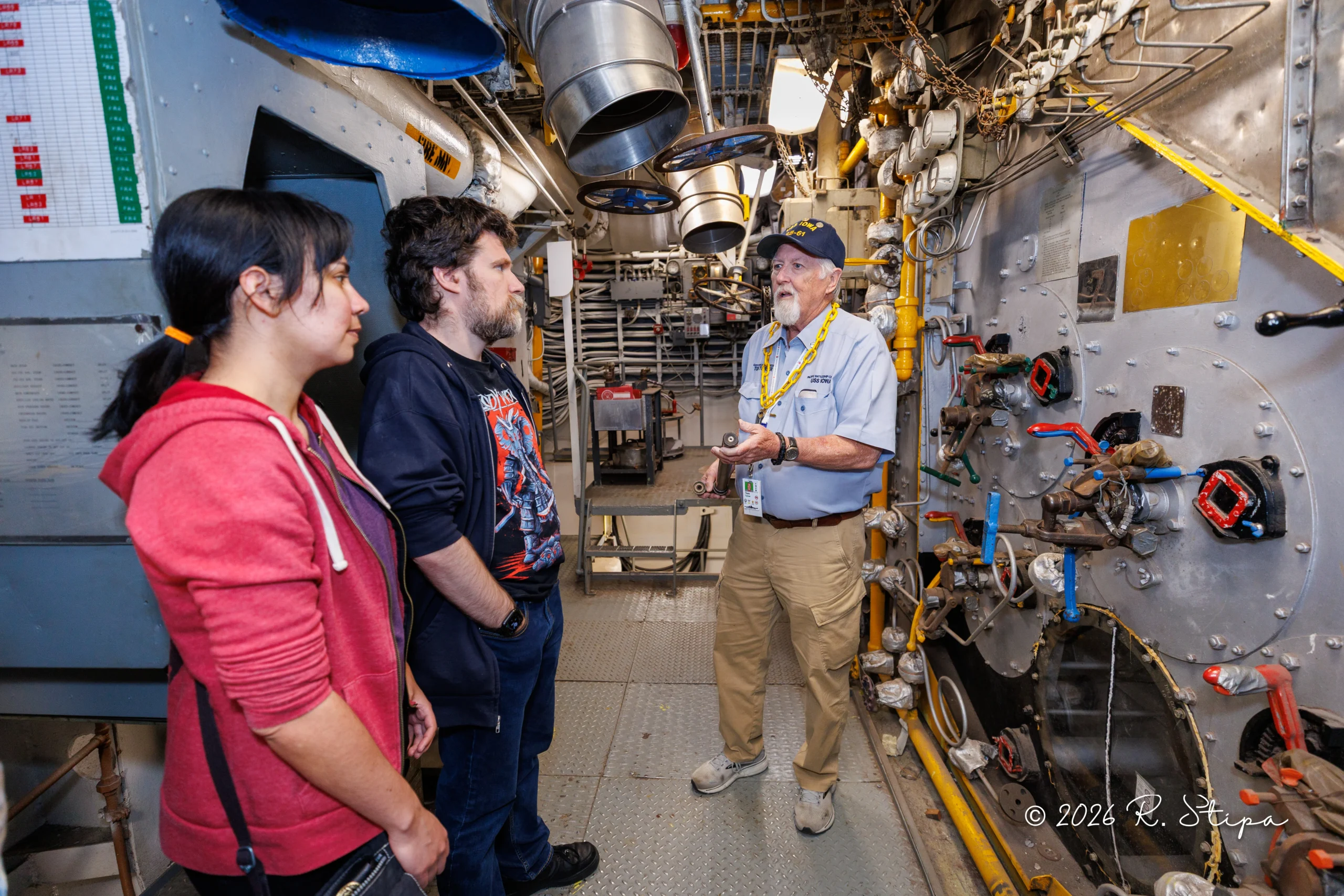
Eight boilers generated steam for four turbines, which transferred power through four shafts to the propellers. Together, the system could produce approximately 212,000 shaft horsepower and propel the ship at speeds approaching 35 knots under some conditions.
But propulsion was only one part of the engineering challenge. Electrical generation, navigation, communications, fire control, ventilation, pumps, plumbing, ammunition handling, damage control and systems supporting thousands of sailors all had to occupy the same hull and work together.
That is why an Iowa-class battleship is best understood not simply as a large weapon, but as an enormous exercise in systems engineering.
Its innovation was not found in any single machine. It came from making thousands of individual solutions function as one ship.
Why Is Speed Such a Difficult Engineering Problem on a Battleship?
Making something move quickly becomes much more difficult as it becomes larger and heavier.
Battleship IOWA had to push an enormous hull through the water while carrying armor, weapons, ammunition, machinery, fuel, supplies and a crew numbering in the thousands during portions of her service.
Generating enough horsepower was only part of the solution. Naval architects also had to shape the hull, manage weight, distribute machinery and maintain stability and structural strength.
Those tradeoffs are central to understanding engineering.
More armor might improve protection, but it also makes the ship heavier. More propulsion power can increase speed, but the additional machinery, fuel and piping add still more weight. Larger weapons require stronger structures and greater ammunition capacity.
Engineers rarely get to maximize every desirable characteristic.
They optimize.
That is what makes the figure "35 knots" more interesting than it first appears. The number describes the result. The boilers, turbines, shafts, hull form, weight distribution and thousands of design decisions required to achieve it are the real innovation story.
Battleship IOWA allows visitors to see that story at full scale.
How Did USS Iowa Adapt as Technology Changed?
Historic technology is often presented as though it existed in a single finished form.
USS Iowa did not.
Warships change because the world around them changes. During a major 1945 overhaul, for example, IOWA received new search and fire-control radar as electronic detection and targeting became increasingly important.
The transformation was even more dramatic when the ship returned to service in the 1980s.
When USS Iowa was recommissioned in 1984, the Navy did not simply restore a World War II battleship to its original configuration. The ship was modernized with Tomahawk cruise missiles, Harpoon anti-ship missiles and updated combat systems while retaining her nine 16-inch guns.
The resulting ship brought together technologies separated by roughly four decades.
Its hull and main battery came from a design developed before America's entry into World War II. Its missile systems belonged to an era of long-range precision weapons and increasingly computerized naval warfare.
That juxtaposition provides an important lesson about innovation: sometimes the answer is not to discard an existing platform and start over.
The better question is whether an existing system still provides useful capabilities—and whether it can be adapted to meet a different mission.
What Is the Difference Between Invention and Innovation?
Invention and innovation are related, but they are not the same thing.
An invention creates something new. Innovation more often involves applying knowledge, materials, technology or processes in a different way to solve a problem more effectively.
USS Iowa illustrates that distinction repeatedly.
Steam turbines were not invented for the ship. Radar was not invented aboard IOWA. Neither were cruise missiles. What mattered was how those technologies were integrated into a larger system to meet changing operational requirements.
The same distinction can be seen aboard the museum today.
Battleship IOWA's preservation team did not invent composite marine decking. Instead, the team evaluated a modern material as one possible answer to a very specific preservation problem: how to protect historic steel beneath deteriorating deck surfaces while maintaining the appearance of a battleship deck and addressing the cost, availability and sustainability concerns associated with traditional teak.
The innovation was not the material itself.
It was understanding the problem well enough to determine where a different material could provide a better solution.
How Can Modern Technology Help Preserve a Historic Battleship?
Preserving Battleship IOWA creates an interesting paradox.
The museum is responsible for protecting a historic artifact, but fulfilling that responsibility sometimes requires materials and methods that did not exist when the ship was built.
Deck preservation is a good example.
Traditional teak performs well in marine environments, but replacing large areas of deteriorated decking with new teak presents significant challenges involving cost and sourcing. Douglas fir, which was used on portions of IOWA during later periods of service, does not provide the same durability.
After researching alternatives, the operations team selected a resin-composite marine decking system using Herculan for selected areas. Before installation, staff and volunteers removed deteriorated material, preserved usable historic planks, treated corrosion beneath the old deck and resealed the steel.
The objective was not to make an old battleship more modern.
It was to use an appropriate modern solution to protect more of the historic ship.
That distinction matters because good innovation begins with the mission, not with the technology.
Why Is Historic Preservation an Engineering Design Problem?
Preservation is full of constraints, and constraints are often where engineering becomes most interesting.
Consider an exterior deck aboard Battleship IOWA. Any solution has to keep moisture away from structural steel while surviving sunlight, rain, salt air, foot traffic and temperature changes. It should respect the visual character of the historic vessel, remain maintainable by a nonprofit organization and make economic sense over decades rather than simply at the moment of installation.
No single factor can determine the answer.
The process therefore looks much like engineering design elsewhere: define the problem, identify the constraints, investigate alternatives, test an approach, observe the results and improve the solution.
Battleship IOWA initially used synthetic marine decking on the wings of the 04-level navigation bridge, allowing the preservation team to evaluate the material and installation process before using the approach on a larger area.
The same problem-solving approach appears in hull preservation. Dry-docking an 887-foot battleship presents enormous financial and logistical challenges, so the museum uses cofferdams to create temporary dry work areas against portions of the hull. That allows crews to address vulnerable steel while the ship remains at its berth.
Neither approach exists because innovation itself was the goal.
The problem came first.
Can Historic Battleship Technology Be Brought Back to Life?
Some of the most interesting innovation aboard Battleship IOWA involves technology that is not new at all.
A volunteer team made up of engineers and retirees from technology and electronics industries has worked to reactivate historic electronic systems that had been cold and silent for decades.
That work changes the way visitors can understand the ship.
A static piece of equipment can show what a system looked like. A functioning system can begin to demonstrate what it actually did.
Switches, displays, communications equipment, indicators, motors and other shipboard systems often make much more sense when they are experienced as parts of a functioning network rather than as isolated artifacts.
Bringing those systems back to life requires an unusual combination of expertise. Original Navy technology and documentation may have to be interpreted alongside veteran knowledge, modern electronics experience, fabrication skills, troubleshooting and contemporary museum requirements.
In that sense, the project joins old and new problem-solving methods.
The original machine provides the challenge. Today's engineers and technicians have to determine how much of its function can responsibly be restored.
Why Does Restoring Old Technology Require New Solutions?
Repairing historic machinery is not the same as fixing a modern appliance.
Replacement parts may no longer exist. Documentation may be incomplete. Original manufacturers may have disappeared. People who once operated the equipment may no longer be available.
There is also a fundamental difference between maintaining a warship and preserving a museum artifact.
An active Navy crew repaired equipment so the ship could accomplish an operational mission. A museum may want a system to function because operation helps visitors understand it—but without placing irreplaceable historic material at unnecessary risk.
That creates difficult decisions.
Which original components can operate safely? Which should remain untouched? Can a modern component substitute discreetly for something no longer available? How much operation is appropriate for fragile machinery? How can visitors experience a system without shortening its life?
Those questions make restoration a form of applied innovation.
The past provides the technology.
The present has to determine how to keep its story working.
How Is Innovation Changing the Museum Experience?
Innovation aboard Battleship IOWA now extends beyond machinery and preservation.
In 2026, Pacific Battleship Center opened the first elements of Life of a Sailor, an immersive National Museum of the Surface Navy experience intended to connect visitors with the people, experiences, technology and culture of America's Surface Navy.
The experience includes a 60-foot video sculpture showing the evolution of Navy ships, an immersive boot-camp component, a large-scale ship cutaway, interactive experiences and interpretation integrated into the historic battleship itself.
Pacific Battleship Center invested $3.5 million in the experience, developed with American Scenic Design and Pure Imagination Studios, as an early major step in the transformation of the ship into a national museum destination.
The choice to use immersion is important because Battleship IOWA already has an advantage most museums do not.
Visitors are standing inside the artifact.
Digital media, projection, physical environments, firsthand accounts, historic equipment and the ship itself can therefore work together. The purpose is not simply to add screens or new technology to an old battleship. It is to help visitors understand something the steel alone cannot fully explain: the experience of the sailors who operated the Surface Navy.
Technology is most valuable when it strengthens that human story rather than competing with it.
Can Innovation Help Connect Students With Future Careers?
Battleship IOWA also makes innovation visible as a career rather than simply a chapter in technological history.
Students can examine the principles behind a 1940s steam plant, encounter systems added decades later and then see how the same ship is being adapted again for preservation and education.
That sequence makes technological change visible as a continuing process.
A student can begin by asking how a system works. The next question may be why it was designed that way. Eventually, the question can become: Who solves similar problems today?
In March 2026, Pacific Battleship Center announced a $500,000 gift from the Timken Foundation to develop an engineering-focused career pathway within the National Museum of the Surface Navy experience. The initiative is intended to expand engineering-related learning for students as well as general visitors.
That progression can lead toward careers in engineering, shipbuilding, electronics, skilled trades, information technology, logistics, maritime operations and other fields.
Innovation stops looking like something done only by famous inventors.
It becomes something people do every day when they understand a problem well enough to improve the solution.
Does Innovation Always Mean Replacing Old Technology?
Battleship IOWA demonstrates almost the opposite.
During the 1980s modernization, the Navy retained the ship's 16-inch guns while adding missiles and updated combat systems. Technologies from different eras became part of the same platform.
Today, the museum again combines old and new.
Original machinery exists beside restored electronics. Synthetic deck material protects historic steel. Digital interpretation helps explain analog equipment. Contemporary engineers and technicians use modern knowledge to preserve systems designed before many of them were born.
Innovation in this environment is therefore not synonymous with replacement.
It is often about integration.
The challenge is deciding what should remain, what can change and how a new solution can strengthen the value of something that already exists.
What Does Battleship IOWA Teach About Experimentation and Failure?
Innovation rarely follows a perfectly straight path.
Engineering depends on testing assumptions, observing results, correcting problems and learning from what happens. Preservation works much the same way.
Battleship IOWA's use of synthetic decking illustrates the process. Rather than immediately applying a new approach across the ship, the museum first used the system on a limited area. That experience could then inform work on the much larger 01-level restoration.
Removing deteriorated material also revealed conditions that could not be fully understood until the deck was opened. Corrosion had to be addressed, usable historic material preserved and steel resealed before a new surface could be installed. Crews also encountered previously hidden evidence of former 40 mm gun positions and wartime damage.
The lesson is simple but important.
Plans matter, but real-world conditions often reveal something the plan could not predict.
Strong problem-solving responds to what is actually found.
Why Are People More Important Than Technology in Innovation?
The machinery aboard Battleship IOWA makes it easy to think of innovation as a story about hardware.
It is really a story about people.
Machines do not identify problems, weigh tradeoffs, make observations, exchange knowledge or decide which solution best serves a mission.
People do.
That was true when naval architects balanced speed, firepower, protection and range in the original Iowa-class design. It remained true when sailors and engineers adapted the ship during World War II and when the Navy modernized it for Cold War service.
It remains true aboard the museum today.
Preservation teams research material alternatives. Volunteers study dormant systems before attempting to reactivate them. Exhibit designers decide when digital technology improves interpretation and when the historic ship should speak for itself.
The common thread is not any particular technology.
It is people applying knowledge to changing circumstances.
What Can Modern Organizations Learn From Battleship IOWA?
Battleship IOWA's history offers several lessons about innovation that extend well beyond naval engineering.
Constraints can drive better solutions. Weight, space, cost, material availability, safety, maintenance and historical authenticity do not simply make a project more difficult. They force people to make choices and establish priorities.
Innovation is also often incremental. USS Iowa did not move from a World War II battleship to a Cold War missile platform because of one breakthrough. It evolved through changes to equipment, systems, processes and training.
Old and new are not necessarily opposites. Existing technology can sometimes be adapted instead of discarded. Modern materials can protect historic structures. New interpretation can make an old artifact more understandable without replacing it.
Most importantly, innovation should begin with the problem.
Starting with a fashionable technology and searching for somewhere to use it is not the same thing as solving a problem well. The better questions are: What needs to be accomplished? What constraints stand in the way? Which solution best serves the mission?
Battleship IOWA has been answering versions of those questions for more than eight decades.
What Is the Most Important Innovation Lesson Battleship IOWA Can Teach?
Walk through Battleship IOWA and innovation appears everywhere: in the propulsion plant, the 16-inch guns, radar, missile systems, restored electronics, preservation materials and immersive museum technology.
But those are the results of innovation, not its source.
The source is the repeated human decision to solve a problem differently because circumstances have changed.
Naval architects did that when they balanced speed, firepower, protection and range in the Iowa class. Sailors and engineers did it as wartime technology evolved. The Navy did it when the ship returned for Cold War service. Preservation teams do it today when they determine how to protect an historic battleship using modern materials and limited resources. Museum designers do it when they use immersive technology to help visitors understand the people behind the machinery.
That may be the most enduring lesson contained within an 887-foot battleship.
Innovation is not simply about inventing something new.
It is about understanding the problem in front of you well enough to build the next solution.
Battleship IOWA has been doing that since before she first went to sea. Today, as the ship becomes the home of the National Museum of the Surface Navy, innovation continues to connect what came before with what comes next.
TICKETS
Experience the Life of a Sailor.
Life of a Sailor
Our general admission experience shows how sailors live, work, and serve.
President’s Tour
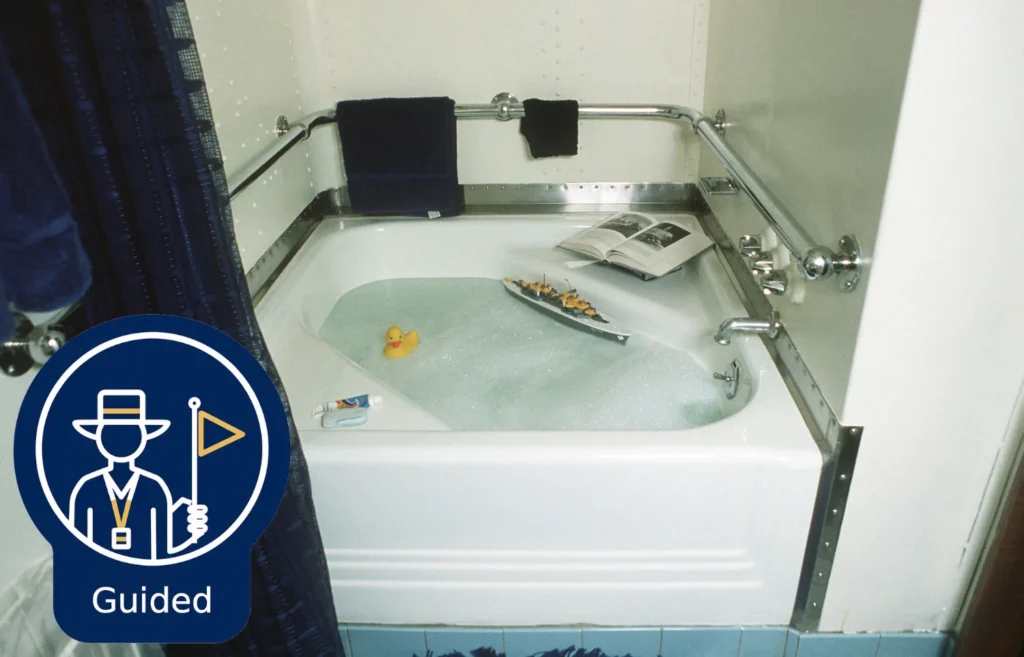
It's November 1943, and Battleship IOWA is on a covert mission. President Franklin Delano Roosevelt and his entire staff are aboard, headed for top-secret […]
Overview Experience
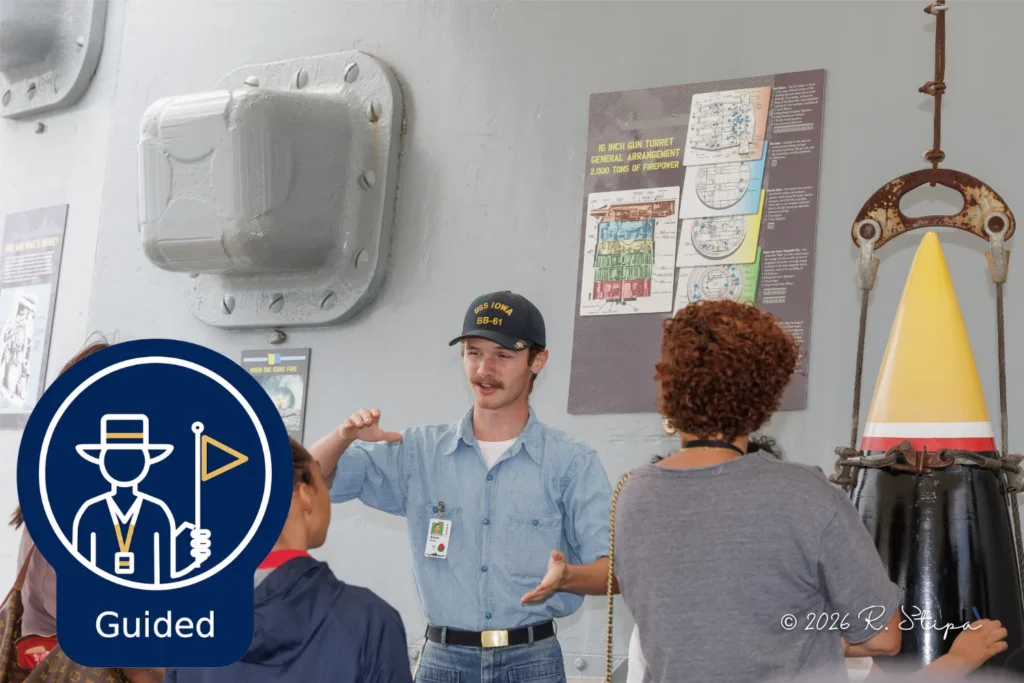
The overview experience is a 90-minute crew-led tour that brings the ship's legacy to life through the stories of those who served, and those […]
Gun Tour Experience
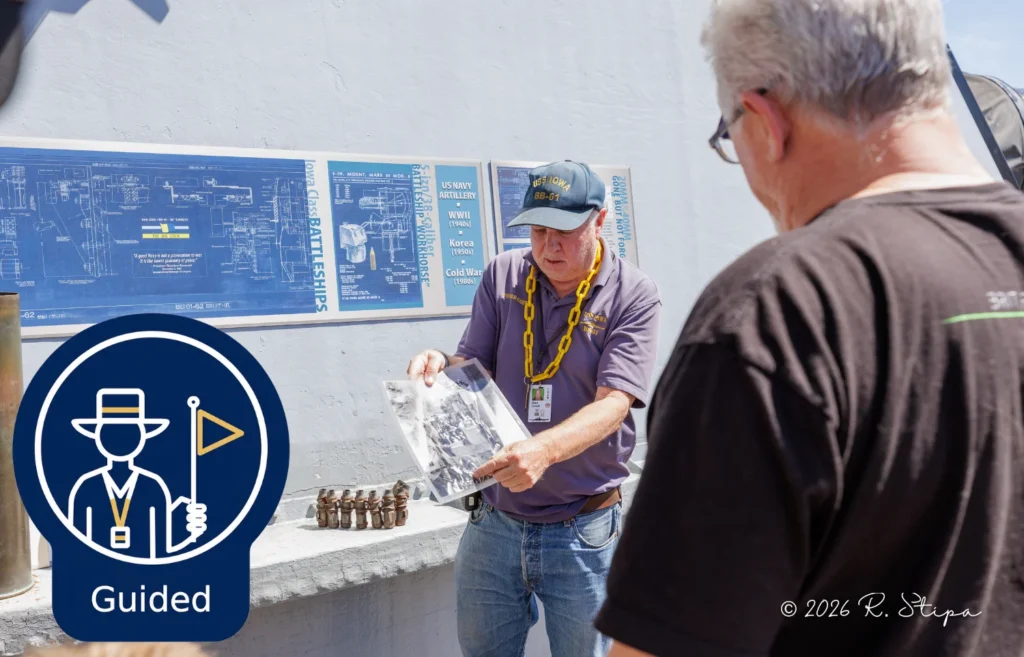
This exclusive, behind-the-scenes journey puts you inside the systems that made Battleship IOWA one of the most powerful warships ever built.
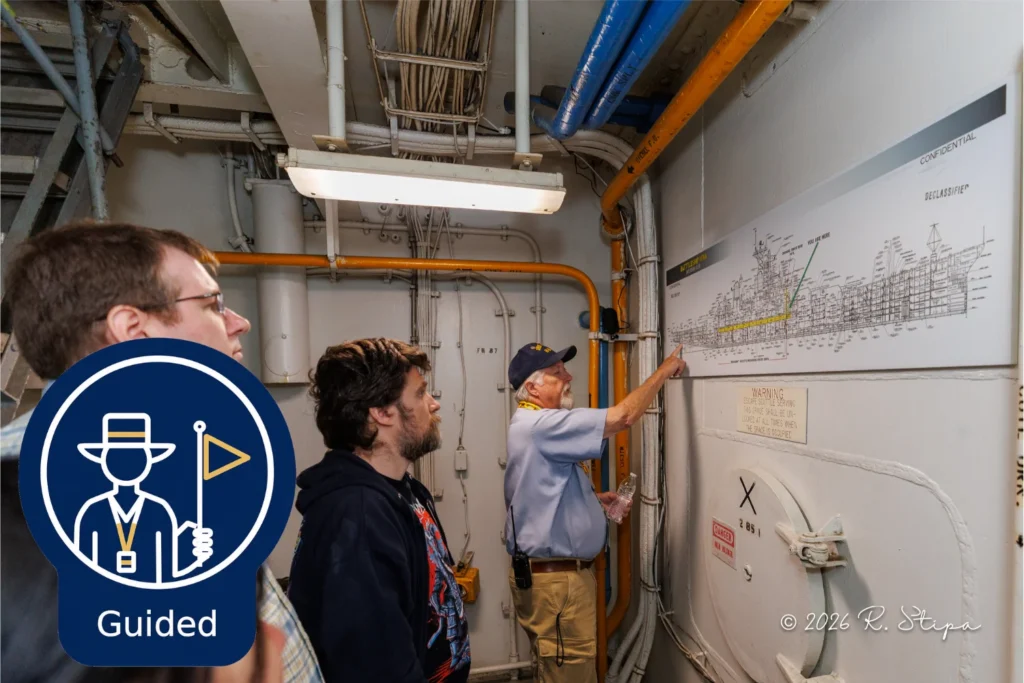
Engineering Tour Experience
The Engineering Tour takes you below into the hidden heart of Battleship IOWA, where eight boilers and four steam turbines once generated 212,000 shaft […]
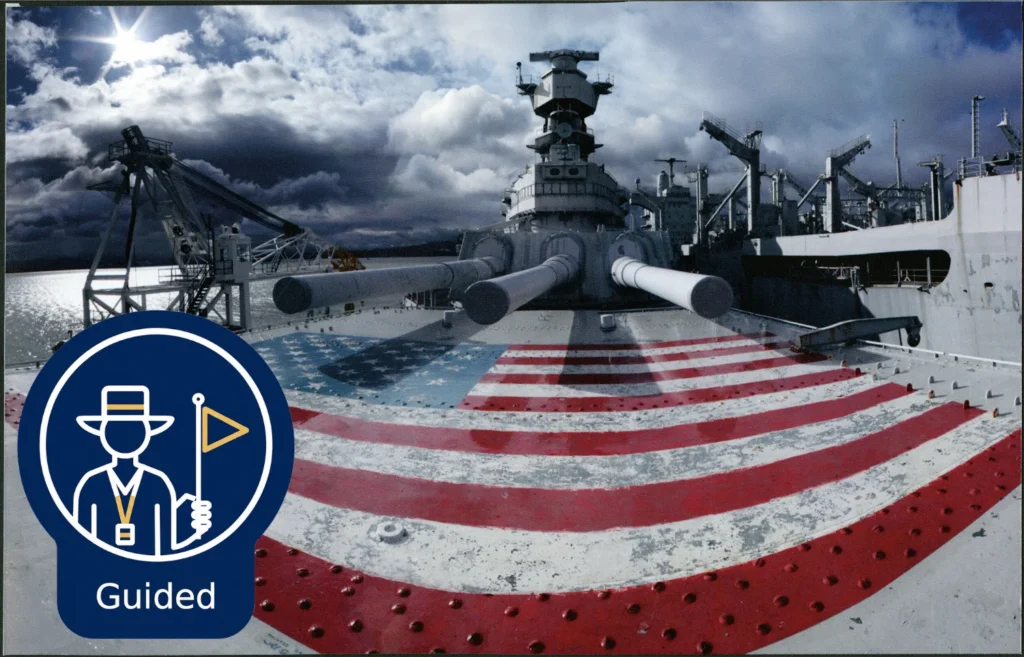
Escape the Fleet Adventure
In 2011, a small team raced against time to pull Battleship IOWA out of the Navy's reserve "ghost fleet" — or watch her be […]
Included with Admission
Life of a Sailor
Our general admission experience shows […]
Great Ships
Explore the ships of America's […]
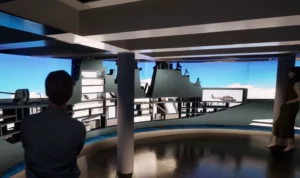
Ship Cutaway
See inside a Navy ship […]
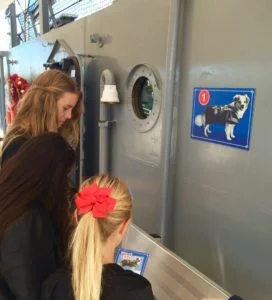
Vicky’s Scavenger Hunt
Find Vicky throughout your shipboard […]
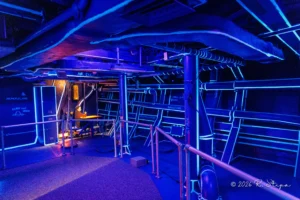
Living Blueprint
Immerse yourself in a blueprint […]
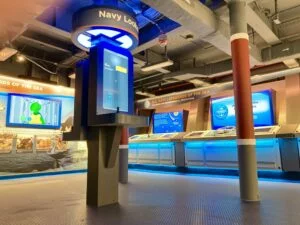
Stewards of the Sea
Explore how the Navy protects […]
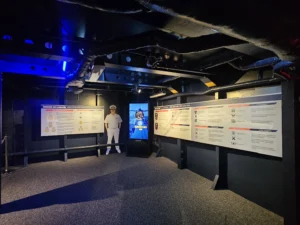
What’s My Rate?
Find the Navy career that […]
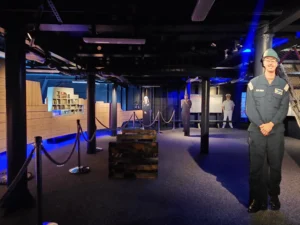
Every Sailor has a Story
Meet the people who serve.
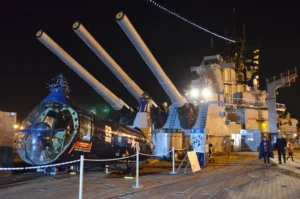
HUP-2 Retriever Helicopter
Korean War-Era HUP-2 Retriever Helicopter.
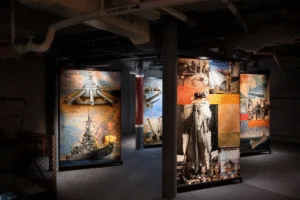
Sticks Art Gallery
Discover IOWA's story through art.
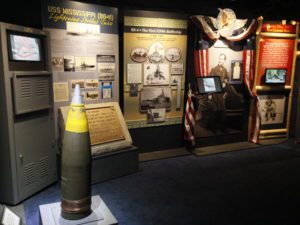
Gunnery Incidents
A dive into Navy gunnery […]

Limited time only!
Kids Board Free
In the all-new Life of a Sailor experience, kids become sailor recruits, building their skills, following the story of a famous sailor, and joining Vicky the Dog on a scavenger hunt through Battleship IOWA.
Kids board free with a paid adult.