
How Battleship IOWA serves veterans beyond remembrance
How Battleship IOWA Serves Veterans Beyond Remembrance
Battleship IOWA was built for sailors, and more than 80 years after USS Iowa entered service, that relationship has not ended.
Today, the ship serves not only as a place to remember military service, but also as a place where veterans can reconnect with one another, find new opportunities, share their experience, volunteer, build careers, and remain part of a community shaped by service.
That makes Battleship IOWA different from a traditional military museum.
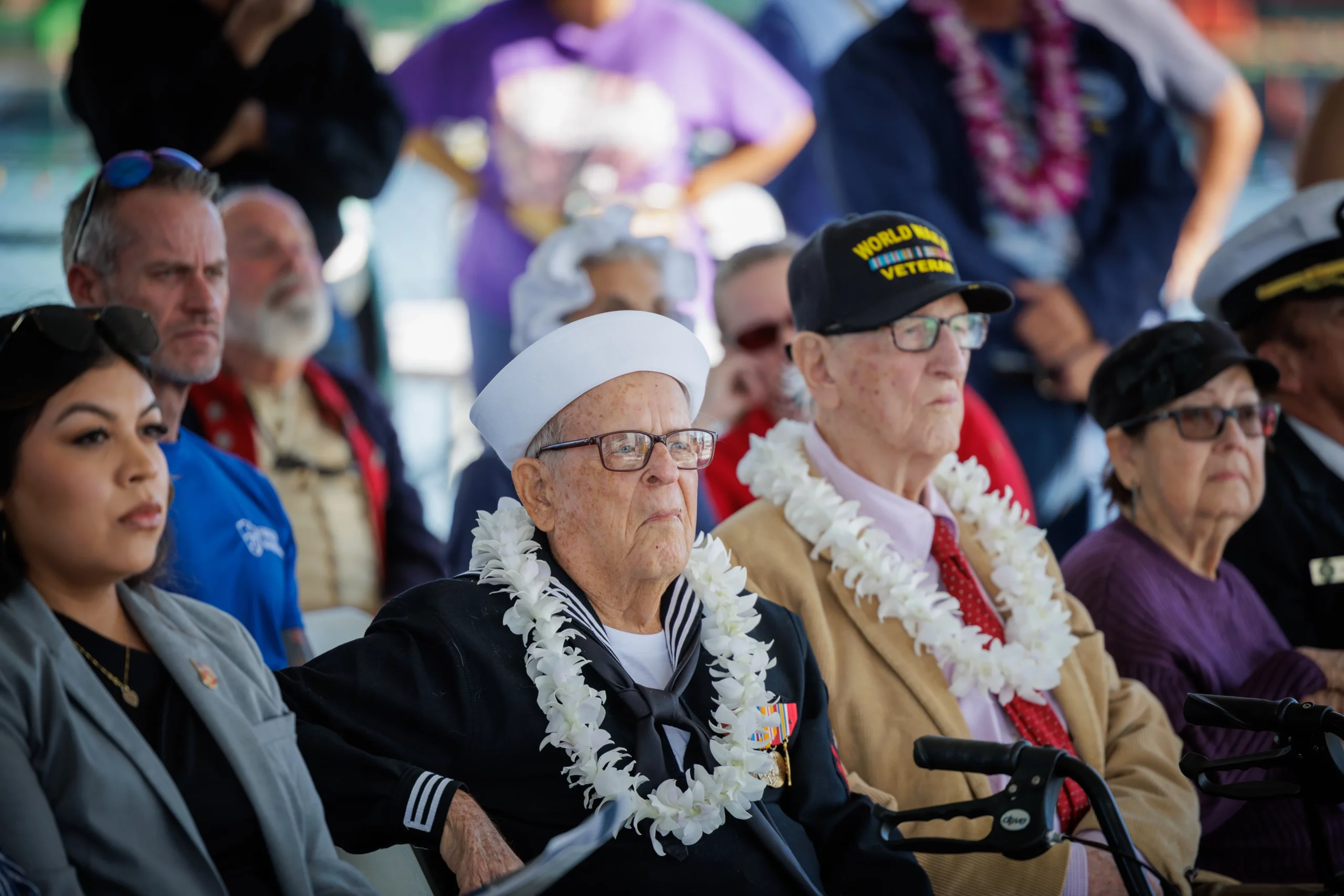
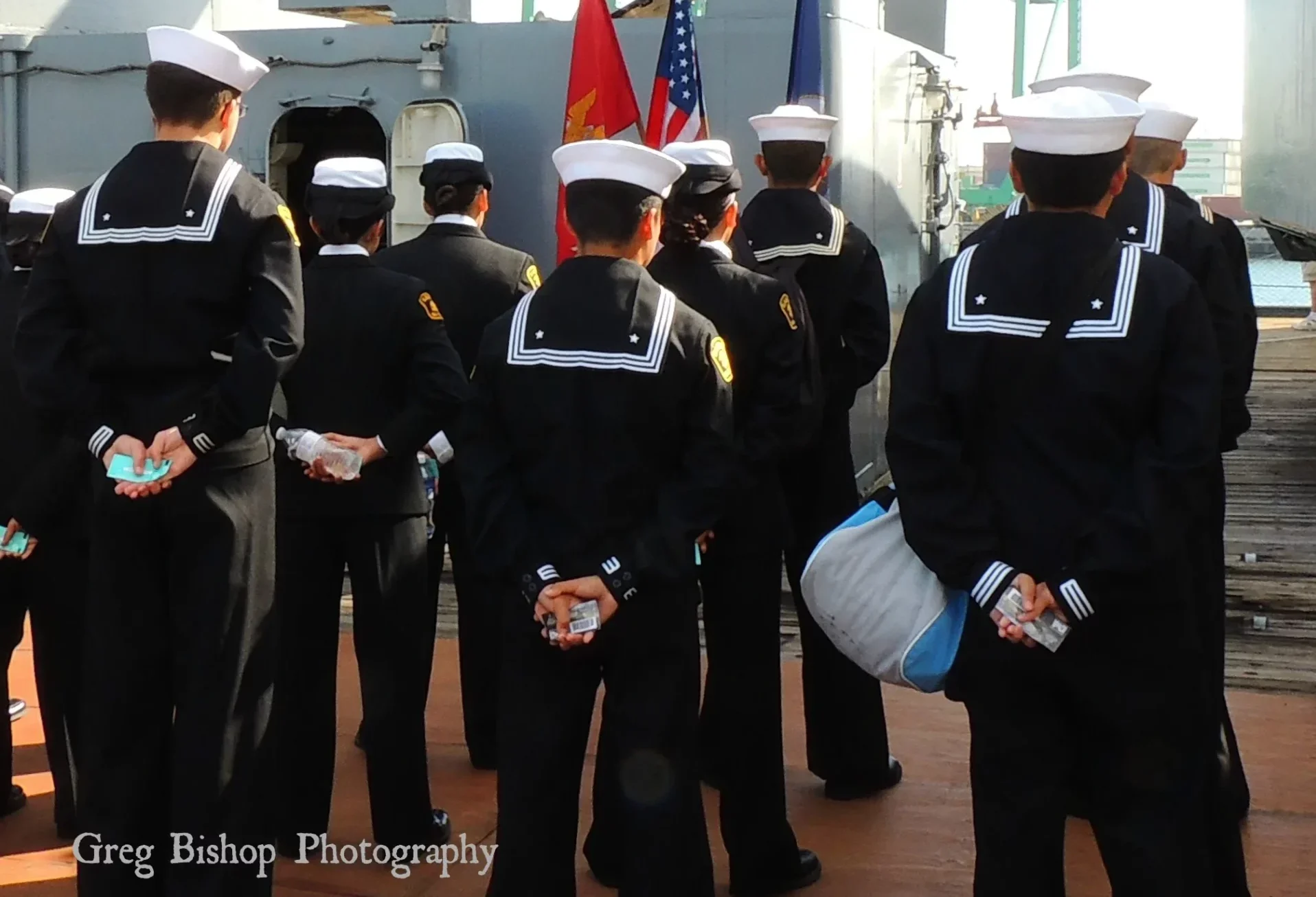
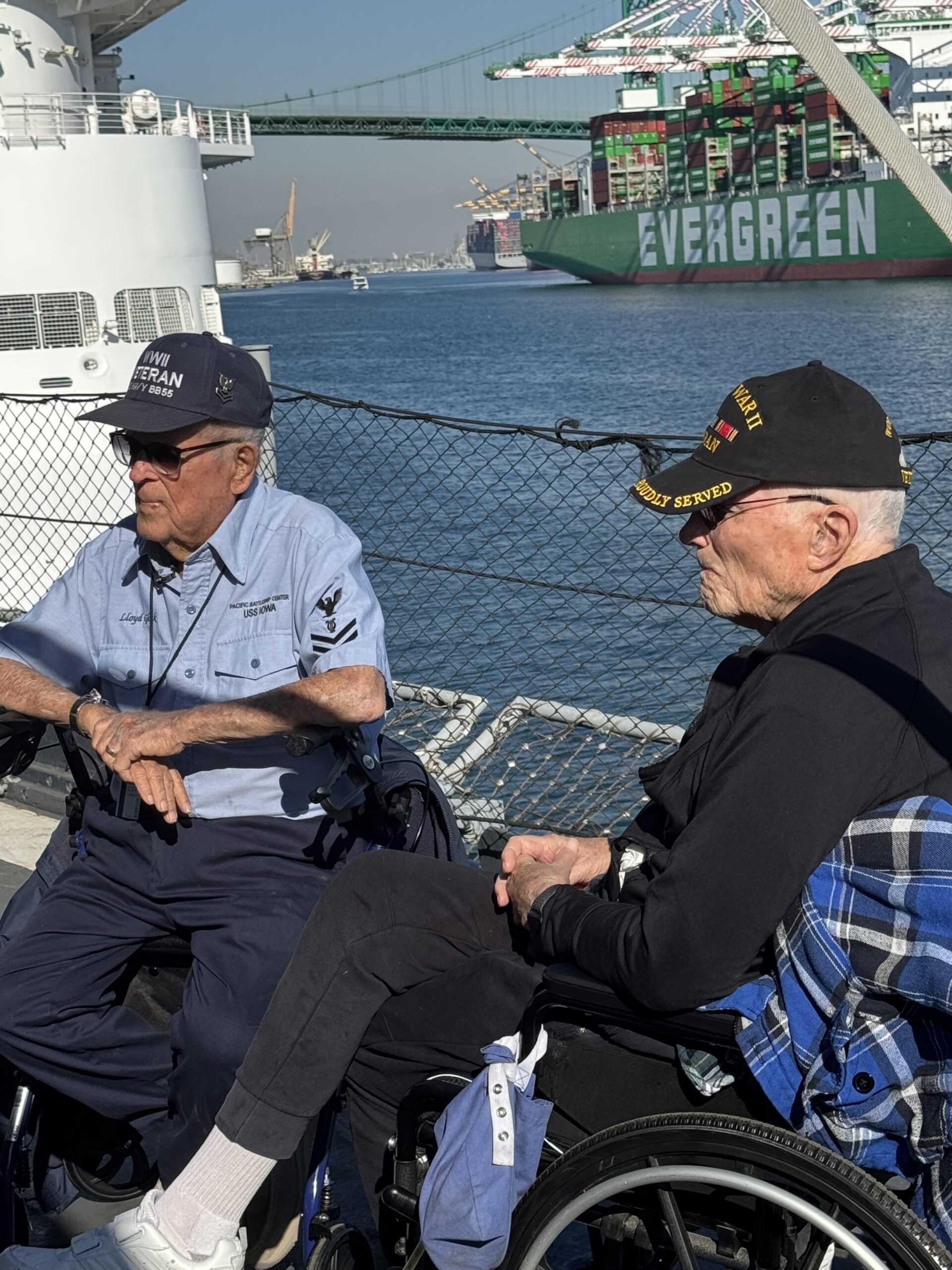
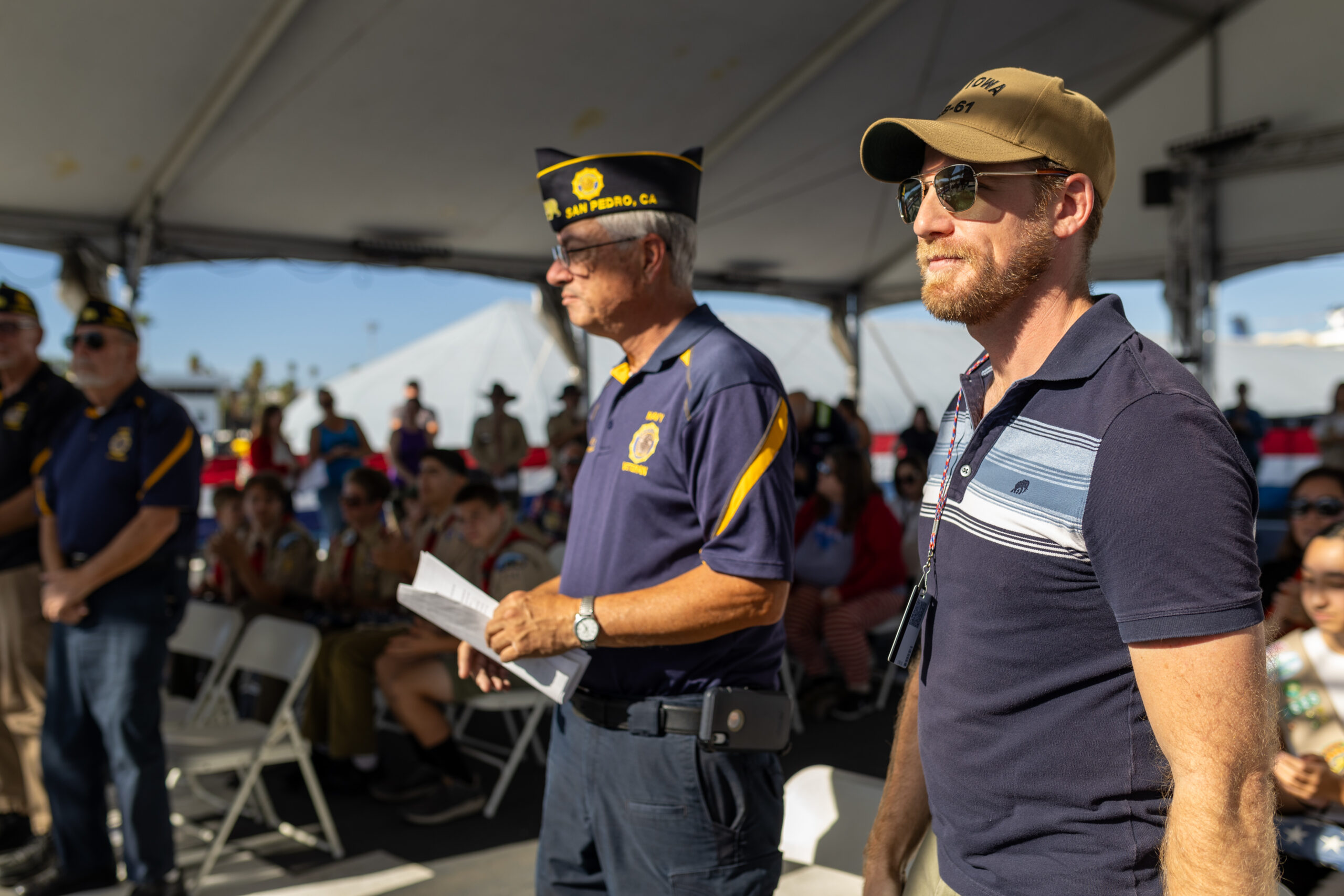
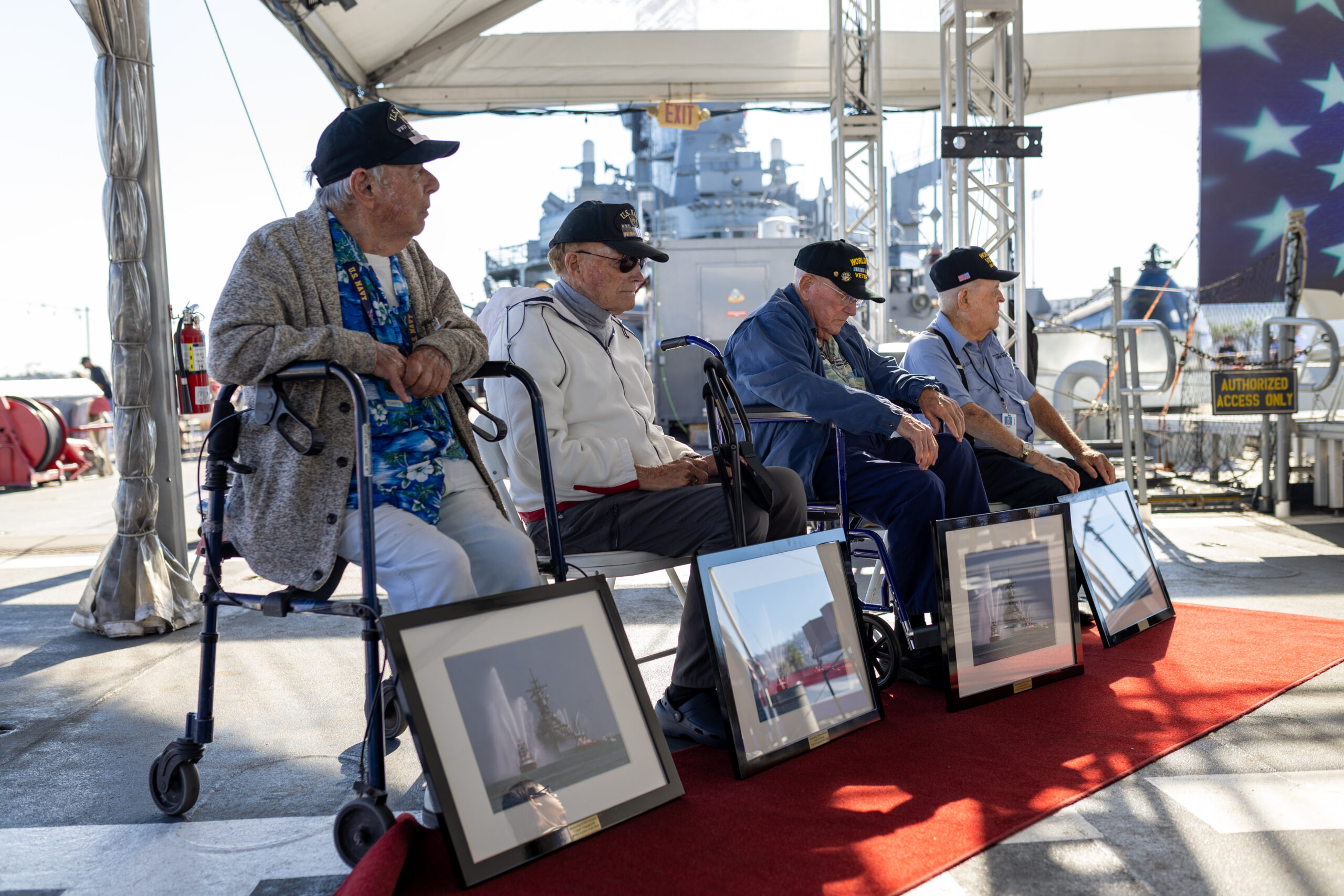
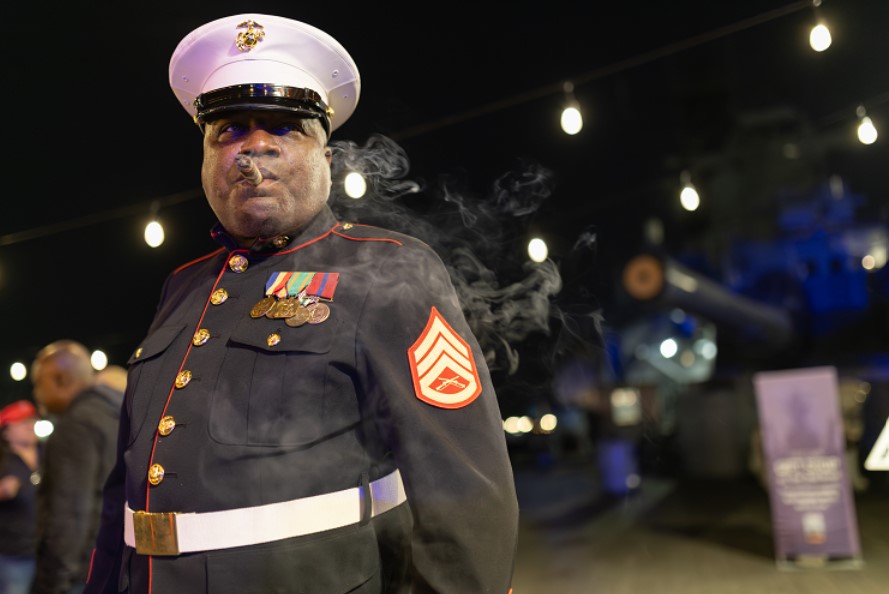
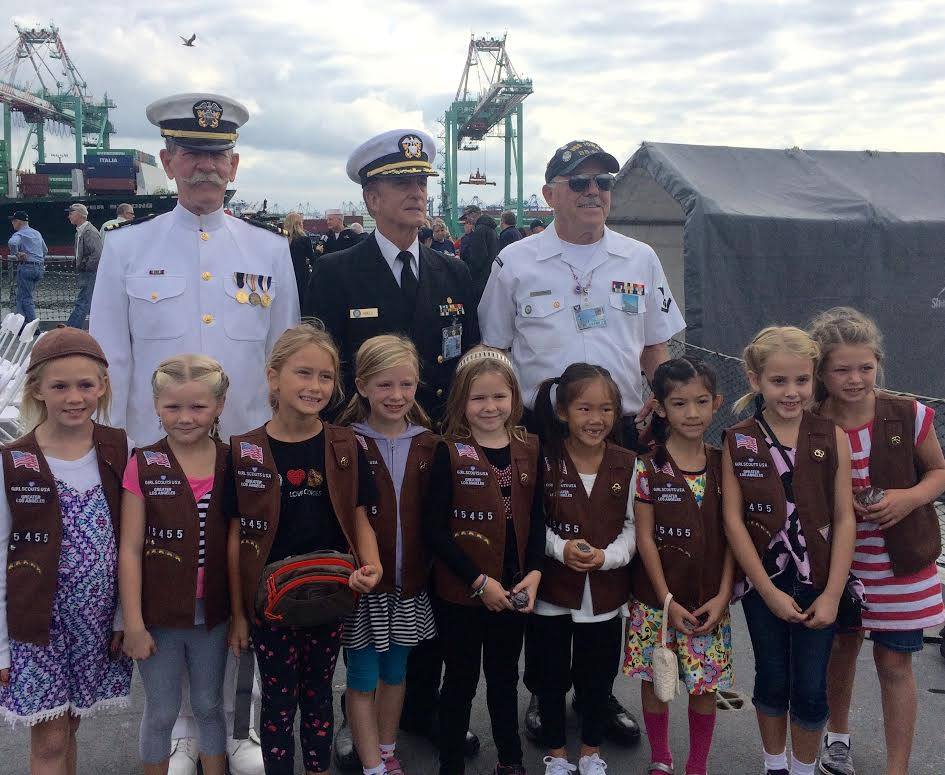
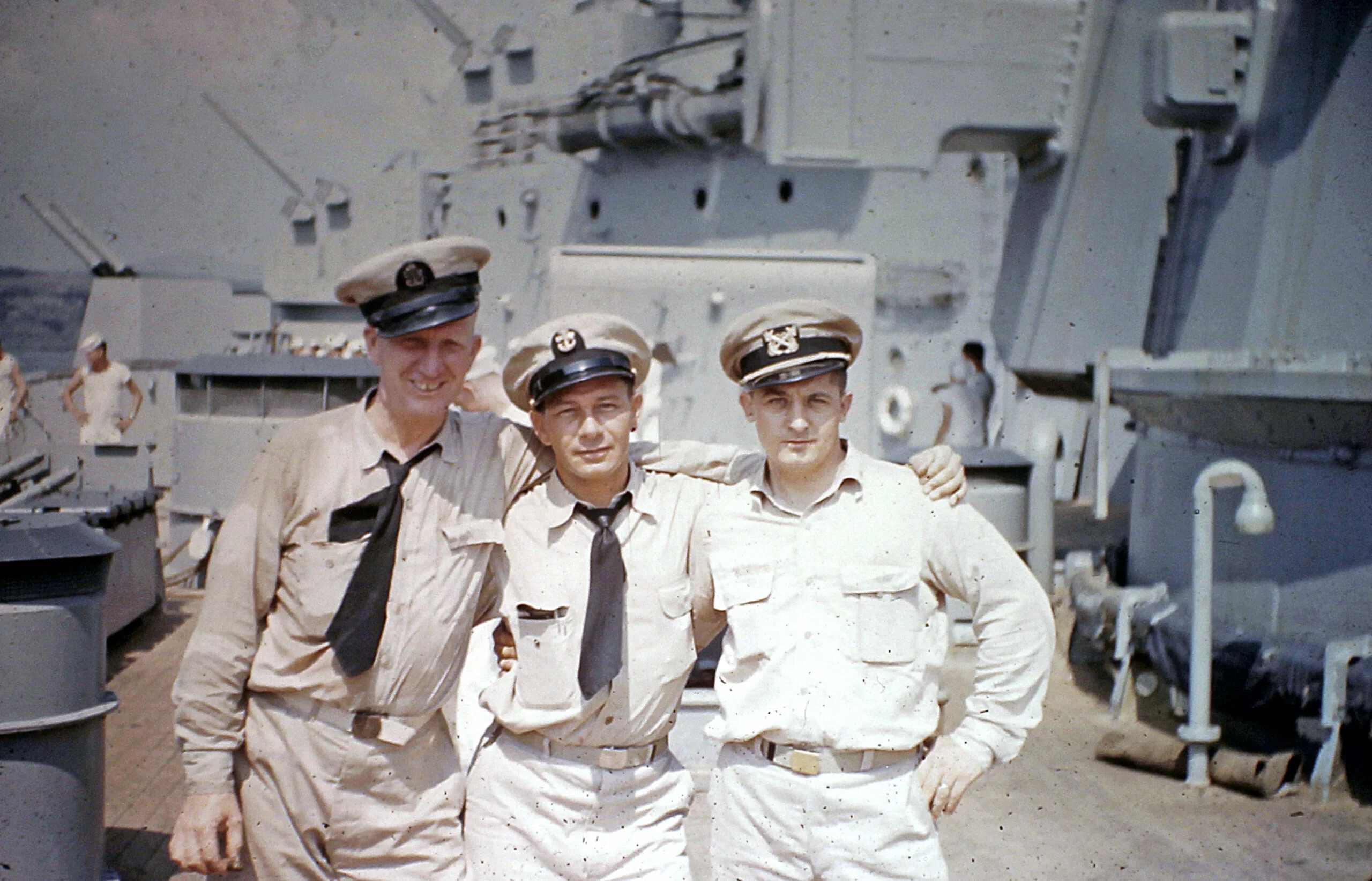
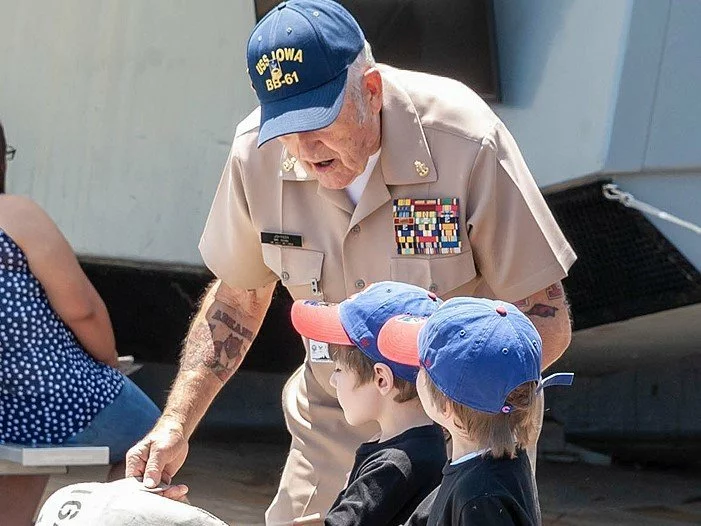
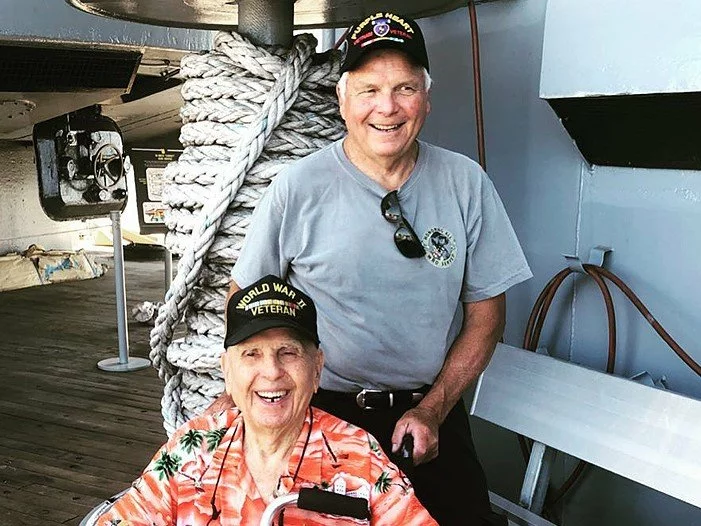
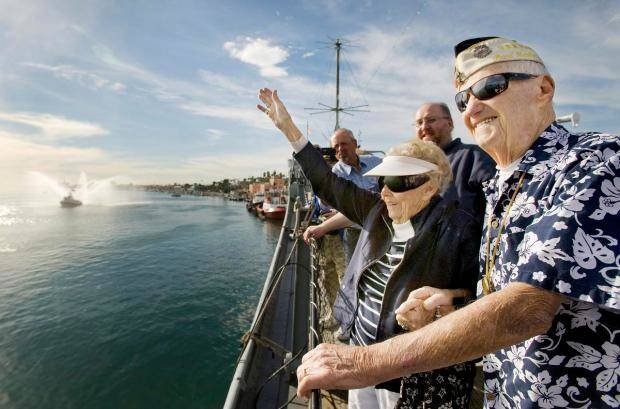
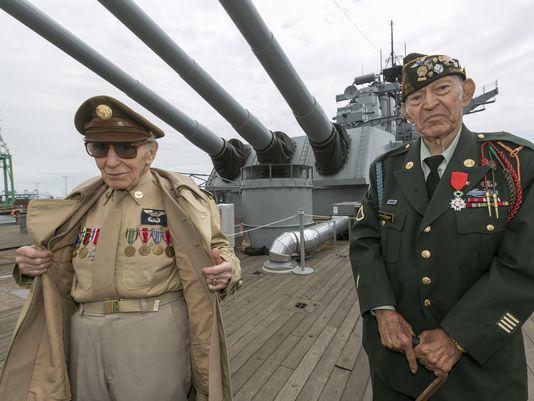
Museums honor veterans by preserving artifacts, telling stories, commemorating sacrifice, and marking important anniversaries. Battleship IOWA does all of those things. But Pacific Battleship Center has also developed Military & Veterans Programs built around a broader idea: military service may end, but the leadership, technical skill, resilience, judgment, and sense of responsibility developed through service do not simply disappear.
The challenge is often finding where those qualities can matter next.
Battleship IOWA provides one place where they can.
How Battleship IOWA Serves Veterans Beyond Remembrance
Battleship IOWA was built for sailors, and more than 80 years after USS Iowa entered service, that relationship has not ended.
Today, the ship serves not only as a place to remember military service, but also as a place where veterans can reconnect with one another, find new opportunities, share their experience, volunteer, build careers, and remain part of a community shaped by service.
That makes Battleship IOWA different from a traditional military museum.
Museums honor veterans by preserving artifacts, telling stories, commemorating sacrifice, and marking important anniversaries. Battleship IOWA does all of those things. But Pacific Battleship Center has also developed Military & Veterans Programs built around a broader idea: military service may end, but the leadership, technical skill, resilience, judgment, and sense of responsibility developed through service do not simply disappear.
The challenge is often finding where those qualities can matter next.
Battleship IOWA provides one place where they can.
Why Can the Transition From Military to Civilian Life Be So Significant?
Leaving the military involves more than changing jobs.
For many service members, military life provides a community, a mission, clearly defined responsibilities, a common language, and relationships with people who understand the demands of service. Transitioning to civilian life can change many of those things at once.
A veteran may be looking for a new career while also learning how civilian workplaces operate, rebuilding professional networks, translating military experience into language employers understand, or replacing the sense of connection that once came naturally from being part of a unit.
Battleship IOWA's Military & Veterans Programs recognize transition as a broader process rather than a single problem to solve. Career connections, civilian reintegration, quality of life, social connection, and renewed purpose are all part of that picture.
That distinction matters.
Veterans do not necessarily need someone to tell them what they lack. Many need opportunities to identify where their experience, abilities, and desire to contribute can be useful next.
Why Do Connection and Purpose Matter After Military Service?
One of the things some veterans miss after leaving the military is the sense of being part of something larger than themselves and knowing that other people depended on them.
That sense of purpose can be difficult to replace.
Battleship IOWA's veterans programming is built in part around creating opportunities for connection, camaraderie, mission, and contribution. What that looks like can vary considerably from one person to another.
A veteran with technical experience might help preserve the ship. A retired sailor may become a docent and turn decades of knowledge into something visitors can learn from. Another veteran might mentor a younger person, develop professional relationships, participate in a veterans organization, or help someone else navigate the transition to civilian life.
The activity matters less than the opportunity to contribute.
That changes the way veterans are seen. Instead of approaching veterans only as people who may need assistance, it recognizes that they also bring leadership, experience, technical skills, adaptability, judgment, and perspective that can strengthen organizations and communities.
Battleship IOWA can provide an environment where those qualities remain useful.
How Does Battleship IOWA Create Community for Veterans?
A ship is a natural place to build community among people who have served.
Military culture is shaped by teams, units, shared missions, routines, traditions, and relationships. Battleship IOWA provides a physical environment where many of those reference points remain immediately recognizable.
The museum hosts and supports military and veterans organizations and social groups including the Surface Navy Association, Marine Corps League Big Stick Detachment 1496, American Legion Battleship IOWA Post 61, American Legion Riders Chapter 61, and the Battleship IOWA Division of the Sea Cadets.
The ship also serves as a setting for ceremonies, reunions, gatherings, resource fairs, and other events that give veterans opportunities to meet one another and remain connected with a larger community of service.
The setting itself adds something important.
Veterans from different branches and generations may have had very different military experiences, but they are meeting inside a ship whose history was built around crew culture. The surroundings provide a shared point of reference and can make conversation easier because people do not always have to begin by explaining what military service means.
Community can begin with something as simple as being in a place where part of that experience is already understood.
How Has Battleship IOWA Provided Direct Support to Veterans?
Battleship IOWA's veterans mission has included more than social connection and commemoration.
Beginning in the early 2020s, the ship became home to a Los Angeles County Veterans Peer Access Network operation. VPAN follows a veterans-helping-veterans model, connecting veterans and their families with resources while helping them navigate systems related to transition, housing, employment, healthcare, education, legal services, and other needs.
The ship also became home to a Veterans Resource Center created in a refurbished section of former Chief Petty Officers' berthing, providing offices and meeting space for veterans, families, staff, and partner organizations.
Pacific Battleship Center's 2023 impact reporting demonstrates the scale that work reached during that period. Veterans West helped 2,505 members of the veteran community navigate services that included mental health and recovery support, housing coordination, workforce development and employment, healthcare, education, legal assistance, and social connection. The organization also reported 111 veteran community gatherings and 44 honors and memorial events during the year.
Those figures represent a particular period in the program's development, but they illustrate a larger idea.
A historic battleship can preserve the story of military service while also remaining useful to the people whose service that history represents.
Why Is Peer Support Valuable for Veterans?
Sometimes the most effective person to help a veteran navigate a difficult system is another veteran.
Shared service does not mean two people have identical experiences, but it can eliminate some of the distance created when someone must first explain military culture, terminology, expectations, or the complexities of leaving service.
That principle was central to the Veterans Peer Access Network work aboard Battleship IOWA. Veterans helped other veterans understand available resources, make connections, and navigate systems that could otherwise feel fragmented or difficult to approach.
Peer support also changes the starting point of the relationship.
Instead of defining someone by a particular problem, the conversation can begin with shared experience and recognition of the strengths the individual already possesses.
That fits a broader principle behind Battleship IOWA's veterans mission. Military service can involve hardship, sacrifice, and loss, but veterans should not be understood only through those experiences. They also bring technical ability, leadership, teamwork, resilience, and practical judgment.
An effective veterans program makes room for both realities.
How Can Battleship IOWA Help Veterans Build Civilian Careers?
Military experience often develops skills that civilian employers value, but those skills do not always translate neatly onto a résumé.
A service member may have spent years managing complex machinery, leading teams, coordinating logistics, maintaining electrical systems, operating communications equipment, solving technical problems, or working under intense time pressure. A civilian employer may need exactly those capabilities without immediately understanding the military title attached to them.
Battleship IOWA identifies career connections and transition support as part of its Military & Veterans mission. Earlier Veterans West programming also included workforce development, employment assistance, and participation in the Department of Defense SkillBridge program. In 2023, the organization provided internships for transitioning service members preparing to enter the civilian workforce.
The connection can be particularly strong within the maritime sector.
Ports, shipping, logistics, engineering, transportation, public safety, skilled trades, government, and maritime businesses depend on many of the same capabilities veterans may have developed during service. Pacific Battleship Center's broader Maritime Pathways model is designed to connect people with careers, service, volunteering, leadership, and community impact.
For many veterans, the issue is not whether their experience has value.
It is identifying where that value fits next.
Why Can Volunteering Be Especially Meaningful for Veterans?
Not every veteran who comes to Battleship IOWA is looking for formal assistance.
Some are looking for a place to contribute.
Volunteers are fundamental to Pacific Battleship Center's operation, working across preservation, visitor engagement, education, events, administration, and other areas. Veterans who join the volunteer crew can bring technical knowledge, leadership experience, maritime understanding, and familiarity with military culture.
In return, the ship can provide something many veterans recognize immediately: a crew, a mission, responsibility, and the expectation that their contribution matters.
That exchange works in both directions.
The museum gains experience and knowledge that can be difficult to replace. The veteran gains an environment in which those skills remain useful.
Stories collected by Battleship IOWA have described veterans initially drawn to the historic ship but ultimately staying because of the people—the camaraderie, shared purpose, and experience of working alongside others toward a common mission.
That is what makes volunteering different from many conventional veterans programs.
The first question is not necessarily, "What does this person need?"
It can also be, "What can this person contribute?"
Why Is Preserving Veterans' Stories Part of the Mission?
Military history can easily become a story about ships, weapons, battles, technologies, and dates.
Battleship IOWA has an opportunity to put people back into that history.
More than 50,000 sailors served aboard USS Iowa from World War II through the Cold War. The museum's "Those Who Served" collection preserves individual stories, photographs, ranks, assignments, memories, and other information shared by veterans and their families.
That work matters because firsthand experience disappears if it is not recorded.
A technical manual can explain how equipment functioned. A veteran can describe what it sounded like, how people worked around it, what happened when something failed, and how a crew solved problems.
An official history can document a deployment. A sailor can describe the routines, friendships, fatigue, humor, responsibility, and everyday realities of being aboard.
Those human details are what turn a historic vessel from an object into a place where people once lived and worked.
Preserving those stories also gives veterans another role.
They become teachers.
What Can Younger Generations Learn From Veterans?
One of Battleship IOWA's strongest opportunities lies where its Veterans and Education missions intersect.
Students can learn how a battleship operated through tours, exhibits, and STEM programs. Veterans can help them understand something more difficult to reproduce in a classroom: what it means to be part of a crew.
Military experience provides real examples of leadership, responsibility, technical competence, decision-making, adaptability, teamwork, and service. Those lessons can be meaningful even for students who will never enter the military.
Battleship IOWA's Military & Veterans programs identify sharing lessons learned with future generations as part of their purpose.
That creates value in both directions.
Young people gain access to firsthand experience and perspectives that cannot be found in a textbook. Veterans have an opportunity to put their knowledge to constructive use and help another generation understand the people behind the ship.
The veteran is no longer simply the subject of the history lesson.
The veteran becomes part of how the lesson is taught.
How Does Battleship IOWA Balance Continuing Service With Remembrance?
Connection and continuing purpose do not replace remembrance.
They give it context.
Battleship IOWA remains a setting for memorial services, military honors, reunions, retirement ceremonies, and other forms of recognition. Because generations of sailors actually lived and worked aboard the ship, those ceremonies take place within an environment that carries its own history.
The most solemn example is April 19, 1989, when an explosion in USS Iowa's Turret II killed 47 sailors.
The IOWA 47 remain inseparable from the history of the ship. Remembering them is part of Battleship IOWA's responsibility to their families, their shipmates, and future generations.
A memorial aboard IOWA has a different quality from one held in a neutral setting because the ship is not simply representing military service symbolically.
Sailors lived here. They stood watch here. They worked in these compartments, built friendships, performed difficult jobs, and depended on one another here.
Some lost their lives here.
The physical ship gives remembrance a setting that cannot be reproduced elsewhere.
Why Is Battleship IOWA More Than a Military Museum for Veterans?
Battleship IOWA can serve several purposes at the same time.
It can be a memorial and a meeting place. It can provide connections to resources while creating professional networks. It can be somewhere to volunteer, teach, mentor, preserve history, meet other veterans, or simply spend time in an environment where military culture is understood.
Those roles do not assume that every veteran has the same experience or the same needs.
Some may be navigating a difficult transition. Others may be looking for employment or professional connections. Some miss the camaraderie of military life. Others want to volunteer, teach, preserve history, or share what they learned.
The strength of the ship as a community platform is that those motivations can coexist.
Pacific Battleship Center's broader Maritime Pathways approach connects people with opportunities involving careers, service, volunteering, leadership, and community impact, while its Military & Veterans Programs emphasize connection, belonging, transition, and purpose.
That is a much broader mission than displaying military history.
The ship becomes useful again.
Why Does Connecting Veterans and Civilians Matter?
Many Americans today have limited firsthand exposure to military service or to the people who have served.
That distance can allow assumptions and stereotypes to replace understanding.
Battleship IOWA creates opportunities for veterans and civilians to encounter one another naturally. A visitor may meet a veteran serving as a docent. A student may learn from someone who operated similar equipment. A civilian volunteer may spend hours working alongside a former sailor preserving part of the ship.
Those encounters make military service personal rather than abstract.
They also make room for a more complete understanding of veterans themselves.
There is no single veteran experience. Some people served in combat and others did not. Some had difficult transitions into civilian life; others moved quickly into new careers. Some carry painful memories. Others remember their service primarily through friendship, responsibility, pride, or accomplishment. Many carry combinations of all of those things.
A useful veterans program recognizes that complexity rather than reducing service to a single narrative.
What Does It Really Mean to Honor Veterans?
Honoring veterans is often associated with ceremonies, monuments, holidays, and expressions of gratitude.
Those things matter, but they are only part of the picture.
Honoring veterans can also mean preserving their stories accurately, listening to their experience, connecting them with resources when support is needed, recognizing the skills they bring, and creating opportunities for them to continue contributing.
It may mean helping a transitioning service member build a civilian career. It may mean giving a retired sailor a place to volunteer. It may mean preserving the story of someone who served or bringing a veteran and a student together for a conversation.
That broader idea is particularly appropriate aboard Battleship IOWA.
The ship was built around service, but it was also built around the concept of a crew. No single sailor could operate it. Thousands of people with different skills and responsibilities depended on one another to accomplish a common mission.
The machinery may be silent today, but the principles that made the ship work have not disappeared.
Teamwork, competence, trust, leadership, responsibility, and service still matter.
They simply need new places to be applied.
Battleship IOWA can be one of them.
How Can Veterans Connect With Battleship IOWA Today?
Veterans, active-duty service members, and military families can connect with Battleship IOWA's Military & Veterans team to learn about current programs, social groups, ceremonies, resources, volunteering, and other opportunities.
Veterans and their families can also contribute personal histories to the USS Iowa "Those Who Served" registry, become part of the volunteer crew, participate in affiliated veterans organizations, attend events, or simply spend time aboard a Navy ship where the experience of military service is recognized.
Community members, donors, foundations, and corporate partners can support that mission as well.
That support offers a broader way to honor veterans—not only by recognizing what they have already done, but by investing in what they can continue to contribute.
Why Does Battleship IOWA's Veterans Mission Extend Beyond Remembrance?
USS Iowa's original mission required sailors to serve their country at sea.
Battleship IOWA's mission today is different, but it remains centered on people.
The ship preserves veterans' history and honors those who served. At the same time, it creates opportunities for veterans to reconnect, contribute, teach, find resources, build careers, volunteer, and remain part of a community.
One veteran may come aboard looking for help and meet someone who understands. Another may arrive looking for a place to contribute and find a new crew. A transitioning service member may make a professional connection. A retired sailor may preserve a story that would otherwise be lost. A student may learn about leadership from someone who practiced it under very different circumstances.
That is why Battleship IOWA's relationship with veterans extends beyond remembrance.
The ship once gave generations of sailors a mission.
Today, it can help ensure that their knowledge, experience, service, and ability to contribute continue forward.
TICKETS
Experience the Life of a Sailor.
Life of a Sailor
Our general admission experience shows how sailors live, work, and serve.
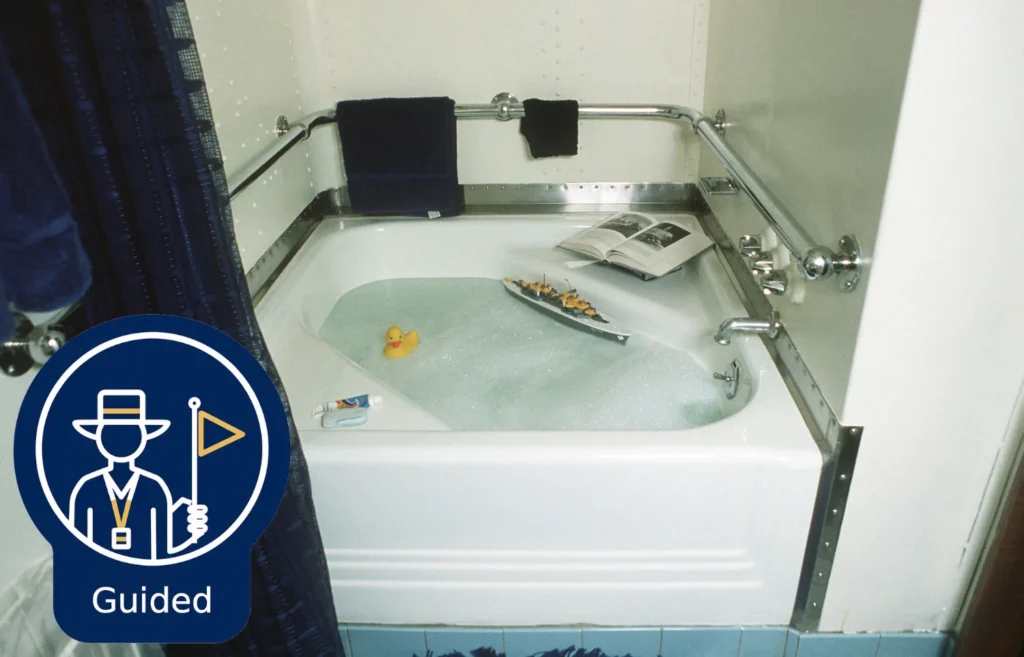
President’s Tour
It's November 1943, and Battleship IOWA is on a covert mission. President Franklin Delano Roosevelt and his entire staff are aboard, headed for top-secret […]
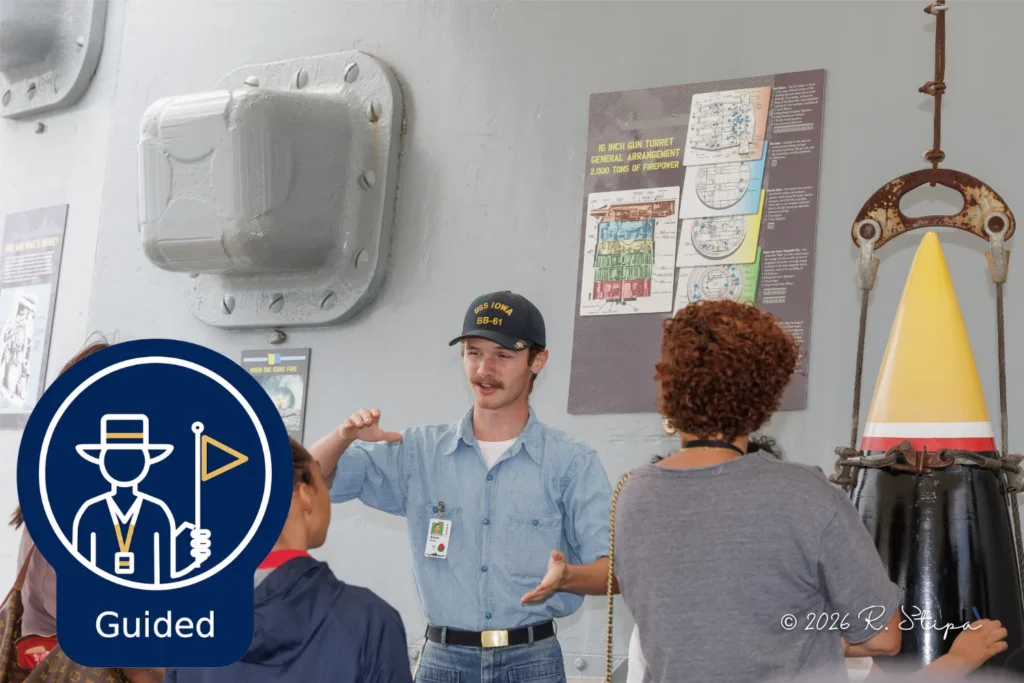
Overview Experience
The overview experience is a 90-minute crew-led tour that brings the ship's legacy to life through the stories of those who served, and those […]
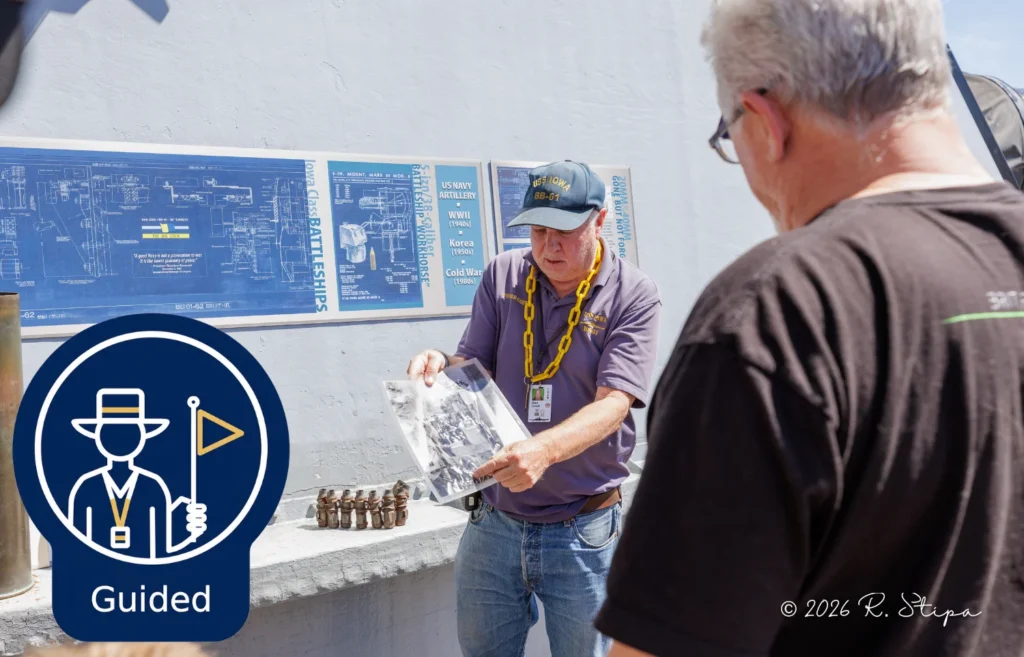
Gun Tour Experience
This exclusive, behind-the-scenes journey puts you inside the systems that made Battleship IOWA one of the most powerful warships ever built.
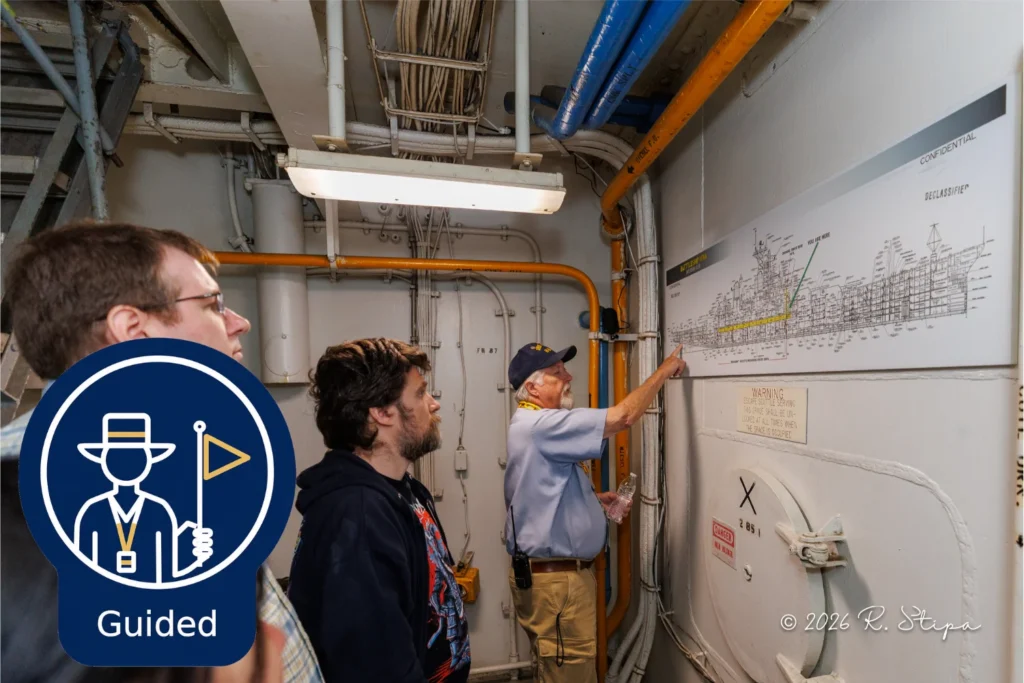
Engineering Tour Experience
The Engineering Tour takes you below into the hidden heart of Battleship IOWA, where eight boilers and four steam turbines once generated 212,000 shaft […]
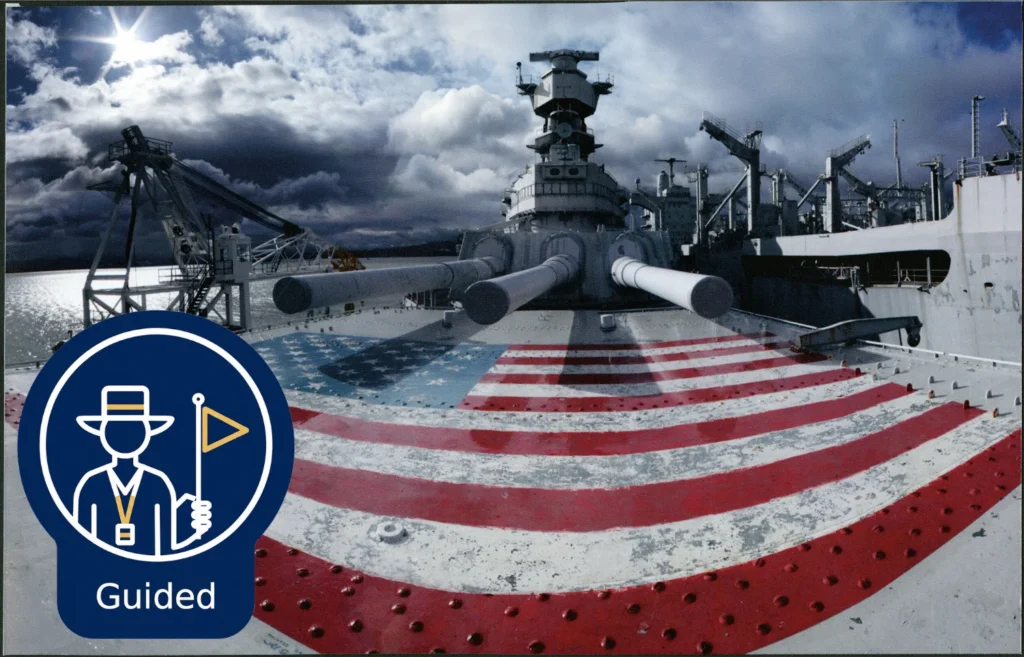
Escape the Fleet Adventure
In 2011, a small team raced against time to pull Battleship IOWA out of the Navy's reserve "ghost fleet" — or watch her be […]
Included with Admission
Life of a Sailor
Our general admission experience shows […]
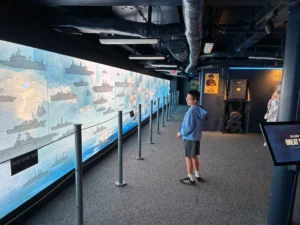
Great Ships
Explore the ships of America's […]
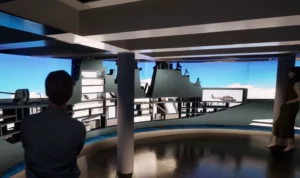
Ship Cutaway
See inside a Navy ship […]
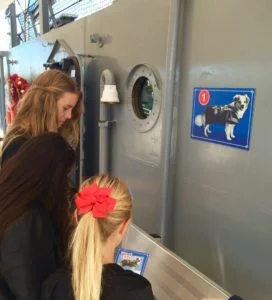
Vicky’s Scavenger Hunt
Find Vicky throughout your shipboard […]
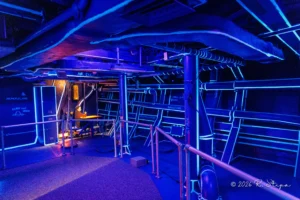
Living Blueprint
Immerse yourself in a blueprint […]
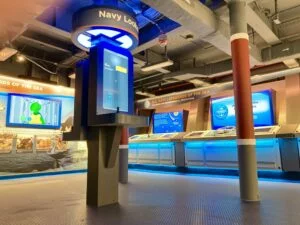
Stewards of the Sea
Explore how the Navy protects […]
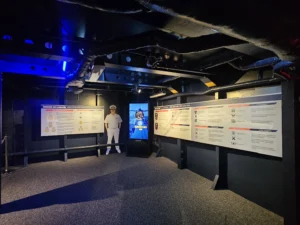
What’s My Rate?
Find the Navy career that […]
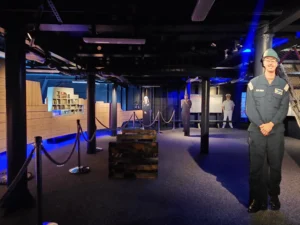
Every Sailor has a Story
Meet the people who serve.
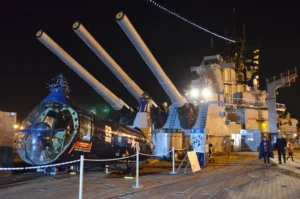
HUP-2 Retriever Helicopter
Korean War-Era HUP-2 Retriever Helicopter.
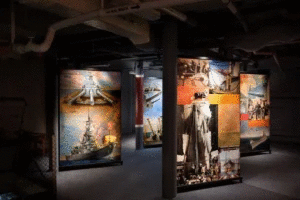
Sticks Art Gallery
Discover IOWA's story through art.
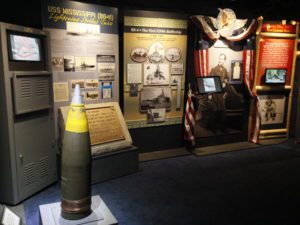
Gunnery Incidents
A dive into Navy gunnery […]
Limited time only!
Kids Board Free
In the all-new Life of a Sailor experience, kids become sailor recruits, building their skills, following the story of a famous sailor, and joining Vicky the Dog on a scavenger hunt through Battleship IOWA.
Kids board free with a paid adult.