
Why Is Battleship IOWA One of the Most Significant Battleships in American History?
Why Is Battleship IOWA One of the Most Significant Battleships in American History?
Battleship IOWA's history spans more than half a century of extraordinary change in the United States Navy.
She entered service during World War II as the lead ship of the final class of American battleships. She carried President Franklin D. Roosevelt across the Atlantic during one of the most consequential diplomatic journeys of the war, fought across the Pacific, returned to combat during Korea, spent years in reserve, and then emerged again during the Cold War carrying modern missiles alongside the massive guns of an earlier era.
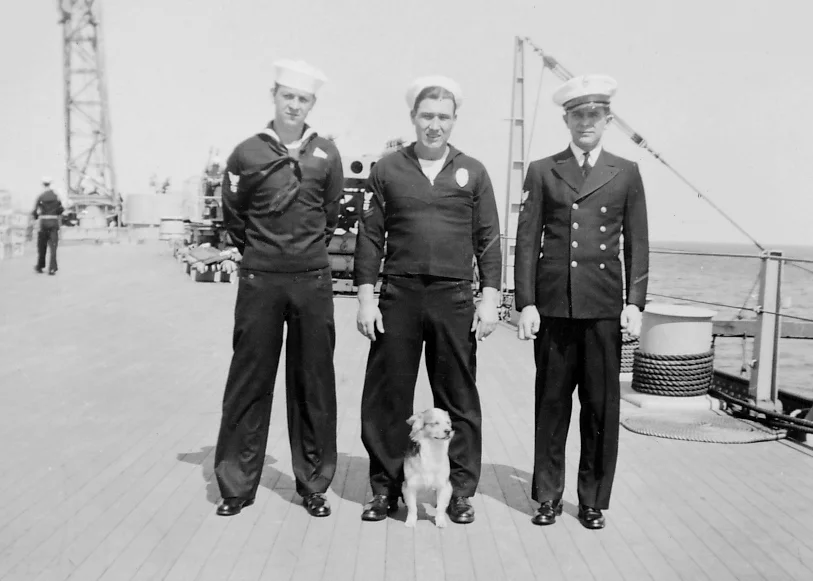
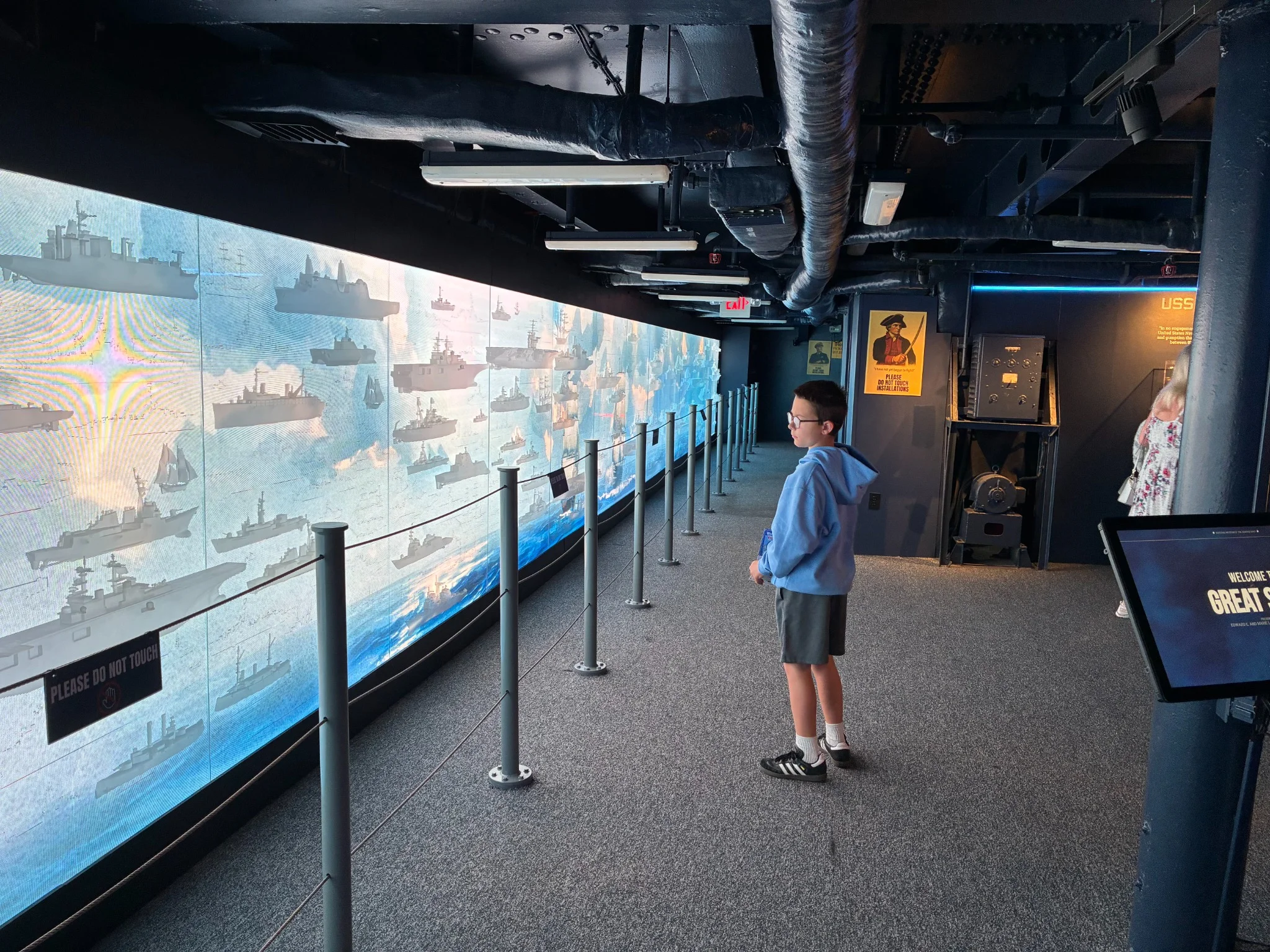
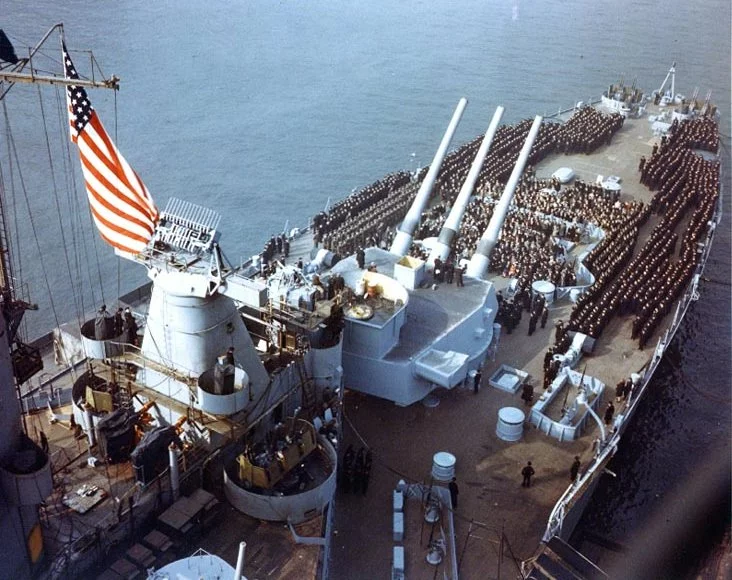
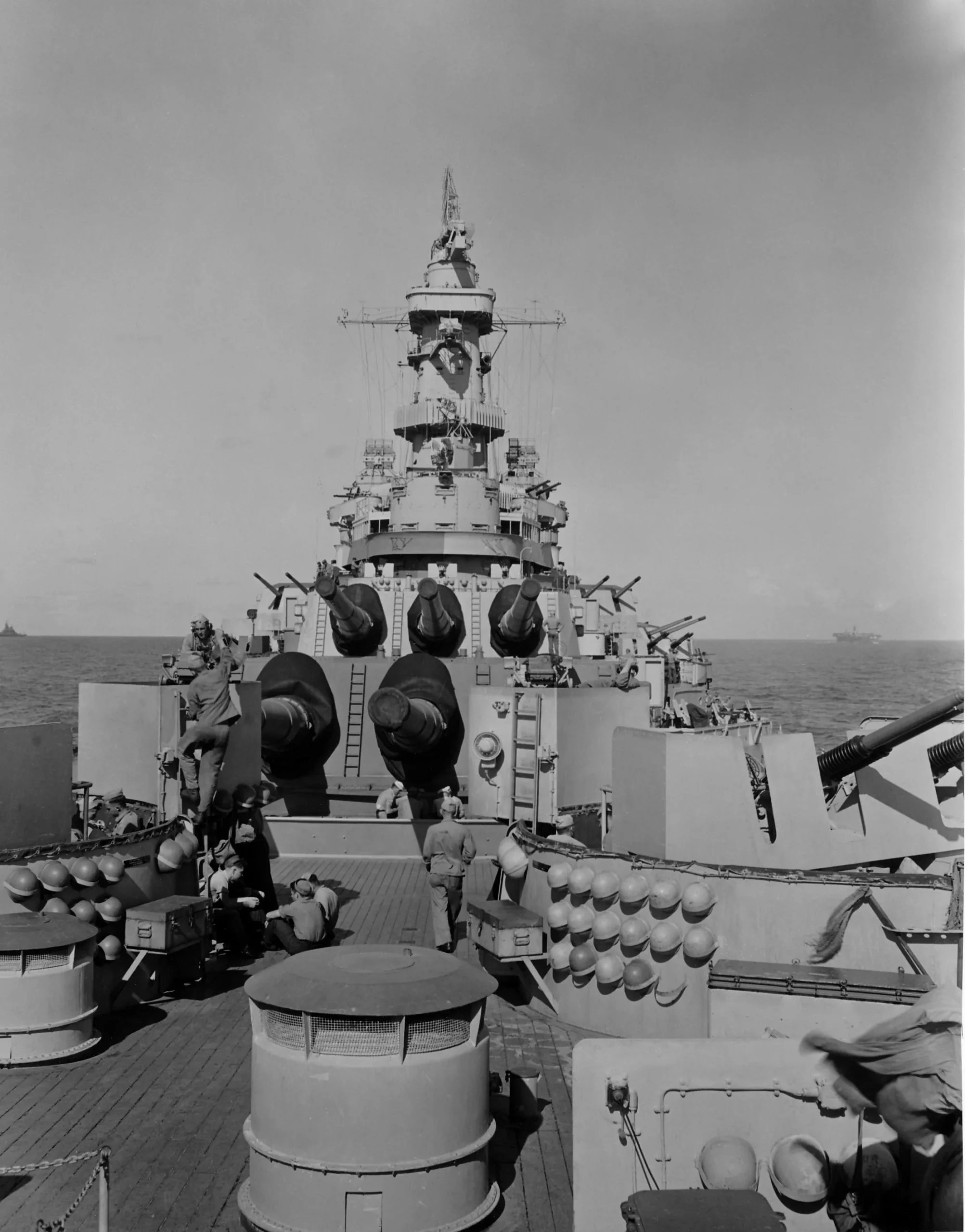
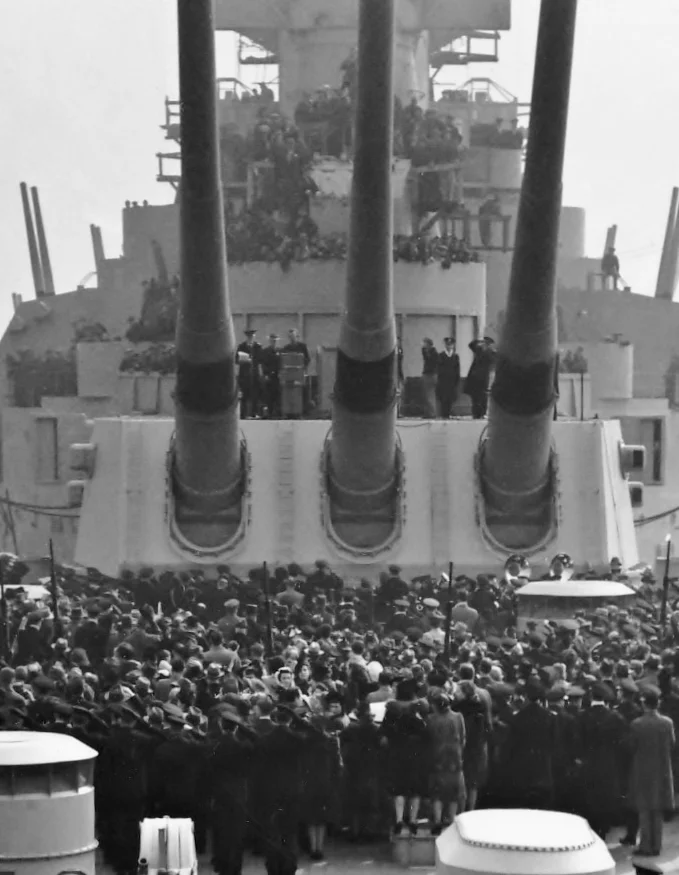
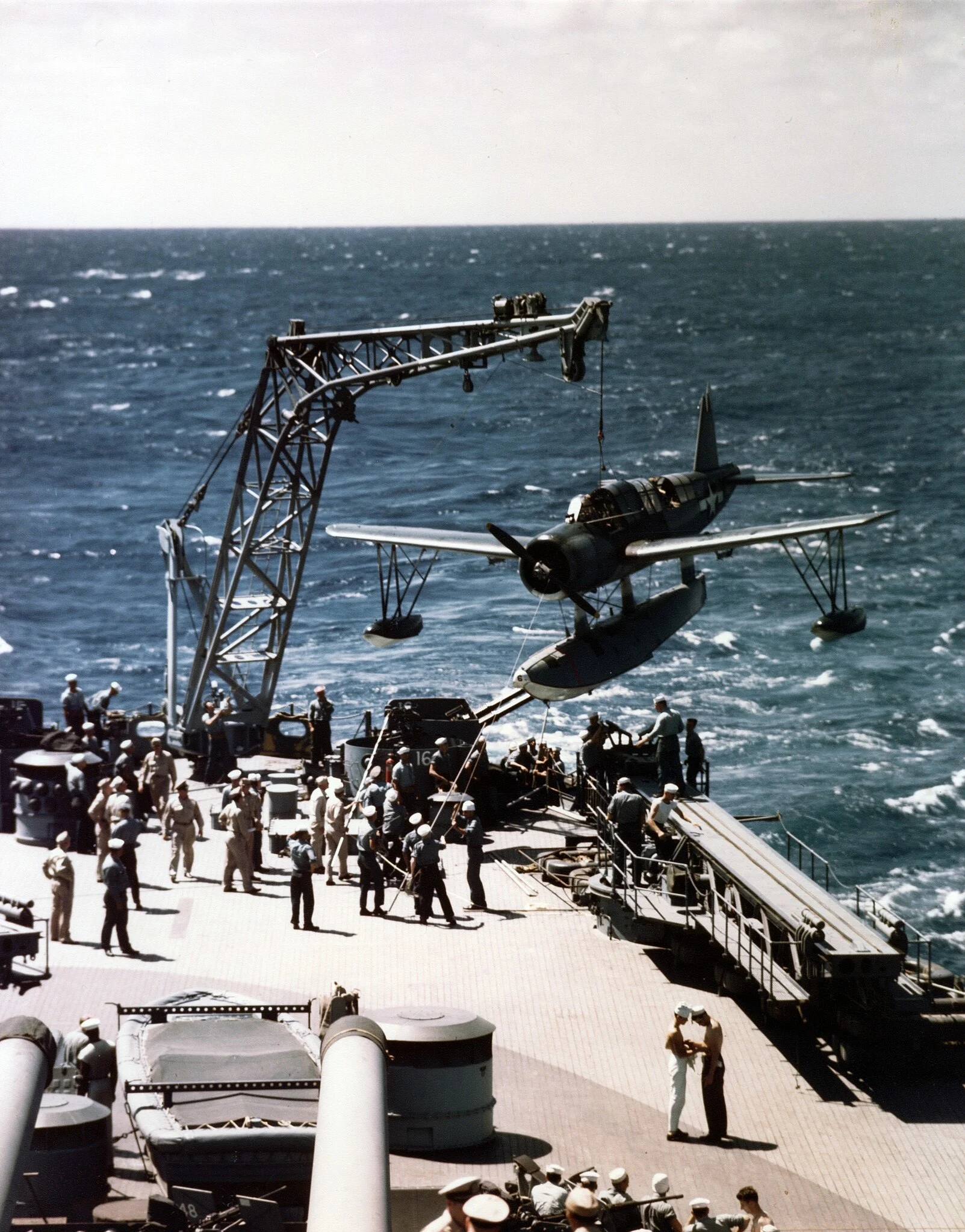
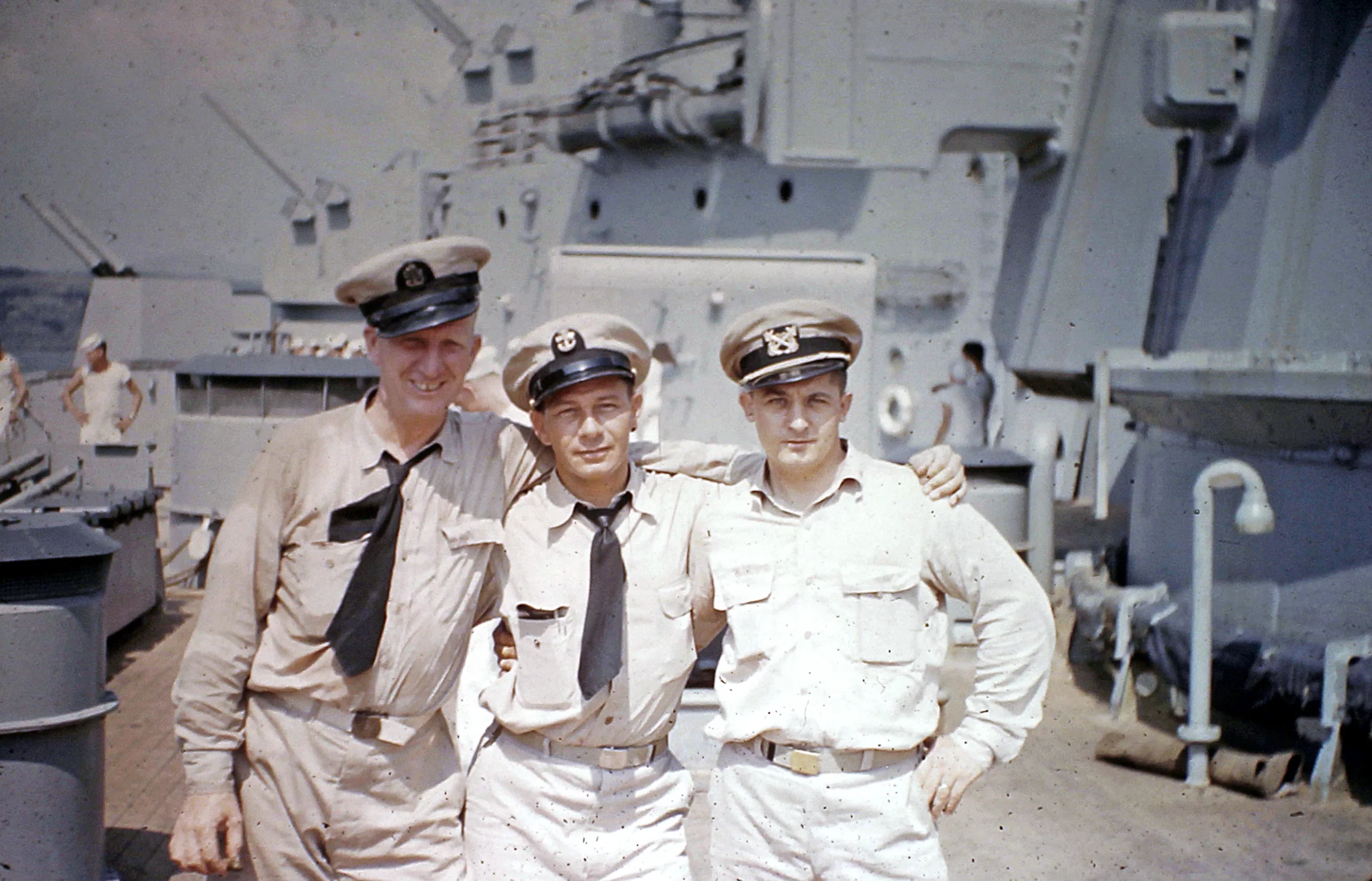
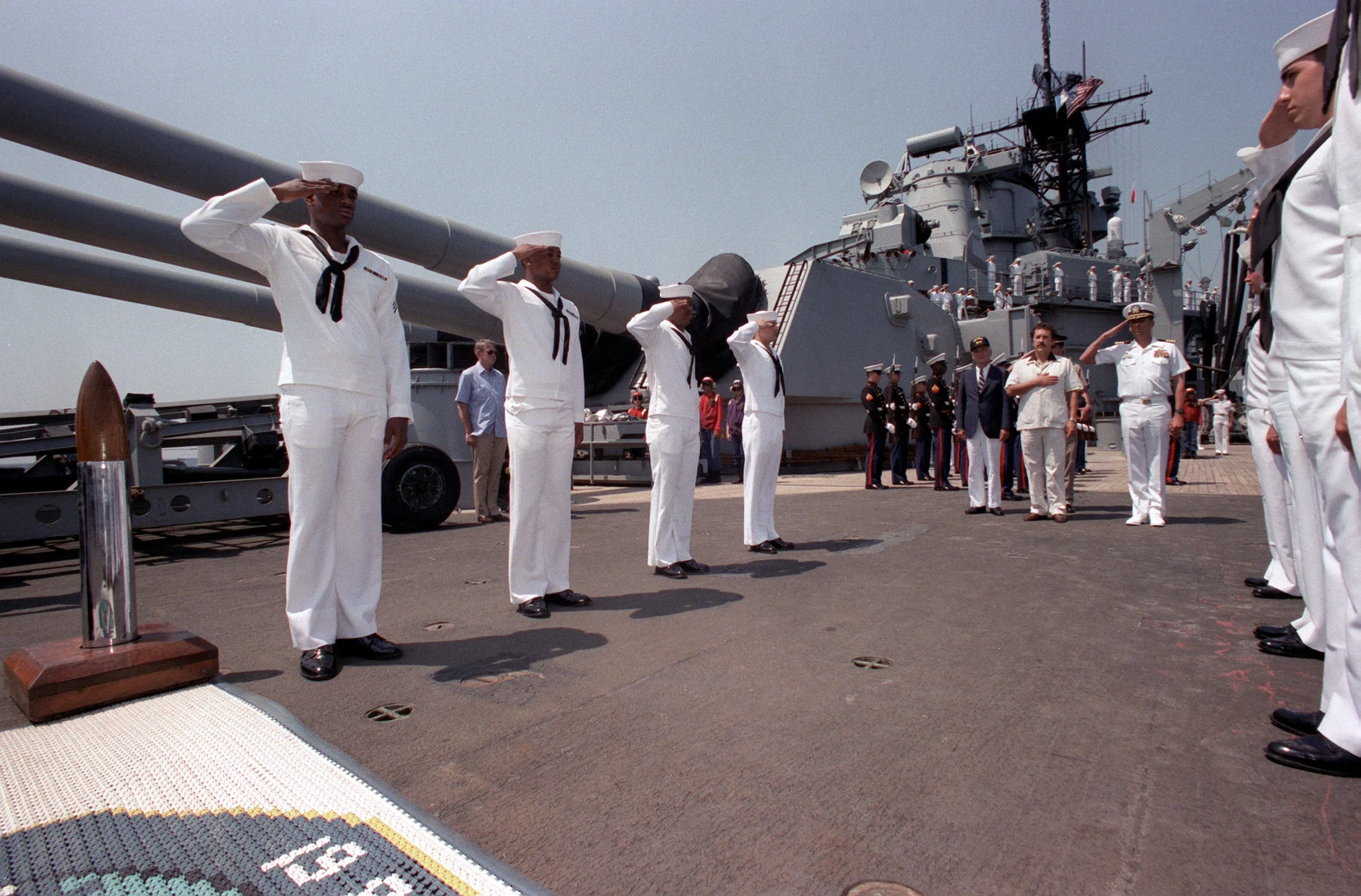
Her history also includes tragedy. On April 19, 1989, an explosion inside Turret II killed 47 sailors, creating one of the darkest chapters in the ship's story.
When USS Iowa was decommissioned for the final time in 1990, her active naval career ended. Her history did not.
Today, Battleship IOWA remains on the Los Angeles Waterfront as a museum, memorial, educational platform, and anchor of the National Museum of the Surface Navy. The ship preserves something difficult to capture in a conventional museum: the ability to walk through more than five decades of American naval history inside the vessel that experienced it.
That is what makes IOWA's history larger than the story of one warship.
It is a story about changing warfare, presidential leadership, industrial power, technological adaptation, national tragedy, and the tens of thousands of sailors who gave the ship life.
What Is USS Iowa BB-61?
USS Iowa, hull number BB-61, was the lead ship of the Iowa class, the last class of battleships built by the United States.
Her keel was laid at the New York Naval Shipyard on June 27, 1940, as war spread across Europe and Asia. She was commissioned into the United States Navy on February 22, 1943.
The Iowa class represented an evolution in American battleship design. These ships combined heavy armor and nine 16-inch main guns with unusually high speed, allowing them to operate alongside the fast aircraft carrier forces that were becoming central to naval warfare in the Pacific.
That combination helped make USS Iowa useful across very different eras.
She began her career as a World War II battleship built around armor, guns, and speed. Four decades later, she returned to service carrying Tomahawk cruise missiles, Harpoon anti-ship missiles, and modernized combat systems while retaining those same nine 16-inch guns.
Few surviving warships show the transition from World War II naval technology to the late Cold War as visibly as USS Iowa.
Why Is USS Iowa Known as the “Battleship of Presidents”?
Battleship IOWA is often called the “Battleship of Presidents” because of her unusual connections to American presidential history.
The most famous began almost immediately after the ship entered service.
In November 1943, USS Iowa carried President Franklin D. Roosevelt across the Atlantic during the first part of his journey to meet Allied leaders Winston Churchill and Joseph Stalin at the Tehran Conference. Roosevelt was traveling at a critical moment in World War II, when Allied leaders were coordinating strategy that would help shape the final years of the conflict.
Because Roosevelt used a wheelchair, modifications were made aboard the ship for the voyage. Among them was the installation of a bathtub for the president, an unusual feature aboard an American battleship.
The voyage linked Iowa to presidential history before she had begun her primary combat service in the Pacific.
That association continued. Battleship IOWA records connections with five U.S. presidents, and President Ronald Reagan later came aboard during the ship's Cold War service.
The result is a battleship whose history repeatedly intersects with the office of the commander in chief and with some of the defining political moments of the twentieth century.
What Did USS Iowa Do During World War II?
After completing the presidential transport mission, USS Iowa headed for the Pacific.
There she joined a Navy in the middle of a major transition.
Battleships had once been expected to meet enemy battleships in decisive gun battles. By 1944, aircraft carriers had become the centerpiece of American naval power in the Pacific. Fast battleships such as Iowa increasingly operated as part of carrier task forces, using their speed, antiaircraft weapons, and heavy guns to protect carriers and support broader fleet operations.
USS Iowa participated in major Pacific campaigns during 1944 and 1945, supporting operations associated with the Marshall Islands, the Marianas, the Philippines, Iwo Jima, Okinawa, and strikes against the Japanese home islands.
Her 16-inch guns could also bombard targets ashore, delivering shells at ranges far beyond conventional field artillery.
By the end of World War II, Iowa had earned nine battle stars.
Yet her wartime importance was not simply a matter of firepower. Her service illustrates how battleships themselves were adapting to a new naval environment in which aviation, radar, logistics, and coordinated fleet operations increasingly determined success.
Iowa had been designed as a battleship.
She proved valuable because she could function as part of a much larger naval system.
Why Did USS Iowa Return for the Korean War?
Like many American warships, USS Iowa did not remain continuously active after World War II.
The enormous Navy built to defeat the Axis powers was reduced dramatically after 1945, and Iowa was decommissioned as the United States adjusted to peacetime requirements.
That peacetime did not last.
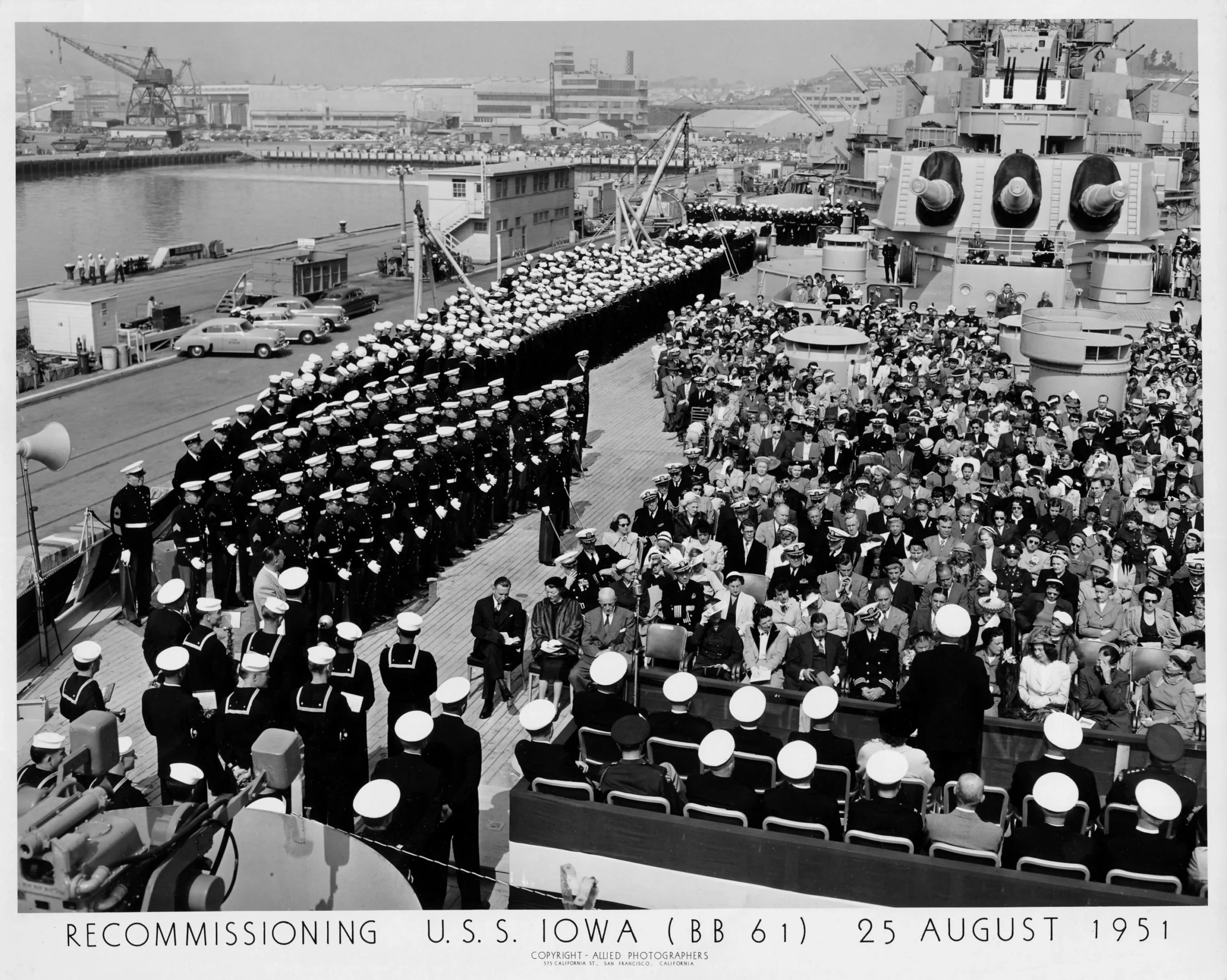
When war began on the Korean Peninsula in 1950, the United States again needed naval forces capable of supporting operations ashore. USS Iowa was recommissioned in August 1951 and deployed to Korean waters in 1952.
The conflict gave the battleship a mission well suited to one of its traditional strengths: heavy naval gunfire.
Iowa's 16-inch and 5-inch guns could strike coastal targets, transportation infrastructure, supply positions, and other military objectives from offshore. During one mission, the ship operated near Chongjin in northeastern Korea, far north along the Korean coast and relatively close to the Soviet border.
Korea demonstrated why battleships could remain useful even after aircraft carriers had surpassed them as the Navy's dominant capital ships.
Their role had changed.
Rather than seeking enemy battleships at sea, they could provide sustained gunfire against targets ashore while projecting a highly visible form of naval power.
After the Korean War, Iowa also served as flagship of the Second Fleet and participated in NATO exercises and overseas deployments before once again entering reserve status.
That cycle of service, reserve, and recommissioning became a defining characteristic of her career.
Why Was USS Iowa Brought Back During the Cold War?
By the late 1970s and early 1980s, USS Iowa had been inactive for decades.
Then the strategic environment changed again.
During President Ronald Reagan's administration, the United States pursued a major naval expansion centered on the goal of a 600-ship Navy. The four Iowa-class battleships offered an unusual opportunity: large, fast, heavily armed vessels that already existed and had enough space to accommodate modern weapons and electronics.
USS Iowa was recommissioned in April 1984.
The ship that returned to service combined technologies from two very different eras.
Her nine 16-inch guns remained. But she also carried Tomahawk cruise missiles capable of striking distant targets, Harpoon anti-ship missiles, and updated combat systems integrated into a hull designed in the early years of World War II.
That made Iowa one of the clearest physical examples of technological adaptation in the Navy.
Instead of discarding the old platform, the Navy found a way to combine existing capabilities with new weapons and systems.
During the 1980s, USS Iowa operated in the Atlantic, Mediterranean, and other regions as part of America's Cold War naval presence. President Reagan also came aboard during the 1986 International Naval Review in New York Harbor.
By then, the battleship had become a living bridge between two very different generations of naval warfare.
What Happened Aboard USS Iowa on April 19, 1989?
The most tragic day in USS Iowa's history occurred on April 19, 1989.
At 9:55 a.m., during a gunnery exercise, an explosion occurred in the center gun of Turret II.
Forty-seven sailors were killed.
The loss devastated the crew and the families and communities connected to them. It also became one of the most intensely examined episodes in the ship's history.
For Battleship IOWA today, April 19 is not simply another date on a timeline.
The sailors who died are remembered as the IOWA 47, and their memory remains closely tied to the museum's identity, its relationship with veterans, and its interpretation of the ship's Cold War service.
Survivors of the 1989 crew have also become part of the ship's continuing story. Some have returned years later to share their experiences and help ensure that the history of the tragedy includes the voices of those who lived through it.
That matters because the history of USS Iowa cannot be told only through military power, technology, and achievement.
It also includes loss, service, trauma, memory, and responsibility to those who did not come home.
When Did USS Iowa Leave Active Service for the Last Time?
USS Iowa was decommissioned for the final time on October 26, 1990.
By then, the Cold War itself was nearing its end.
The battleship era was ending as well.
Missiles, submarines, aircraft carriers, precision weapons, and increasingly sophisticated sensor networks had transformed naval warfare. Large battleships no longer occupied the role they once had in American fleet planning.
Iowa's final decommissioning therefore marked more than the retirement of one ship.
It was part of the closing chapter of an entire category of American warship.
But retirement created a new question.
What should happen to a vessel with this much history?
How Was Battleship IOWA Saved and Brought to Los Angeles?
Historic warships do not automatically become museums.
Preserving a ship the size of USS Iowa requires an organization willing to secure the vessel, identify a permanent home, build public and political support, raise substantial funding, and accept responsibility for maintaining an 887-foot steel ship indefinitely.
Supporters spent years working to preserve Iowa.
Pacific Battleship Center was established in 2008 as part of the effort. The Navy ultimately awarded USS Iowa to the organization for use as a museum, and on July 4, 2012, Battleship IOWA opened to the public in Los Angeles.
The location gave the ship another connection to maritime history.
San Pedro and the Los Angeles Waterfront have deep ties to the Navy, commercial shipping, and maritime activity. IOWA entered a new life in a working port environment rather than becoming an isolated monument.
The move transformed the ship from a retired warship into a place where the public could encounter the history she represents directly.
How Many Sailors Served Aboard USS Iowa?
Battleship IOWA estimates that more than 50,000 sailors served aboard USS Iowa from World War II through the Cold War.
That number is essential to understanding why the ship matters.
Battleships are often remembered through specifications: speed, horsepower, armor, displacement, guns, and battle stars.
None of those capabilities existed independently of people.
Sailors fired the guns, maintained boilers and turbines, navigated the ship, prepared meals, treated injuries, repaired electrical equipment, handled ammunition, operated radios, stood watches, cleaned compartments, and performed thousands of other tasks required to keep a battleship functioning.
Their experiences also differed by era.
A sailor aboard Iowa in 1944 served in a different Navy from one aboard in Korea in 1952 or during the Cold War in 1988. The technologies changed. The missions changed. The strategic environment changed.
The steel remained.
Generations of sailors gave it life.
That human continuity is one of the most important parts of the ship's history.
Why Is Battleship IOWA Historically Important Today?
Battleship IOWA is significant in part because her history spans three very different periods of American naval service: World War II, the Korean War, and the Cold War.
Few surviving artifacts allow people to encounter all three within the same physical object.
Walk through the ship and those layers remain visible.
World War II-era guns and armor exist alongside Cold War missile systems. Spaces associated with sailors of the 1940s coexist with modifications made decades later. The Roosevelt voyage, Pacific combat, Korean gunfire missions, Cold War deterrence, and the 1989 tragedy are all part of the history of the same vessel.
That makes IOWA particularly useful for understanding how the Navy and the United States changed during the second half of the twentieth century.
The ship is not frozen in one moment.
She is a record of adaptation.
Her history demonstrates how a nation changes its technology, strategy, and institutions in response to a changing world.
Why Preserve the Entire Battleship Instead of Just Its Artifacts?
Many objects associated with USS Iowa could be preserved individually.
A uniform could be placed in a display case. A shell could be exhibited. Photographs, documents, equipment, and personal possessions could all help tell parts of the story.
What would be lost is context.
A 16-inch gun means something different when visitors can stand next to the turret that carried it.
A sailor's bunk has greater meaning when it remains inside the compartment where sailors slept.
A boiler becomes easier to understand when visitors descend through the ship to reach the engineering spaces.
The bridge makes more sense when someone can stand there and look forward over an 887-foot bow.
Preserving the entire ship protects the relationships between those things.
It preserves scale.
It preserves space.
It allows history to remain three-dimensional.
That is something no collection of separate artifacts can fully reproduce.
How Has Battleship IOWA's Mission Changed Since Becoming a Museum?
USS Iowa was built to fight wars.
Battleship IOWA now serves a very different purpose.
Today, the ship interprets the Life of a Sailor, preserves naval history, educates students, supports veterans, engages volunteers, connects visitors with maritime careers and service, hosts civic and community activities, and serves as the anchor of the National Museum of the Surface Navy.
That transition is itself one of the most interesting chapters in Iowa's history.
The ship has moved from an instrument of national defense to a platform for education, remembrance, service, and public engagement.
Those roles are different from the ship's original mission, but they are connected to it.
The museum's relevance depends on the history embodied in the vessel and, especially, on the people who served aboard her.
The ship no longer carries sailors into war.
It now carries their stories forward.
What Is the National Museum of the Surface Navy?
Battleship IOWA is the anchor of the developing National Museum of the Surface Navy.
That role broadens the story beyond BB-61 itself.
Iowa provides a powerful starting point for interpreting the ships and sailors who operate on the surface of the world's oceans. Her own career touches many of the themes such a museum can explore: technological change, maritime security, deterrence, global deployment, teamwork, naval careers, service, sacrifice, and the continuing importance of access to the seas.
In 2021, Iowa was named the future National Museum of the Surface Navy.
That designation added another chapter to the ship's evolution.
A vessel built to fight during World War II, recommissioned for Korea, and modernized for the Cold War is now becoming a platform for explaining the larger history and continuing role of America's Surface Navy.
What Can Battleship IOWA Teach Us About American History?
Battleship IOWA allows visitors to examine American history from an unusual perspective.
Through the ship, World War II becomes more than a sequence of battles. It becomes a story about industrial mobilization, technology, global logistics, diplomacy, and the enormous national effort required to fight a worldwide conflict.
The Korean War reveals the early tensions of the Cold War and the continued use of naval power in conflicts very different from World War II.
Iowa's return in the 1980s shows how the United States responded to renewed superpower competition by combining existing military assets with new technologies.
The Turret II tragedy provides a reminder of the human risks associated with military service even outside conventional combat.
And the effort to preserve the ship after decommissioning raises another historical question: what does a society decide is worth remembering, and what is required to preserve that memory?
That is why Battleship IOWA remains relevant.
The ship is not simply evidence of what happened.
It is a place from which to ask why those events mattered.
What Is the Legacy of Battleship IOWA?
It would be easy to define USS Iowa's legacy through numbers.
She served across three major eras of conflict. She has connections with five presidents. She earned 11 battle stars. More than 50,000 sailors served aboard her. She carried nine 16-inch guns across an 887-foot hull.
Those numbers establish scale.
They do not fully explain why the ship matters.
Iowa's larger legacy lies in the people and events behind them.
She carried a president toward a meeting that helped shape Allied strategy in World War II. She supported carrier forces and combat operations across the Pacific. She returned to provide gunfire during the Korean War. She was modernized and recommissioned during the Cold War. Forty-seven sailors lost their lives aboard her in 1989. Thousands more served aboard and carried their experiences home.
Then another generation worked to save the ship itself.
Today, visitors can walk through the same vessel and encounter those histories in the places where they occurred.
That continuity is what makes Battleship IOWA historically significant.
She is not simply a surviving battleship.
She is a surviving connection between generations.
How Can Visitors Experience Battleship IOWA's History Today?
The best way to understand Battleship IOWA's history is to experience the ship itself.
Visitors can move through spaces associated with the sailors who served aboard, see the weapons and machinery that defined different periods of the ship's career, explore exhibits connected to the Life of a Sailor, and observe how the vessel evolved from World War II through Korea and the Cold War.
Guided and specialized tours offer opportunities to go deeper into particular parts of the story, including weapons systems, engineering spaces, presidential history, and areas beyond the standard visitor route.
Each compartment adds another piece to a history that cannot be reduced to a single battle, president, technology, or era.
Battleship IOWA's story is the accumulated history of a ship and the people who brought her to life across generations.
More than 80 years after USS Iowa entered service, that history can still be experienced by stepping aboard.
TICKETS
Experience the Life of a Sailor.
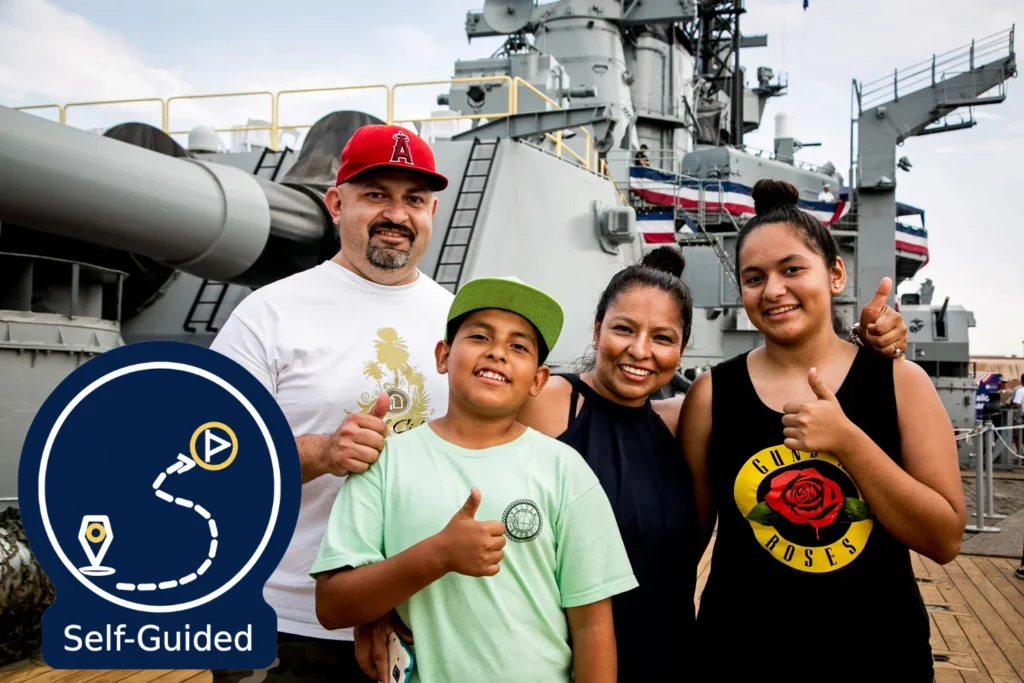
Life of a Sailor
Our general admission experience shows how sailors live, work, and serve.
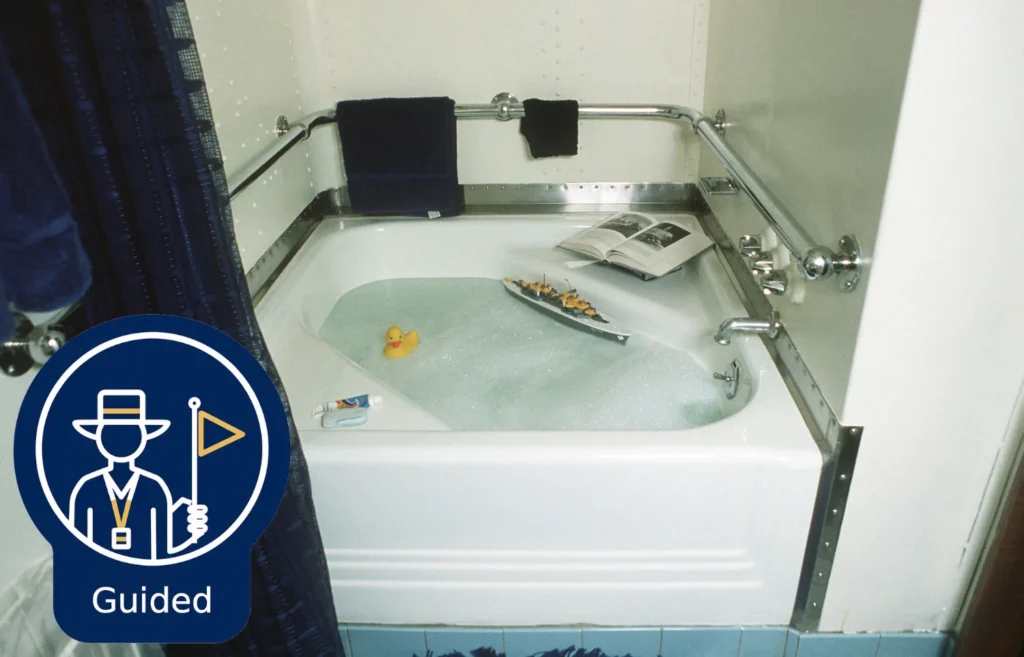
President’s Tour
It's November 1943, and Battleship IOWA is on a covert mission. President Franklin Delano Roosevelt and his entire staff are aboard, headed for top-secret […]
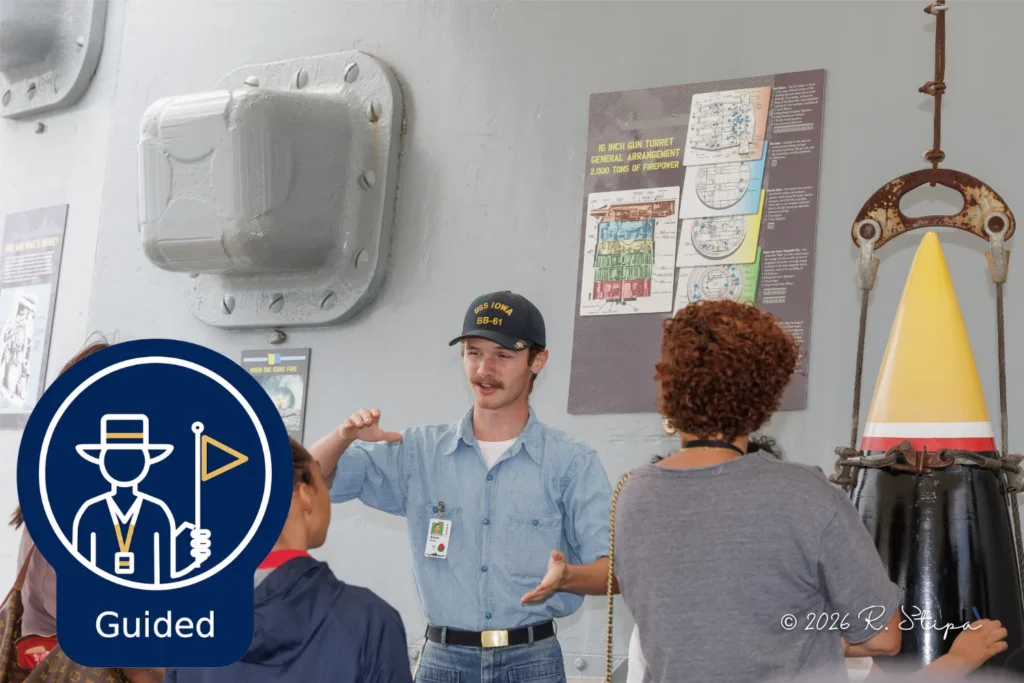
Overview Experience
The overview experience is a 90-minute crew-led tour that brings the ship's legacy to life through the stories of those who served, and those […]
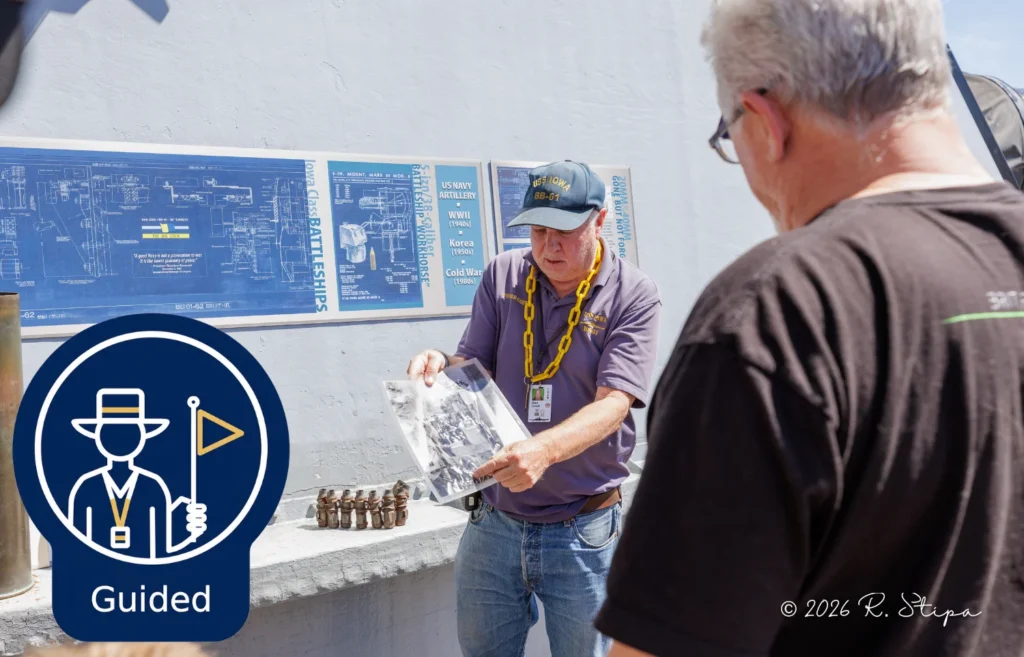
Gun Tour Experience
This exclusive, behind-the-scenes journey puts you inside the systems that made Battleship IOWA one of the most powerful warships ever built.
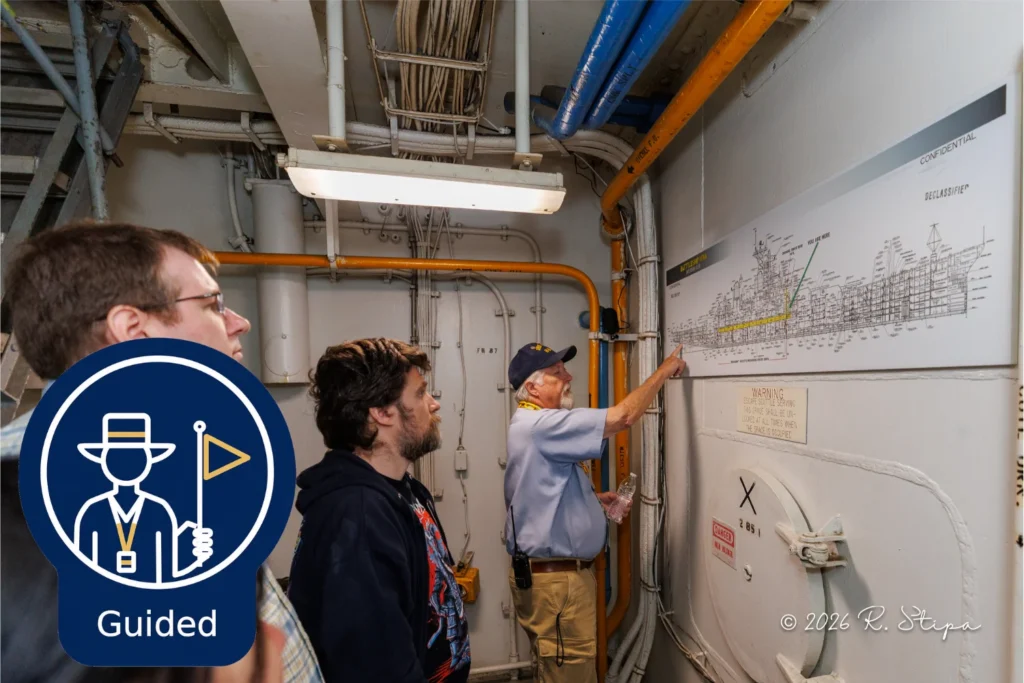
Engineering Tour Experience
The Engineering Tour takes you below into the hidden heart of Battleship IOWA, where eight boilers and four steam turbines once generated 212,000 shaft […]
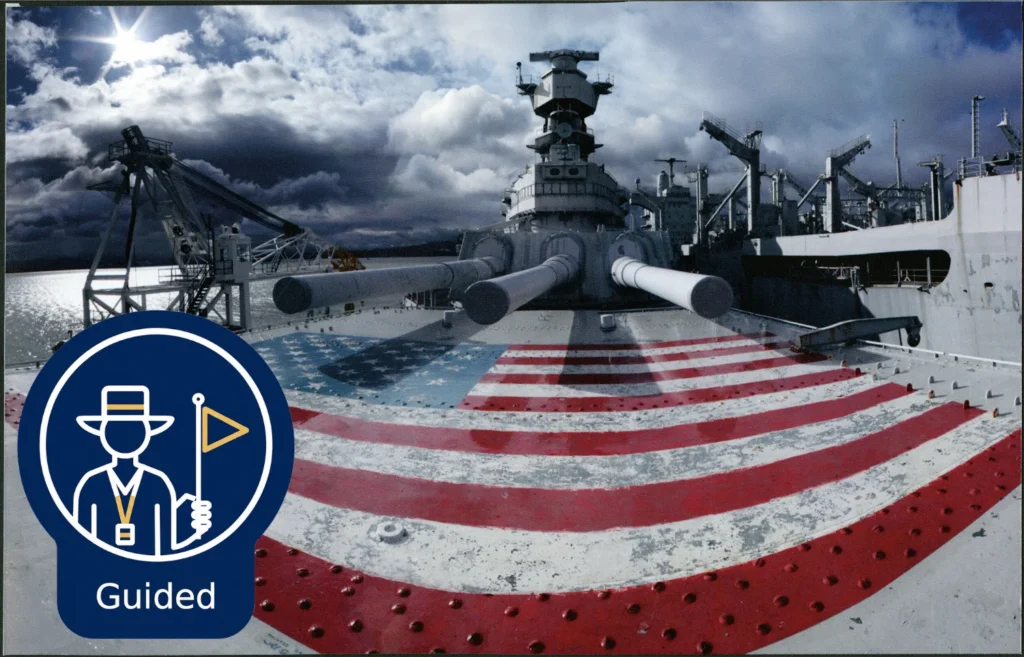
Escape the Fleet Adventure
In 2011, a small team raced against time to pull Battleship IOWA out of the Navy's reserve "ghost fleet" — or watch her be […]
Included with Admission
Life of a Sailor
Our general admission experience shows […]
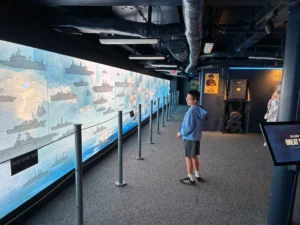
Great Ships
Explore the ships of America's […]
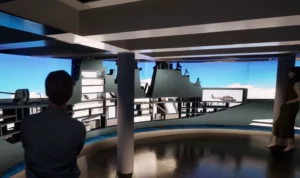
Ship Cutaway
See inside a Navy ship […]
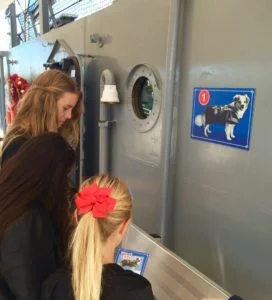
Vicky’s Scavenger Hunt
Find Vicky throughout your shipboard […]
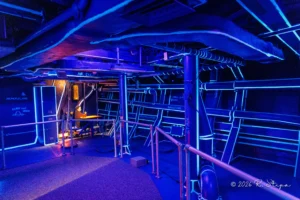
Living Blueprint
Immerse yourself in a blueprint […]
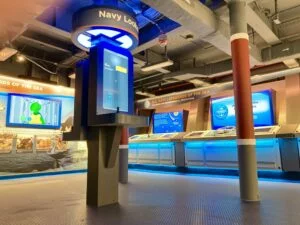
Stewards of the Sea
Explore how the Navy protects […]
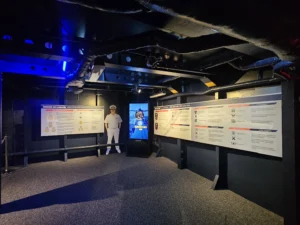
What’s My Rate?
Find the Navy career that […]
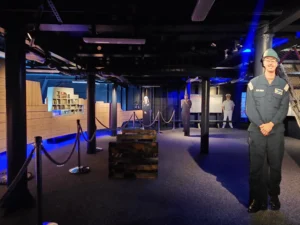
Every Sailor has a Story
Meet the people who serve.
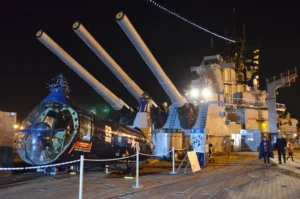
HUP-2 Retriever Helicopter
Korean War-Era HUP-2 Retriever Helicopter.
Sticks Art Gallery
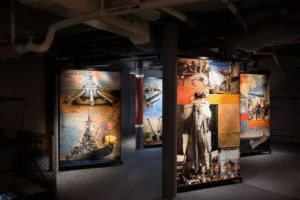
Discover IOWA's story through art.
Gunnery Incidents
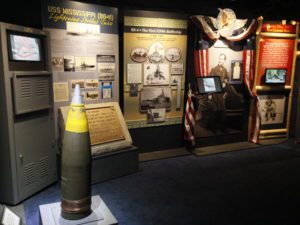
A dive into Navy gunnery […]

Limited time only!
Kids Board Free
In the all-new Life of a Sailor experience, kids become sailor recruits, building their skills, following the story of a famous sailor, and joining Vicky the Dog on a scavenger hunt through Battleship IOWA.
Kids board free with a paid adult.