
Why Volunteers Are Essential to Battleship IOWA
Why Volunteers Are Essential to Battleship IOWA
Battleship IOWA was built to be operated by a crew.
During active service, thousands of sailors worked throughout the ship to keep its machinery operating, its weapons ready, its spaces maintained, and its people fed, supplied, trained, and connected. Every system depended on someone knowing what to do and taking responsibility for doing it.
The ship no longer has a Navy crew of thousands, but it still depends on people.
Today, volunteers are central to the operation of Battleship IOWA and the broader mission of Pacific Battleship Center. They preserve historic spaces, welcome visitors, teach students, support veterans, restore equipment, stage events, maintain the vessel, and contribute across the organization.
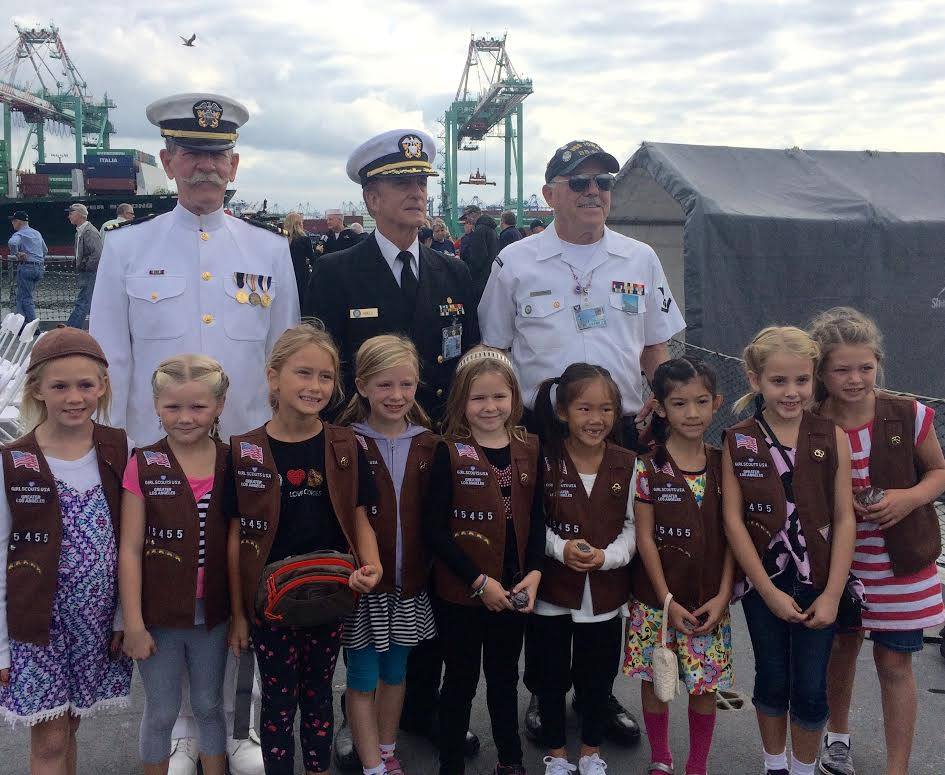
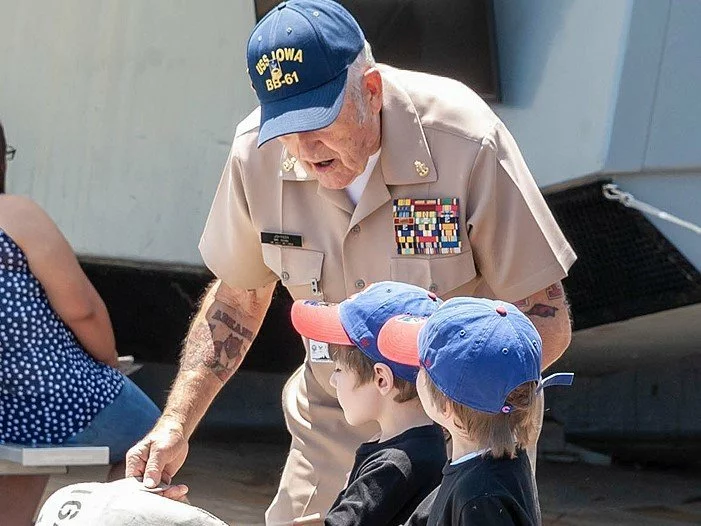
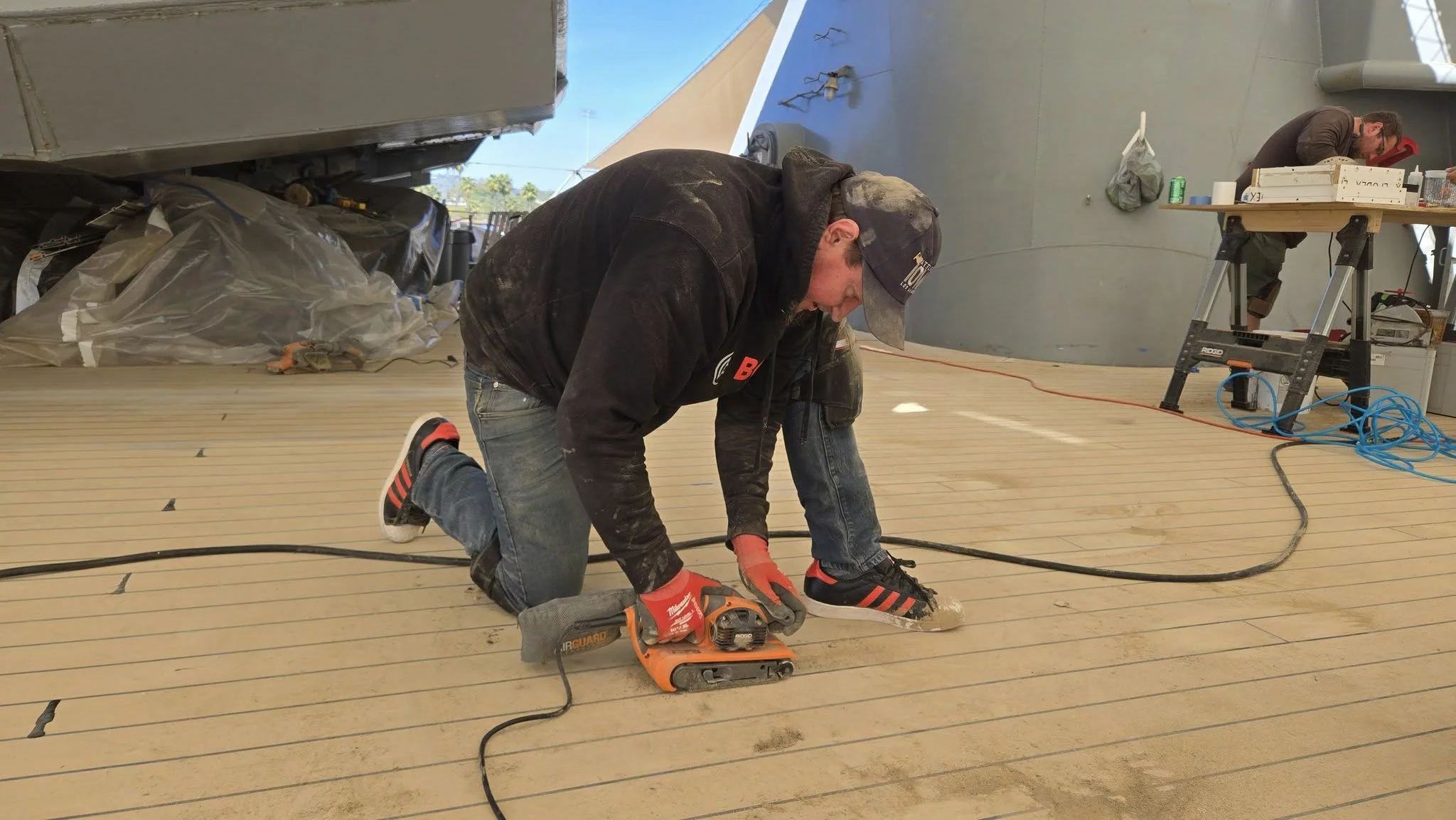
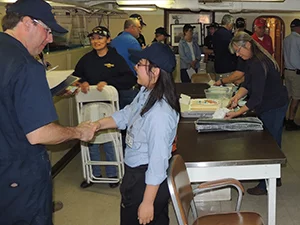
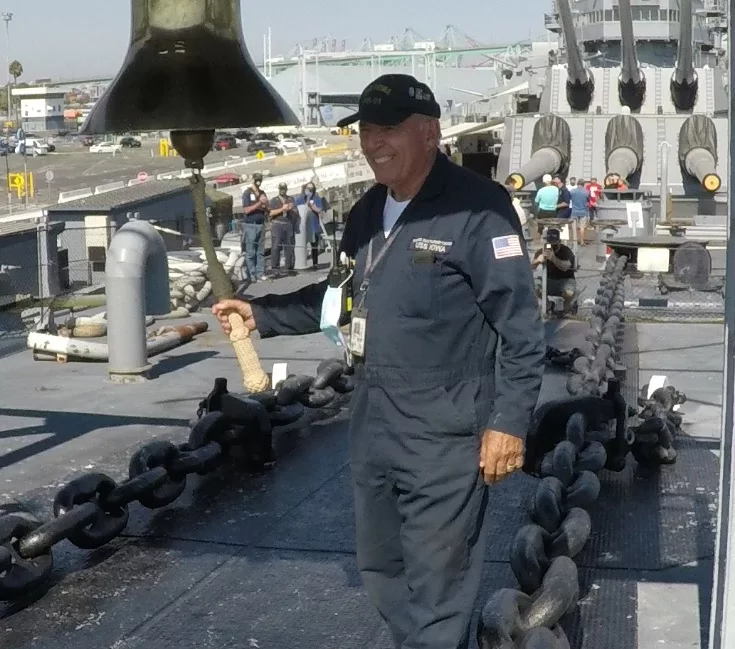
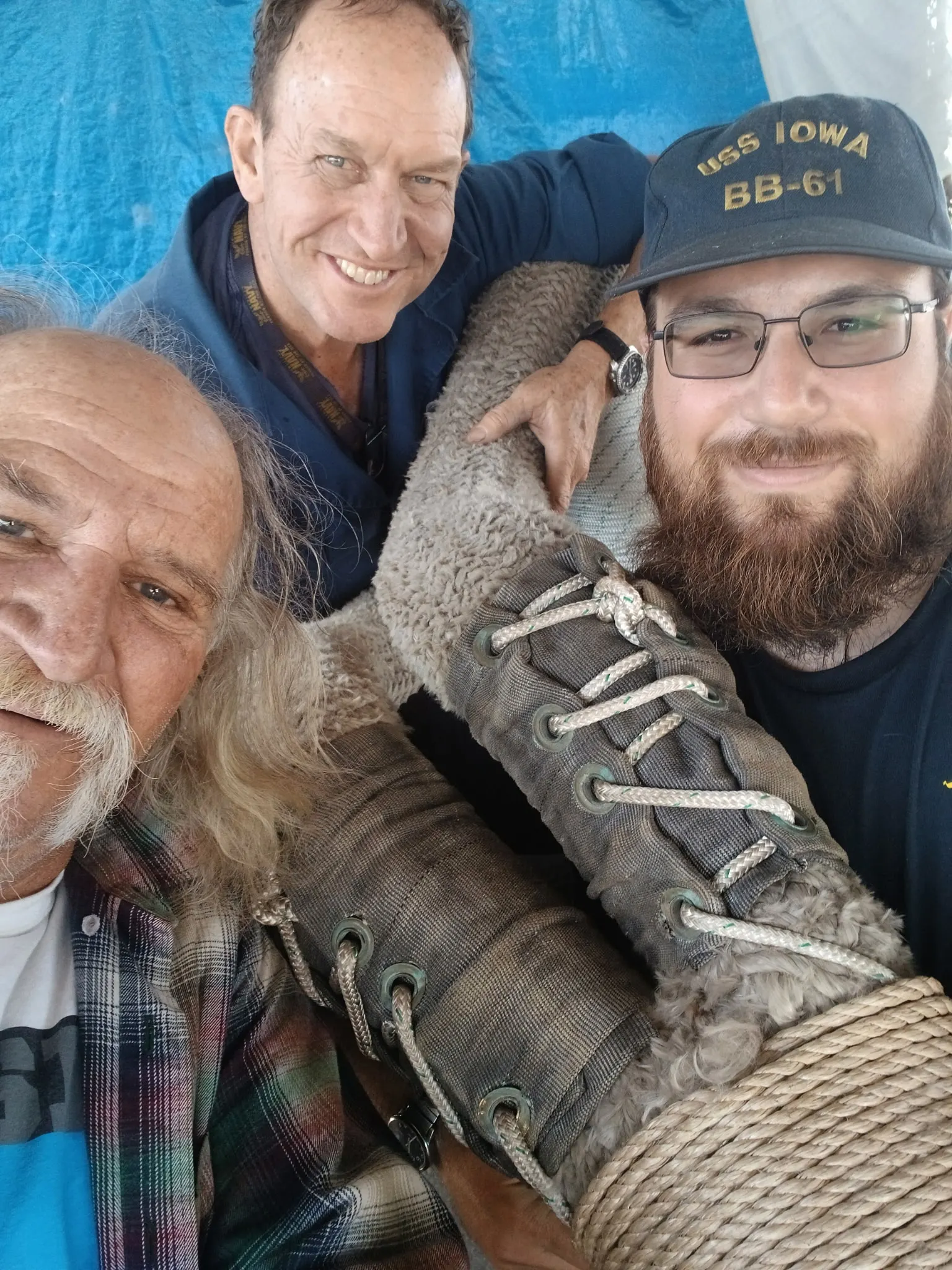
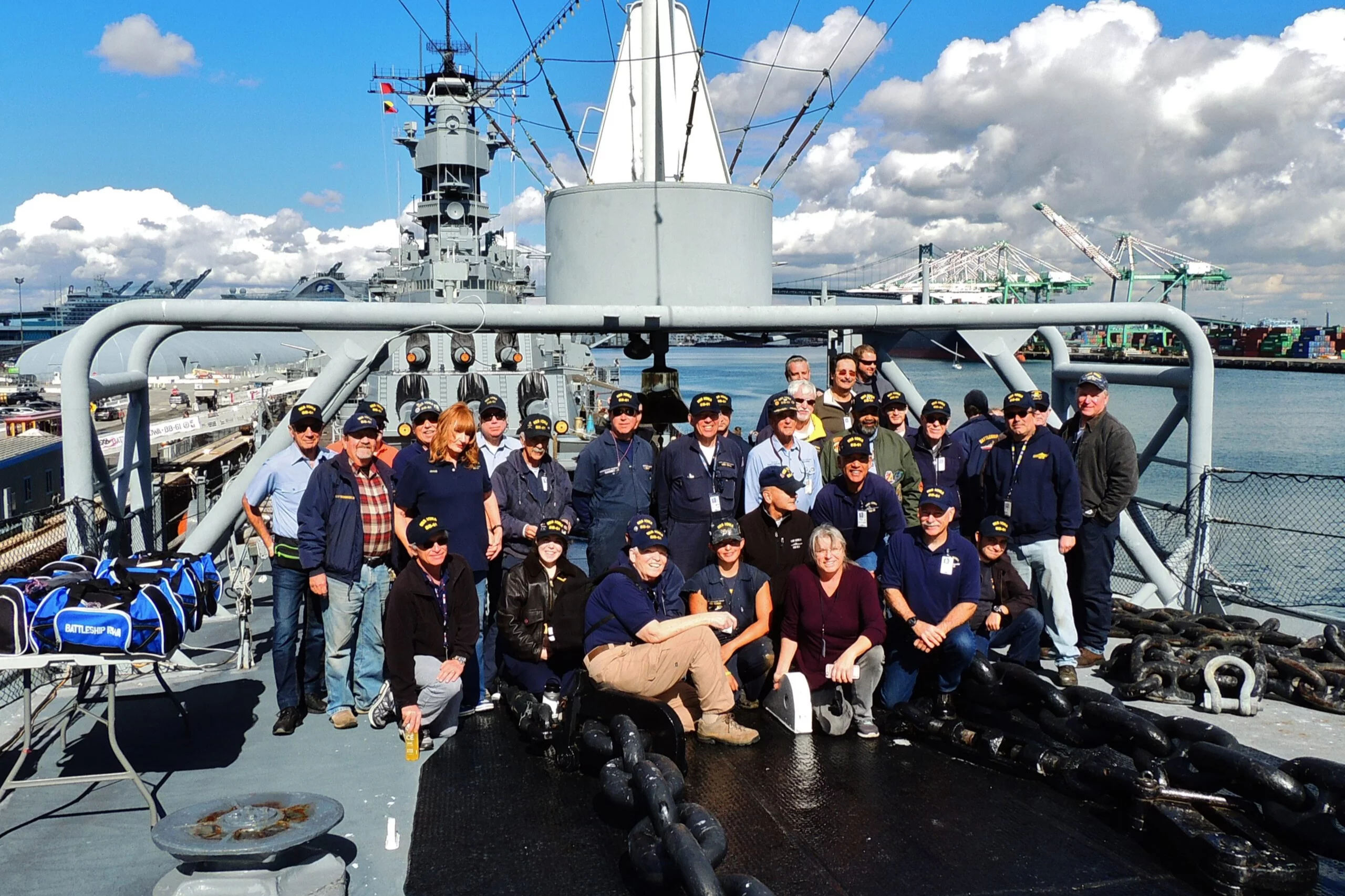
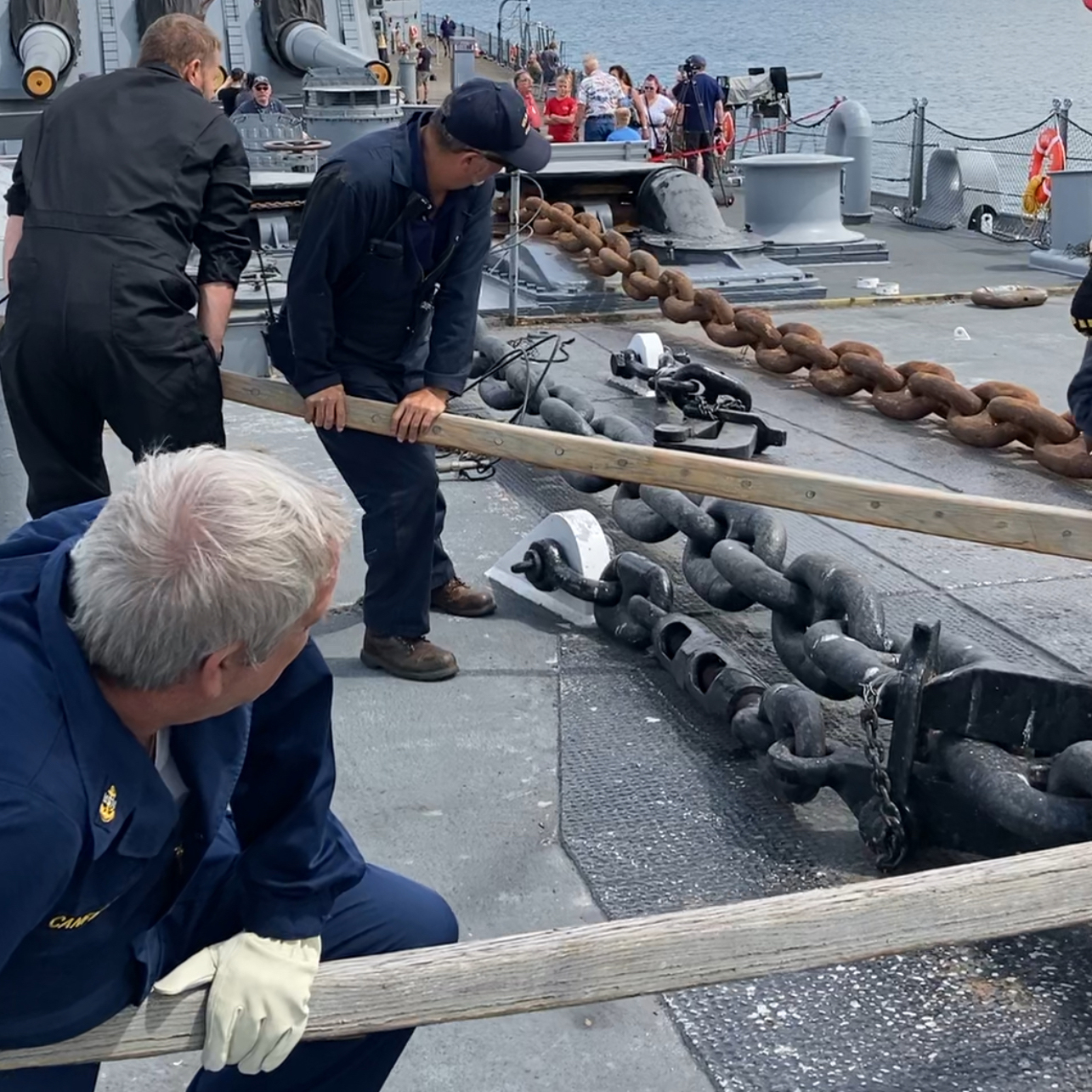
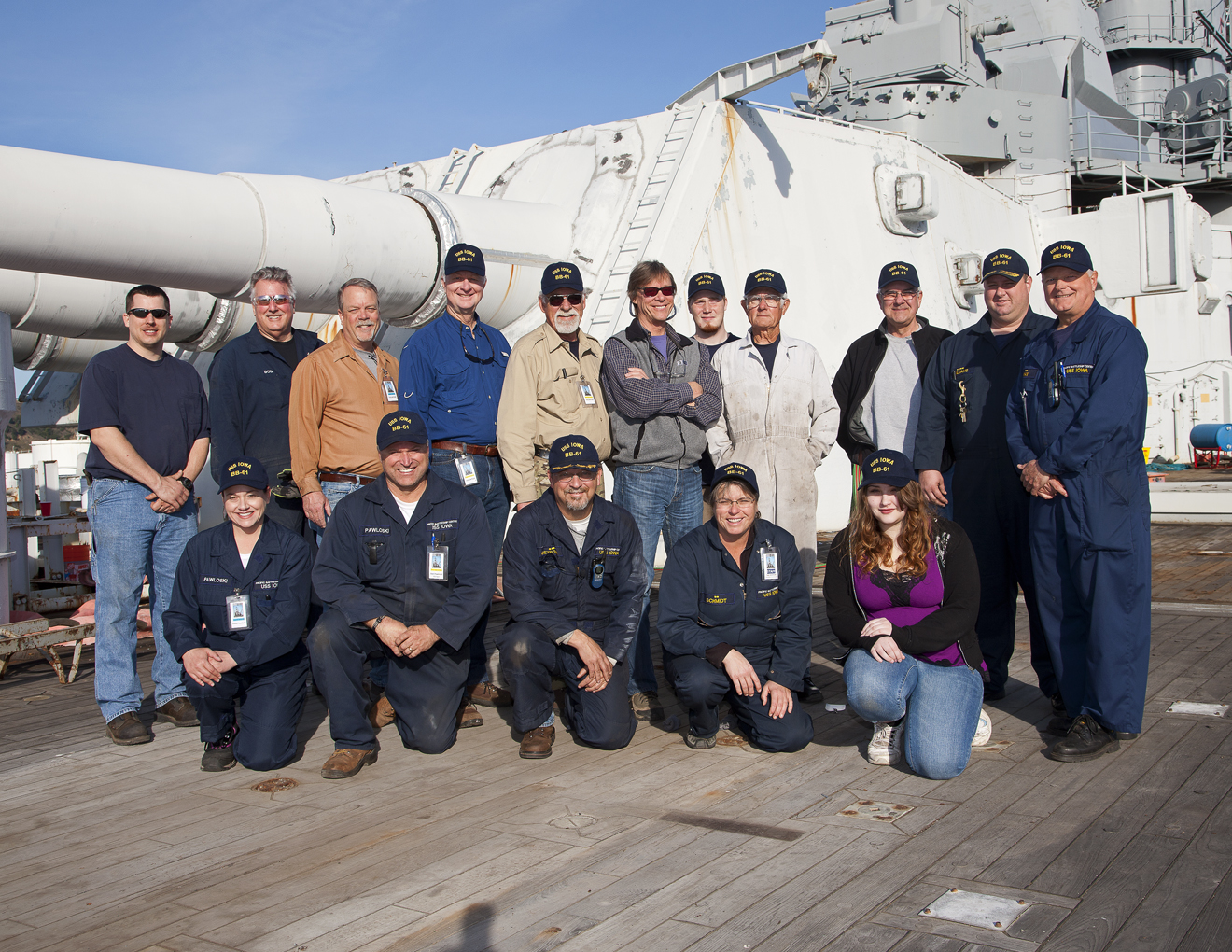
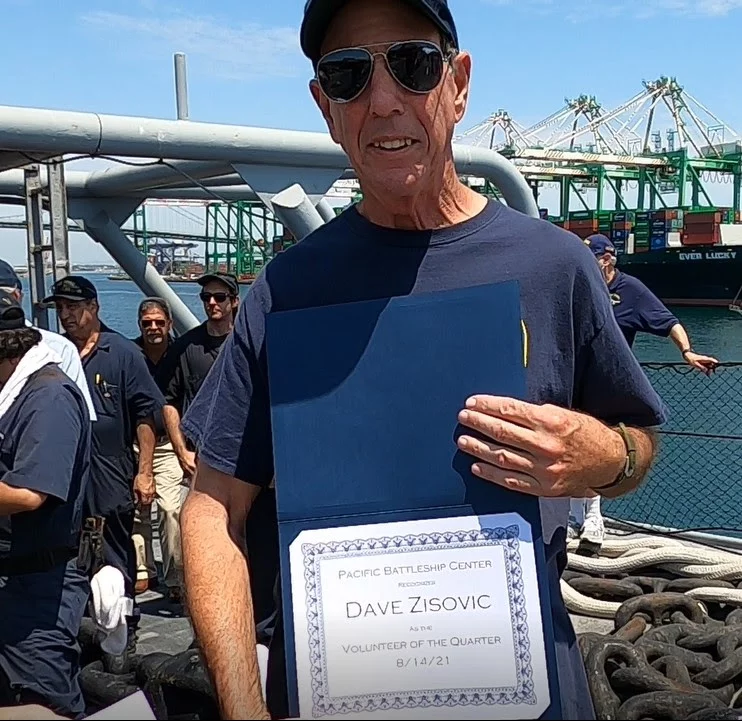
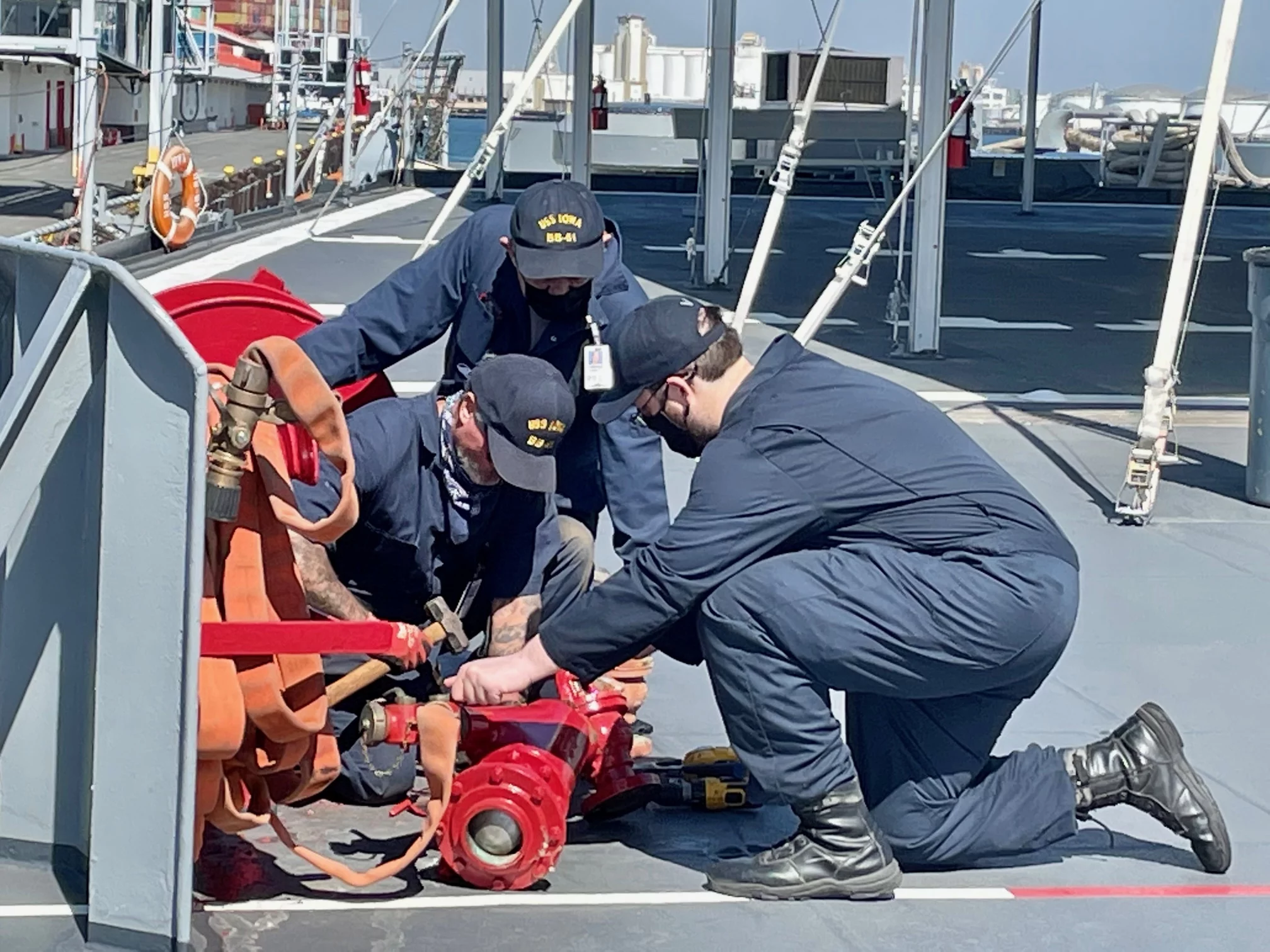
In 2025, Pacific Battleship Center reported that volunteers had collectively surpassed 750,000 hours of service over more than twelve years.
The number is impressive. What matters even more is what those hours have made possible.
Battleship IOWA is not simply a historic ship being cared for by volunteers. Volunteers help turn it into a museum, classroom, veterans resource, community gathering place, and living connection to America's maritime story.
Why Does Battleship IOWA Depend So Heavily on Volunteers?
An 887-foot battleship presents an unusual challenge for any nonprofit museum.
The vessel itself requires continuous care. Steel has to be protected from corrosion. Decks need attention. Historic equipment must be maintained. Hundreds of compartments have to be inspected, cleaned, restored, and prepared for visitors.
At the same time, Pacific Battleship Center operates tours, educational programs, veterans activities, public events, community initiatives, and the continuing development of the National Museum of the Surface Navy.
That combination requires far more labor and expertise than a small professional staff could provide alone.
Pacific Battleship Center has described volunteers as fundamental to its operation, with volunteer participation extending across virtually every department.
That makes volunteering aboard IOWA more than a source of additional labor. It is part of the institution's operating model and part of the way it fulfills its mission.
The ship needs a crew.
Today's crew simply looks very different from the one that took IOWA to sea.
What Do Volunteers Actually Do Aboard Battleship IOWA?
The short answer is “almost everything.”
Some volunteers work directly with visitors, helping them navigate the ship and understand what they are seeing. Others lead tours, support educational programs, work with young people, assist veterans, help stage events, perform administrative functions, contribute photography or communications, and handle many of the day-to-day jobs required to operate a large museum.
Then there is the ship itself.
Preserving Battleship IOWA involves painting, surface preparation, carpentry, corrosion control, equipment restoration, cleaning, inspection, and countless smaller jobs that rarely attract attention individually but become essential at the scale of an 887-foot vessel.
Pacific Battleship Center's 750,000-hour milestone highlighted volunteers performing physically demanding work such as needle gunning, painting, and removing deteriorated deck boards, alongside detailed technical projects such as restoring vintage radio equipment.
Other jobs may be as simple as replacing a light bulb or polishing a brass fitting.
On a ship with thousands of fixtures, hundreds of compartments, and acres of surface area, even simple jobs add up quickly.
Taken together, that work is what helps keep the ship open, safe, understandable, and alive as a museum.
How Do Volunteers Help Preserve a Historic Battleship?
Preservation is where the scale of volunteer service becomes especially visible.
Battleship IOWA has an extraordinary amount of exposed steel. Protective coatings are one of the primary defenses against corrosion, but painting a battleship is not simply a matter of applying a new coat.
Rust has to be removed. Failing coatings must be stripped or stabilized. Surfaces need to be cleaned and prepared properly before new protective materials can be applied.
Deck restoration creates another kind of challenge.
During work on the 01-level deck, staff and volunteers helped remove deteriorated decking by hand, preserve surviving pieces of teak, address corrosion beneath the old surface, and prepare the steel for resealing before a new deck system was installed.
That work also uncovered physical traces of earlier chapters in the ship's history, including evidence of former World War II-era gun positions and battle damage.
Pacific Battleship Center's 2024 reporting credited the broader crew, including volunteers, with supporting a project that replaced 4,725 square feet of vulnerable wood decking with composite material intended to reduce water intrusion and corrosion.
Projects like these demonstrate why preservation depends on much more than highly specialized restoration work.
A professional conservator or contractor may perform a particular technical task, but the project also requires preparation, cleaning, documentation, movement of materials, inspection, follow-up, and ongoing maintenance.
Volunteers expand the amount of preservation work the organization can realistically accomplish.
Do Volunteers Need Naval or Technical Experience?
No.
Some volunteers arrive with decades of experience in the Navy, maritime trades, engineering, education, construction, communications, technology, or other fields. That expertise can be particularly useful in technical restoration, historical interpretation, and specialized projects.
Others arrive knowing very little about battleships.
Battleship IOWA's volunteer program is designed to allow people to learn. Volunteers can be trained for particular roles and gradually develop knowledge of the ship, its history, its visitors, and the work required to maintain it.
That creates a useful exchange.
The organization benefits from people who already possess valuable expertise, but it also helps create expertise in people who simply begin with curiosity and a willingness to contribute.
A volunteer with little naval knowledge may eventually become an experienced tour guide. Someone with no preservation background may learn surface preparation or restoration techniques. Another person may discover an ability to work with students or museum visitors.
Volunteering aboard IOWA can therefore become a form of hands-on education as well as service.
More important than arriving as an expert is being willing to learn and become part of the crew.
Why Are Volunteers Important to the Visitor Experience?
Most visitors will never know how many volunteer hours were required to make their visit possible.
That is because much of the work happens before anyone buys a ticket or walks onto the ship.
Volunteers help maintain the decks and compartments visitors move through. They support restoration and cleaning. They help prepare exhibits, events, and spaces that may have been inaccessible for years before reopening to the public.
They also shape the visitor experience directly.
A knowledgeable volunteer can explain not only what a piece of equipment is, but how it fits into the larger story of the ship. They can answer the question a visitor did not know to ask, point out a detail that might otherwise go unnoticed, or connect a compartment with the experience of the sailors who once worked there.
That human interaction is difficult to reproduce through signs and displays alone.
A historic battleship contains an enormous amount of information, but much of it is not immediately obvious. Pipes, controls, machinery, passageways, and equipment can appear confusing without someone who knows what they mean.
Volunteers help translate the ship.
They turn a very large historic object into a more understandable human experience.
How Do Volunteers Support Education and Veterans Programs?
Volunteers contribute to missions that extend well beyond preservation and tours.
Battleship IOWA is also a learning environment where students can explore history, engineering, science, leadership, teamwork, maritime careers, and the lives of sailors.
Those experiences often begin with direct observation.
A student sees a turbine and asks how it works. A gun system leads to questions about physics. A sailor's bunk opens a conversation about shipboard life. Corrosion on a steel surface becomes an introduction to chemistry and preservation.
A knowledgeable volunteer can help turn those observations into learning.
For volunteers with technical, naval, maritime, or educational experience, the ship offers a particularly valuable opportunity to pass knowledge from one generation to another.
Veterans are also both part of Battleship IOWA's audience and part of its volunteer crew.
Some come aboard for programs, ceremonies, organizations, or community events. Others become volunteers themselves and bring military experience, leadership, technical skills, and familiarity with service culture to the museum.
For some veterans, volunteering can provide something especially familiar: a crew, a responsibility, and a shared mission.
Navy veteran Hershell Hardimon, who volunteered aboard IOWA before later joining the organization professionally, described being drawn not only to the historic ship but to the energy, camaraderie, and commitment of the people working aboard it.
That helps explain why volunteering can mean different things to different people.
For one person, it may begin with history.
For another, it may be about service.
For someone else, it may be about finding a crew again.
What Does 750,000 Volunteer Hours Really Mean?
Large numbers can become abstract.
In 2025, Battleship IOWA's volunteers surpassed 750,000 collective hours of service contributed over more than twelve years. Those hours represent hundreds of thousands of individual decisions to show up, take responsibility for a task, and give time to the ship.
Their meaning becomes clearer when measured by what they produced.
Those hours helped protect steel before corrosion advanced. They helped reopen historic spaces. They supported tours, school programs, veterans activities, and public events. They restored equipment, maintained spaces, and handled countless details that determine whether a museum of this scale can operate successfully.
Volunteer labor also allows other resources to go farther.
A donation may purchase materials. A grant may pay for specialized expertise. A contractor may perform work that requires professional certification or equipment.
But many projects also demand large amounts of preparation and support before and after that specialized work occurs.
Volunteers create capacity.
That is why 750,000 hours should not be understood simply as a measure of donated time. It is a measure of how much more the organization has been able to accomplish because people chose to contribute it.
Why Does Battleship IOWA Call Its Volunteers a Crew?
The language is deliberate.
Battleship IOWA's volunteer program emphasizes the idea of joining the ship's crew rather than simply completing isolated volunteer assignments.
That reflects the history of the ship itself.
USS Iowa operated because thousands of sailors with different specialties understood that their work contributed to something larger. A machinist, cook, electrician, gunner, corpsman, communicator, and officer performed very different jobs, but all were part of the same ship.
The modern museum obviously has a different mission, yet that idea of interdependence still applies.
A preservation volunteer may never lead a tour, but the condition of the ship affects what visitors experience. A tour guide may never restore historic equipment, but their interpretation gives meaning to what restoration crews preserve. An education volunteer works with students inside spaces maintained by someone else.
Those jobs connect.
The volunteer program also creates a social community around that shared work, with activities that have included potlucks, lectures, movies, behind-the-scenes access, field trips, and recognition of service milestones.
For people who remain aboard for years, that community can become as important as the task that first brought them to the ship.
A battleship may attract someone initially.
The crew can give them a reason to stay.
Why Does Long-Term Volunteer Service Matter?
Volunteer retention provides Battleship IOWA with something beyond additional hours.
It creates institutional knowledge.
A person who has spent years aboard learns the ship in ways that are difficult to capture in a manual. Longtime volunteers remember earlier restoration projects, understand how spaces have changed, recognize recurring maintenance issues, and accumulate stories and historical knowledge that can help newer members of the crew.
Battleship IOWA recognizes major service milestones as part of its volunteer culture.
That recognition matters because reaching hundreds or thousands of hours represents more than occasional participation. It reflects sustained responsibility to a mission and a community.
Long-term volunteers can also become informal mentors.
They teach new volunteers how work is done, explain why certain practices developed, and pass along knowledge that helps maintain continuity even as staff and volunteer roles change.
For an organization responsible for preserving a ship whose systems and history are already extraordinarily complex, that continuity has real value.
Can Companies and Organizations Volunteer Aboard Battleship IOWA?
Volunteer service aboard IOWA is not limited to individuals.
Pacific Battleship Center has also hosted corporate, civic, military, and other volunteer groups for project-based service.
Group projects can be particularly useful because a concentrated team can complete labor-intensive work in a short period. One example involved Tourism Cares volunteers working aboard Battleship IOWA as part of a larger Los Angeles Waterfront service effort. Their work included painting and cleaning areas intended to reopen to visitors, including spaces around the mess, post office, and barber shop.
For participating organizations, work like this can provide a more tangible form of community engagement than a conventional off-site meeting or team-building exercise.
Participants can look at a compartment, deck, or restored area and see what their effort accomplished.
For Battleship IOWA, group service adds another source of human capacity to a preservation challenge that is too large for any one staff or volunteer team to address alone.
What Do Volunteers Gain From Serving Aboard Battleship IOWA?
Volunteerism works best when the relationship has value in both directions.
Battleship IOWA gains time, skills, knowledge, experience, and commitment.
Volunteers can gain community, education, friendships, practical experience, access to parts of the ship not normally open to visitors, and the satisfaction of contributing to something larger than themselves.
Those benefits mean different things to different people.
A history enthusiast may want to learn IOWA in greater depth. A retired tradesperson may want to put decades of knowledge to use. A veteran may value camaraderie and shared purpose. A student or younger volunteer may gain skills and experience that influence a future career.
Someone new to Los Angeles may simply be looking for a community.
The ship gives those different motivations a common focus.
People arrive for different reasons, but they work toward the same goal: preserving Battleship IOWA and making its history useful to others.
Why Does Volunteerism Matter to Battleship IOWA's Future?
Battleship IOWA's mission is expanding.
The ship remains a major historic attraction, but Pacific Battleship Center's work now extends through the National Museum of the Surface Navy and Maritime Pathways, connecting people with maritime history, education, careers, service, leadership, volunteering, and community impact.
That future requires more than preserving the physical vessel.
New exhibits need people. Educational programs need people. Community events need people. Veterans programs need people. Preservation projects need people.
Volunteers expand the organization's ability to do all of those things.
They also create something that cannot simply be purchased: people with a personal stake in the mission.
A volunteer who has spent years aboard the ship understands its challenges differently from someone who visits once. Over time, volunteers can become advocates who introduce friends, families, employers, community groups, and potential supporters to the organization.
Their influence therefore extends beyond the hours they record.
They help build the community that will determine whether the ship and its mission remain sustainable over the long term.
Why Is Volunteer Service Part of Battleship IOWA's History?
Visitors understandably focus on USS Iowa's naval service.
They see the 16-inch guns, bridge, machinery, crew quarters, and other evidence of the ship's history from World War II through the Cold War.
But another chapter of IOWA's history is being written around them.
The ship did not automatically become a museum after decommissioning. People had to save it, bring it to Los Angeles, prepare it for visitors, preserve its structure, restore spaces, build programs, and continue caring for it year after year.
Volunteers have been part of that work from the beginning.
Every compartment reopened to the public, every restored system, every school program, every guided tour, and every preserved section of deck becomes part of IOWA's post-Navy history.
The modern crew is therefore doing more than maintaining the past.
It is creating the next chapter of the ship's story.
What Does Volunteer Service Ultimately Preserve?
The obvious answer is Battleship IOWA itself.
Volunteers remove corrosion, paint steel, restore equipment, maintain spaces, welcome visitors, and perform thousands of jobs that help protect an 887-foot historic vessel.
But what they preserve extends beyond steel.
They preserve the opportunity for a child to step onto a battleship and ask how it works.
They preserve a place where a veteran can reconnect with a culture of service.
They preserve the setting that helps a sailor's story make sense.
They preserve a museum where history can still be experienced at full scale.
They help sustain a community in which people from very different backgrounds can work together toward the same purpose.
Battleship IOWA was built around the idea that every member of a crew had a role in keeping the ship functioning.
More than eight decades later, that principle still applies.
The mission has changed.
The need for a crew has not.
How Can Someone Become Part of the Battleship IOWA Crew?
Battleship IOWA continues to welcome people interested in joining its volunteer community.
Opportunities can include working with visitors, supporting education programs, helping with preservation and operations, assisting with events, and contributing to other areas of the organization. Group opportunities are also available for companies, civic organizations, military units, and other teams.
Naval experience is not required.
For someone considering volunteering, the more useful question may be whether they want to learn, contribute, and help keep a historic battleship alive.
Every hour donated aboard Battleship IOWA becomes part of something larger: preserving a national historic resource, helping visitors understand America's maritime story, supporting veterans and students, and making it possible for future generations to step aboard and experience the ship for themselves.
Individual
Sign-Up
Group
Sign-Up
Login
TICKETS
Experience the Life of a Sailor.
Life of a Sailor
Our general admission experience shows how sailors live, work, and serve.
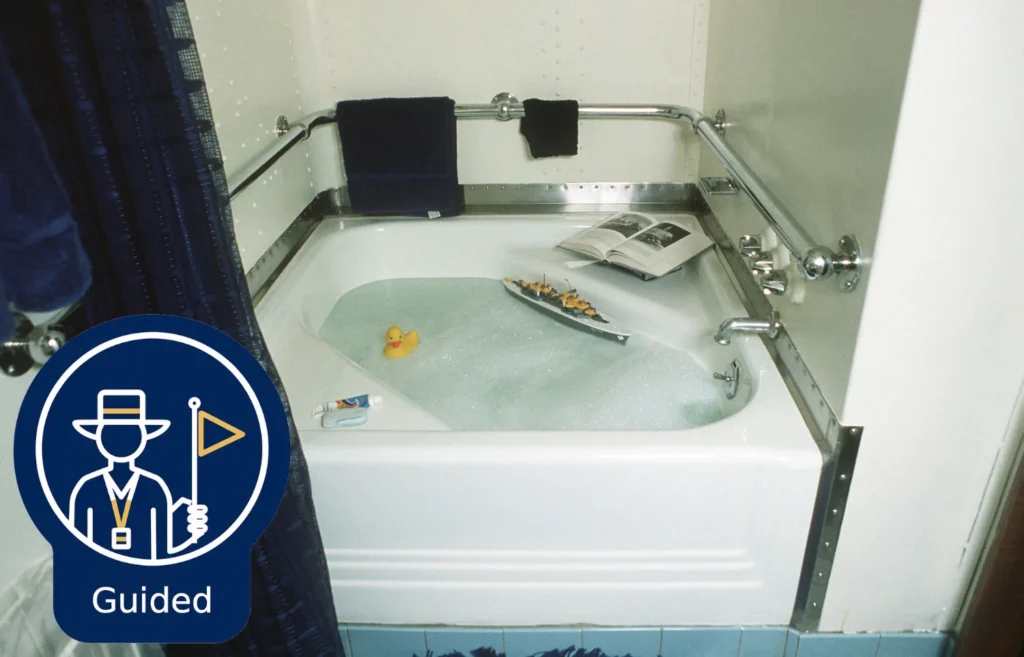
President’s Tour
It’s November 1943, and Battleship IOWA is on a covert mission. President Franklin Delano Roosevelt and his entire staff are aboard, headed for top-secret meetings with Winston Churchill and Joseph Stalin.
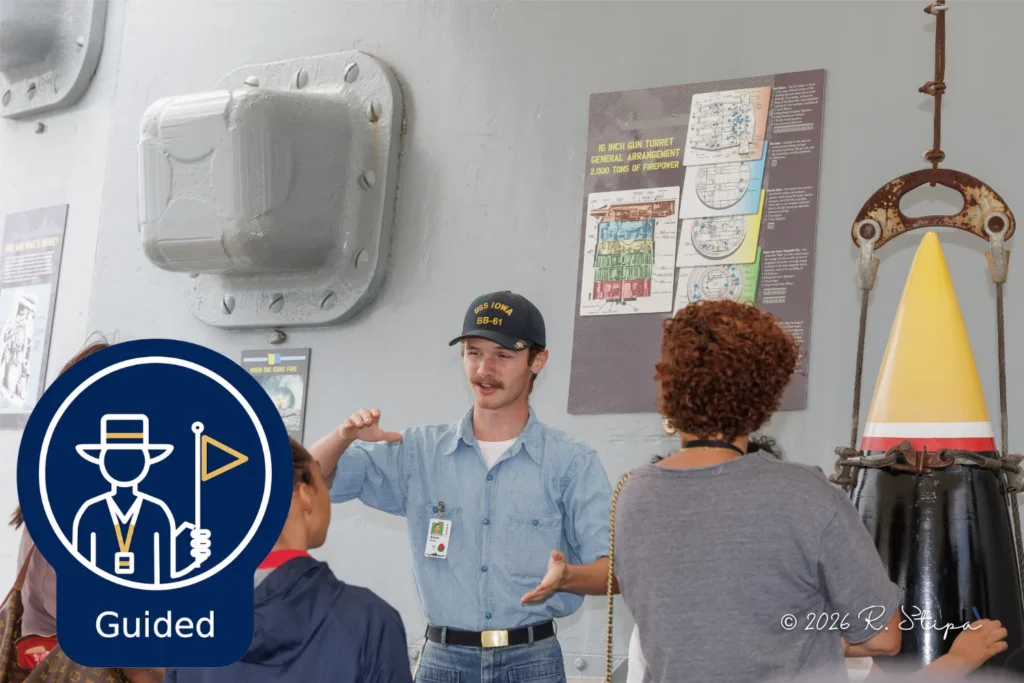
Overview Experience
The overview experience is a 90-minute crew-led tour that brings the ship’s legacy to life through the stories of those who served, and those who preserve her today.
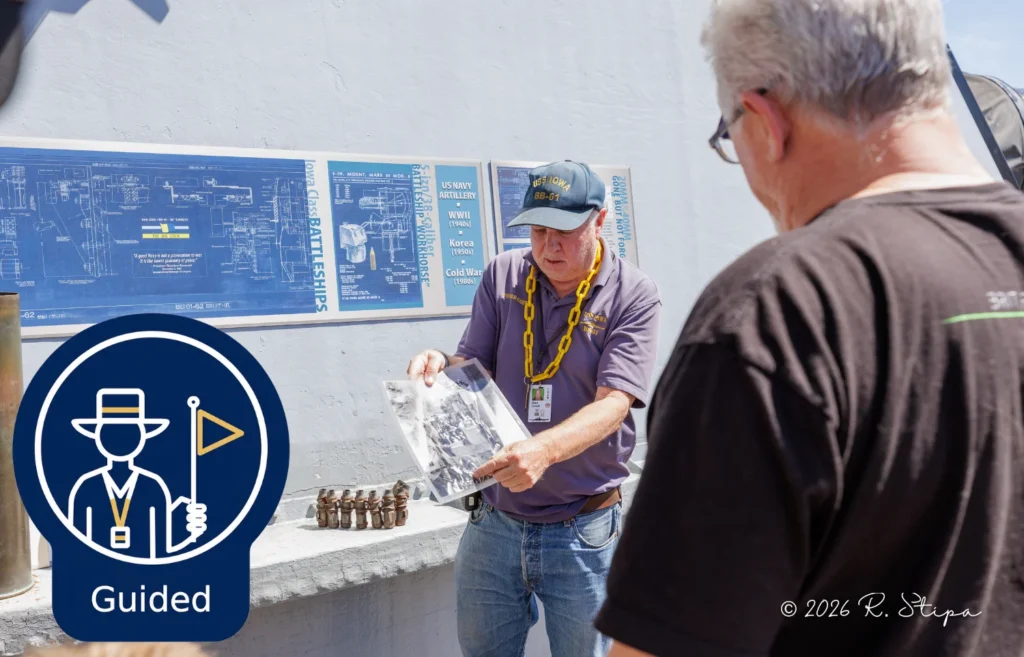
Gun Tour Experience
This exclusive, behind-the-scenes journey puts you inside the systems that made Battleship IOWA one of the most powerful warships ever built.
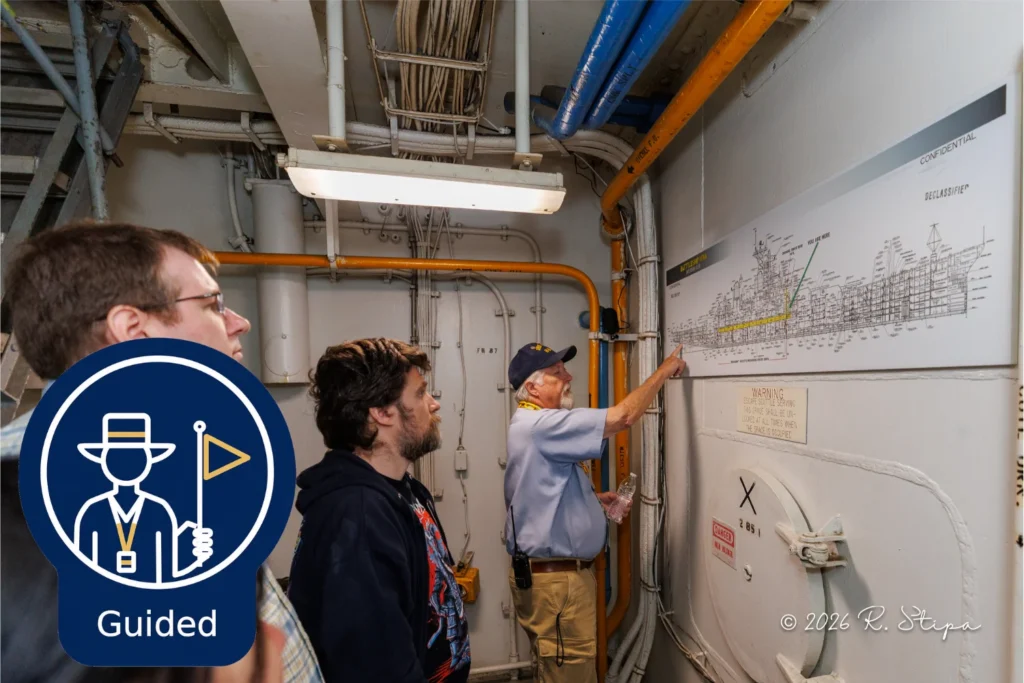
Engineering Tour Experience
The Engineering Tour takes you below into the hidden heart of Battleship IOWA, where eight boilers and four steam turbines once generated 212,000 shaft horsepower, enough to power 650 Ford F-150 trucks, and drove IOWA to a blistering 35 knots, the fastest of any battleship ever built.
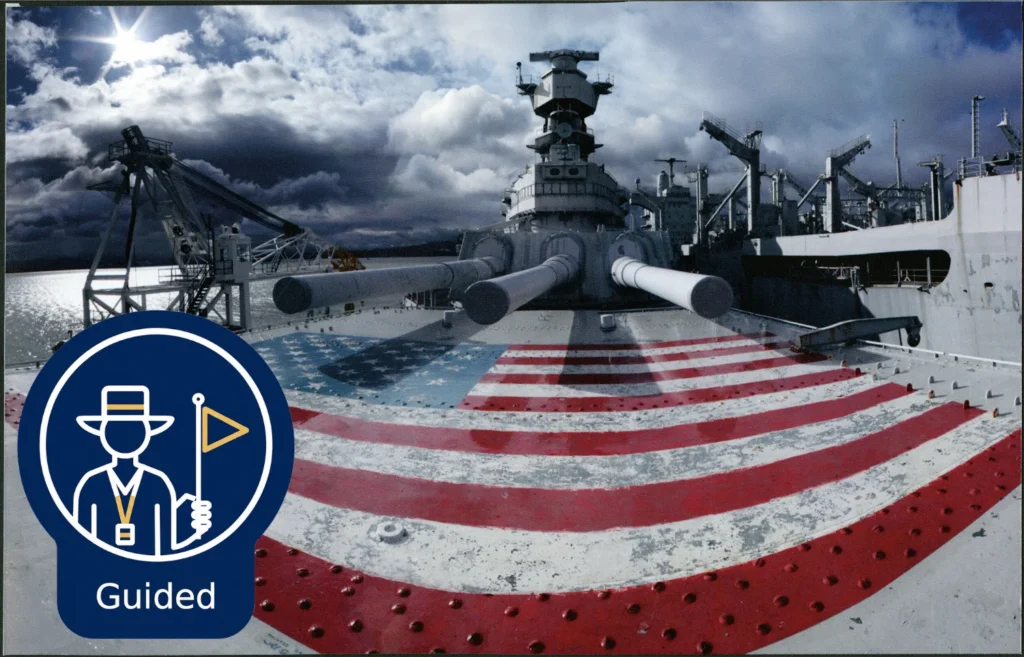
Escape the Fleet Adventure
In 2011, a small team raced against time to pull Battleship IOWA out of the Navy’s reserve “ghost fleet” — or watch her be scrapped forever. Now it’s your turn to live that mission.
Included with Admission
Life of a Sailor
Our general admission experience shows how sailors live, work, and serve.
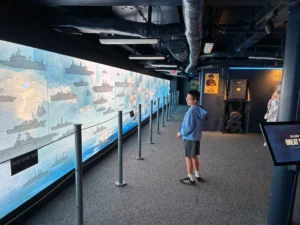
Great Ships
Explore the ships of America’s Surface Navy.
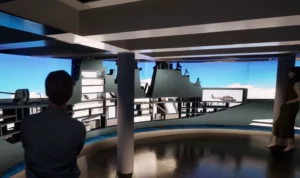
Ship Cutaway
See inside a Navy ship from bow to stern.
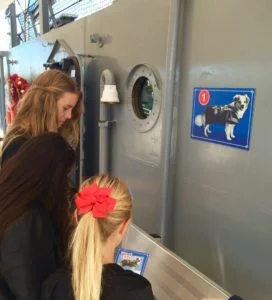
Vicky’s Scavenger Hunt
Find Vicky throughout your shipboard adventure.
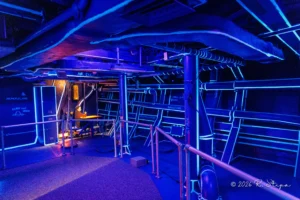
Living Blueprint
Immerse yourself in a blueprint of a Navy ship.
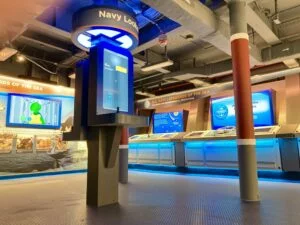
Stewards of the Sea
Explore how the Navy protects the seas.
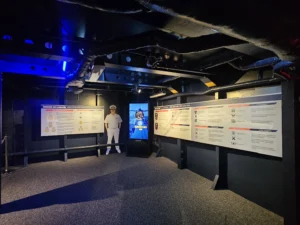
What’s My Rate?
Find the Navy career that fits you.
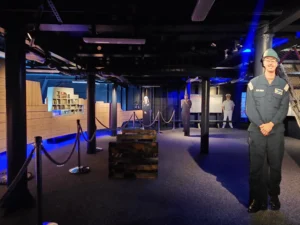
Every Sailor has a Story
Meet the people who serve.
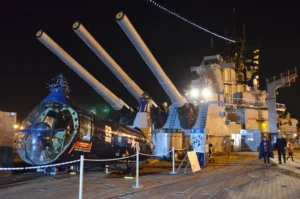
HUP-2 Retriever Helicopter
Korean War-Era HUP-2 Retriever Helicopter.
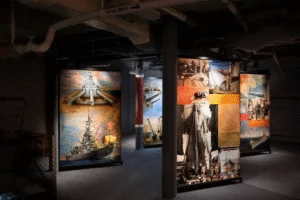
Sticks Art Gallery
Discover IOWA’s story through art.
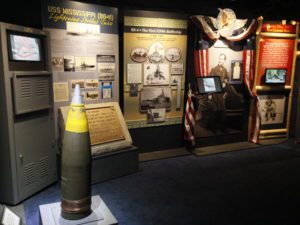
Gunnery Incidents
A dive into Navy gunnery incidents over the years.

Limited time only!
Kids Board Free
In the all-new Life of a Sailor experience, kids become sailor recruits, building their skills, following the story of a famous sailor, and joining Vicky the Dog on a scavenger hunt through Battleship IOWA.
Kids board free with a paid adult.